Advertisement










Private equity has played a significant role in shaping Indi...
In today’s real estate landscape, fitness is often treated...
In this episode of Prop Personalities, we sit down with Hars...
Luxury real estate is one of the most talked-about segments ...
Welcome to Prop Personalities by Prop News Time - a podcast ...
Gurgaon's shift towards electric mobility in public transport remains uneven, with progress largely confined to e-cabs and electric autos. Over 20,000 electric commercial vehicles are registered in the city, but its entire public bus fleet continues to operate on CNG. Plans to introduce electric buses have been discussed for several years under national schemes, with Gurgaon expected to receive a large share of the proposed fleet. However, pending approvals and slow execution have delayed implementation, keeping large-scale public transport outside the EV transition.
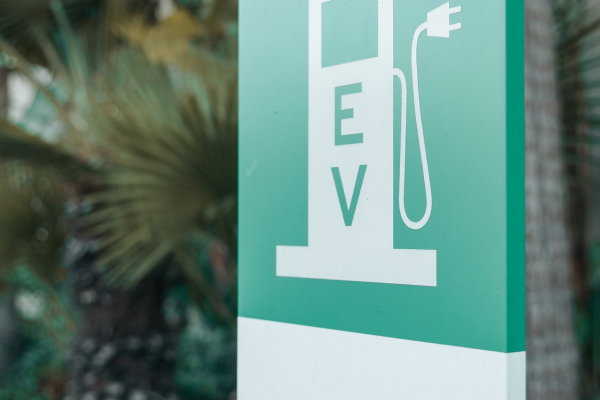
Gurgaon has made limited progress in transitioning its public transport system to electric vehicles, with adoption largely restricted to commercial shared mobility segments such as app-based cabs and electric autos. Official transport data shows that more than 20,000 electric commercial vehicles are currently registered in the city. This includes approximately 2,685 electric cabs and 3,392 electric passenger autos, indicating stronger uptake in last-mile connectivity and aggregator-driven services. Advertisement


Despite this growth, the city's public bus operations remain entirely dependent on compressed natural gas. Not a single electric bus has been inducted into Gurgaon's fleet so far, even as neighbouring Delhi has rapidly expanded its electric bus network over the past few years. Gurgaon's bus services continue to be operated by Gurugram Metropolitan City Bus Limited, which has relied on CNG as its primary fuel.
Efforts to introduce electric buses in the city date back several years. A proposal to deploy 100 electric buses was floated earlier but did not move forward after the state government decided to centralise procurement at the Haryana level. Subsequently, under the national PM e-Sewa scheme, Convergence Energy Services Ltd was tasked with handling procurement, operations, and maintenance of electric buses for multiple cities across the state.
Under this plan, Haryana approved the deployment of around 450 electric buses, with Gurgaon expected to receive nearly 200 buses due to its size and demand. However, the rollout has remained stalled as final approvals are yet to be cleared by the competent government committees. Officials have indicated that the proposal is pending consideration by a high-powered purchase committee, after which contracts can be executed.
Transport authorities say steps are being taken to support EV adoption, including faster registration processes for electric autos and cabs. However, large-scale transition in public transport depends on timely approvals, charging infrastructure development, and coordinated execution. Urban mobility experts note that while Gurgaon has seen visible growth in electric shared vehicles, the absence of electric buses limits the overall environmental and operational impact of the city's EV transition.

5th Jun, 2025

25th May, 2023

11th May, 2023

27th Apr, 2023
Advertisement





 Facebook
 Whatsapp
