Advertisement








When should a housing society in Mumbai start considering re...
From GST on JDAs to SEBI’s REIT reclassification and the S...
Stay ahead in the world of real estate with our daily podcas...
Stay ahead in the world of real estate with our daily podcas...
Automobile industry bodies have welcomed provisions in the Union Budget 2026-27 that extend customs duty exemptions on capital goods and components used in lithium-ion battery manufacturing, stating that the measures will support the growth of India's electric vehicle ecosystem. Industry representatives said the continued duty relief, along with higher capital expenditure and allocations for electric buses, would strengthen domestic manufacturing, improve affordability and provide long-term policy stability. The sector also welcomed the government's focus on infrastructure development, clean mobility, rare-earth supply chains and manufacturing-led growth. Industry leaders noted that the measures would help stabilise supply chains, support MSMEs and position India as a competitive manufacturing and sourcing hub amid global economic uncertainty.
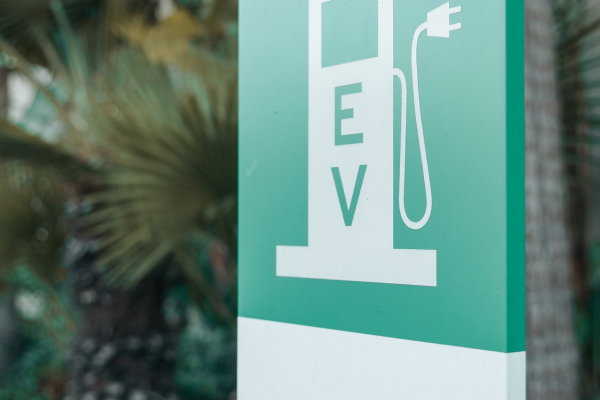
The automobile industry has welcomed the Union Budget 2026-27, stating that the extension of customs duty exemptions on goods used in lithium-ion battery manufacturing will help create a stronger electric vehicle ecosystem in the country. Advertisement


The Society of Indian Automobile Manufacturers (SIAM) said that the continued exemption of basic customs duty on capital goods used for manufacturing lithium-ion batteries, along with the extension of concessional duty benefits on lithium-ion cells and their parts for electric and hybrid vehicles until March 2028, would support the development of a robust EV infrastructure. SIAM noted that the budget maintained a clear focus on long-term economic growth, with emphasis on manufacturing, infrastructure such as freight corridors and waterways, and fiscal discipline.
The industry body added that the increase in capital expenditure to INR 12.2 lakh crore for FY27, compared with INR 11.2 lakh crore in the current year, would provide a strong push to demand creation and industrial activity, including the automobile sector. It also said that the allocation of 4,000 electric buses for the Purvodaya states would accelerate the shift towards sustainable public transport.
The Federation of Automobile Dealers Associations (FADA) also welcomed the government's continued commitment to the EV ecosystem. It said that extending customs duty exemptions on capital goods used in lithium-ion cell manufacturing, along with the creation of rare-earth corridors in mineral-rich states, would strengthen domestic EV production and improve affordability. The association noted that measures such as the rollout of electric buses in the Northeast and Purvodaya regions, the exclusion of biogas value from central excise duty on blended CNG and the India Semiconductor Mission 2.0 would help stabilise supply chains for modern vehicles.
The Automotive Component Manufacturers Association (ACMA) said the budget outlined a clear roadmap for strengthening India's manufacturing ecosystem. It added that sustained focus on MSMEs, clean mobility and export facilitation would help the auto component industry manage global headwinds while enhancing India's position as a trusted manufacturing destination.
Industry executives and consultants also highlighted the importance of policy continuity. They said that extending customs duty exemptions on lithium-ion cells and key inputs until March 2028 would provide much-needed certainty for investment in electric mobility. Several leaders noted that higher infrastructure spending, improved highways and better intercity connectivity would support overall mobility demand, including premium vehicle segments, while boosting domestic manufacturing of capital goods, EV components and electric motors across vehicle categories.
Source - PTI

5th Jun, 2025

25th May, 2023

11th May, 2023

27th Apr, 2023
Advertisement








 Facebook
 Whatsapp
