Advertisement






When should a housing society in Mumbai start considering re...
From GST on JDAs to SEBI’s REIT reclassification and the S...
Stay ahead in the world of real estate with our daily podcas...
Stay ahead in the world of real estate with our daily podcas...
Sankla Buildcoon, through its clean energy arm Sankla Renewables, has signed a memorandum of understanding with the Government of Maharashtra to develop a large-scale Sustainable Aviation Fuel (SAF) manufacturing facility at Chalisgaon in Jalgaon district, involving an investment of INR 15,000 crore. Formalised on the sidelines of the World Economic Forum in Davos, the agreement marks the group's strategic expansion from real estate into infrastructure-grade clean energy assets. The proposed project will convert agricultural residues into aviation-grade fuel using internationally certified technologies and will be commissioned in phases through 2029. Designed in line with global ESG benchmarks, the initiative aligns with India's energy security and aviation decarbonisation goals while creating structured rural income opportunities and employment across the value chain.
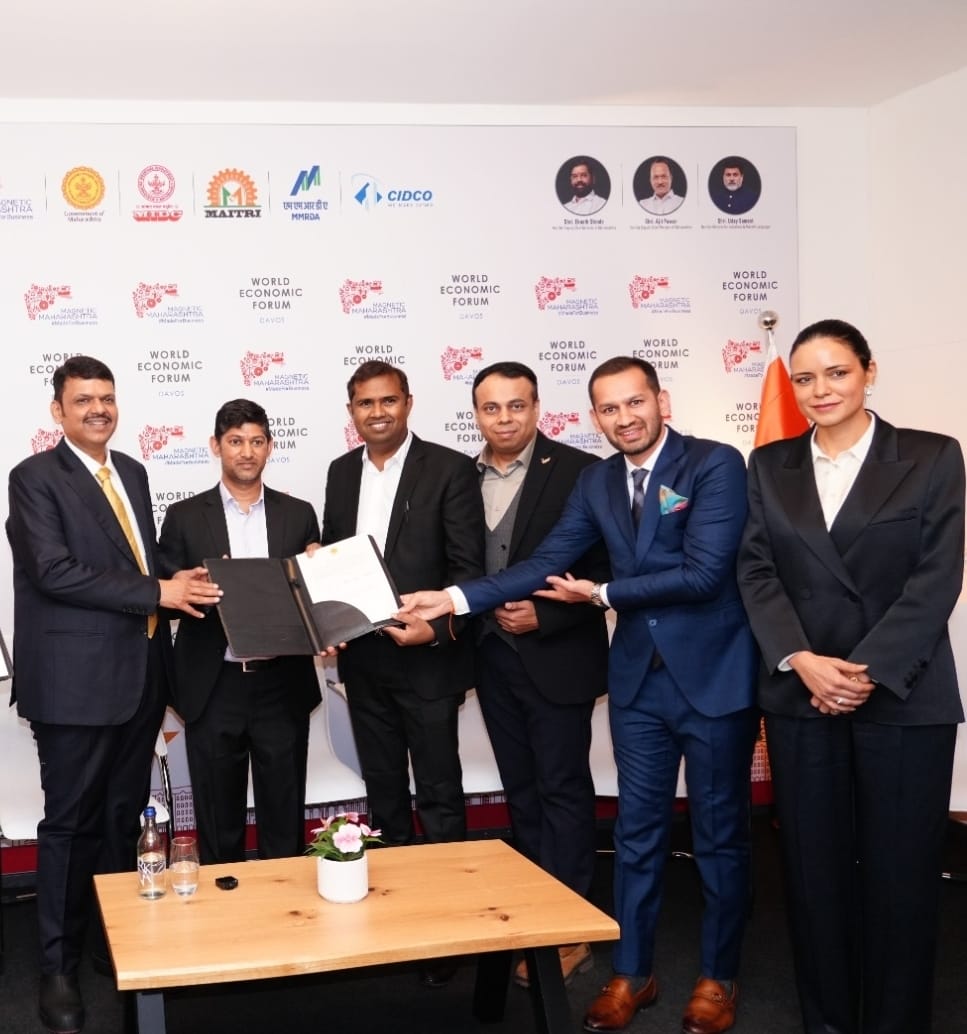
Sankla Buildcoon has announced a significant foray into the clean energy sector after its associate platform, Sankla Renewables, entered into a memorandum of understanding with the Government of Maharashtra to set up a Sustainable Aviation Fuel manufacturing facility in Chalisgaon, Jalgaon district. The proposed investment of INR 15,000 crore positions the project among the larger transition-aligned industrial investments planned in the state. Advertisement


The MoU was formalised at the World Economic Forum in Davos, underlining Maharashtra's push to attract capital into long-duration, sustainability-focused infrastructure. For Sankla Buildcoon, the project represents a strategic diversification beyond its real estate-led business model into clean energy assets with long operating lives and predictable demand drivers.
The planned facility will utilise agricultural residue feedstock such as sugarcane bagasse, cotton stalks, soybean husk and pigeon pea waste to produce aviation-grade sustainable fuel. Internationally certified conversion technologies will be deployed to ensure compliance with global aviation and environmental standards. Chalisgaon was selected due to its locational advantages, including access to feedstock, connectivity and regional industrial potential.
The project has been structured for phased commissioning up to 2029, allowing for capital-efficient deployment and a risk-managed scale-up of operations. Once fully operational, the SAF facility is expected to cater to long-term demand driven by global aviation decarbonisation mandates and India's increasing focus on reducing dependence on imported fossil fuels.
From a sustainability perspective, the project has been designed to align with global ESG benchmarks. Operations will be powered entirely by renewable energy, supported by closed-loop water management with complete reuse. The facility will adopt zero-liquid-discharge systems, low-emission process design and electric vehicle-based internal logistics, ensuring compliance with environmental and governance norms.
Beyond emissions reduction, the initiative is expected to generate measurable rural economic benefits. The project will create a formal market for agricultural residue through long-term feedstock procurement contracts, providing additional income streams for farmers while reducing open-field residue burning.
On the employment front, the project is expected to generate more than 3,000 direct and indirect jobs upon full commissioning, along with several thousand additional opportunities across logistics, services and allied supply chains. Sankla Renewables plans to work with local institutions to implement skill development and training programmes, ensuring a qualified local workforce and long-term operational sustainability.
The company has indicated that the SAF platform could emerge as a cornerstone asset in India's broader energy transition, combining infrastructure-grade returns with sustainability-led growth objectives.

5th Jun, 2025

25th May, 2023

11th May, 2023

27th Apr, 2023
Advertisement








 Facebook
 Whatsapp
