Advertisement








When should a housing society in Mumbai start considering re...
From GST on JDAs to SEBI’s REIT reclassification and the S...
Stay ahead in the world of real estate with our daily podcas...
Stay ahead in the world of real estate with our daily podcas...
Indian Railways has enforced stricter safety protocols for power cars after repeated lapses were found in fire safety systems installed in these coaches. The Railway Board has directed that no power car will be allowed into service without a joint inspection and certification by mechanical and electrical staff. The move follows inspections that revealed faulty Fire Detection and Suppression Systems, low nitrogen pressure, damaged valves and systems being kept inactive. The revised process introduces detailed checklists, clearer accountability and aims to reduce fire-related risks on passenger trains.
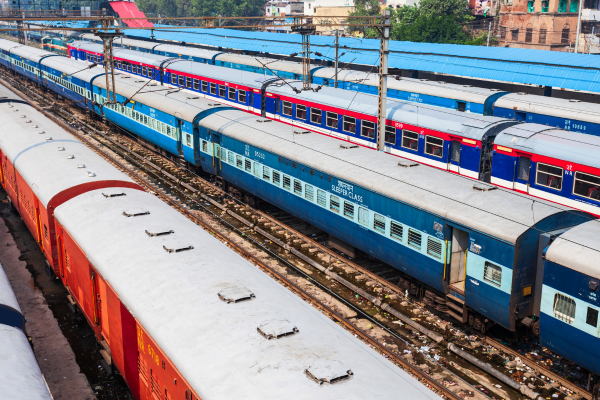
Indian Railways has strengthened its safety framework for power cars, also known as generator coaches, after internal assessments highlighted serious shortcomings in onboard fire protection systems. The Railway Board has now made it compulsory for both mechanical and electrical departments to jointly inspect every power car before it is attached to a passenger train. A written certification confirming that all safety checks have been completed is now mandatory. Advertisement


The decision follows observations that the Fire Detection and Suppression System (FDSS), installed at a cost running into several lakh INR per power car, was often found in an unserviceable condition. In many cases, inspections revealed broken solenoid valves, nitrogen cylinders operating below prescribed pressure levels and pipelines that were either damaged or improperly maintained. In some instances, the system was found switched off, undermining its purpose during emergencies.
Under the revised protocol, officials must ensure that smoke detectors and temperature sensors in the power car and the adjoining guard room are fully functional. The condition of nitrogen cylinders, including intact main valve seals and adequate pressure, must be verified. Inspectors are also required to check control panel indicators, system switches, backup batteries and all associated fittings and pipelines.
Indian Railways has introduced a structured inspection format, referred to as Proforma A, to standardise checks and ensure proper documentation. Power cars will not be permitted to move beyond the originating station unless the checklist is fully completed and signed by authorised staff from both departments. The Railway Board has also made it clear that responsibility for any lapse will be fixed, signalling a stronger push for accountability.
This step builds on earlier safety initiatives taken by Indian Railways to address fire incidents and technical failures in passenger coaches, particularly in power cars that supply electricity to long-distance trains.

5th Jun, 2025

25th May, 2023

11th May, 2023

27th Apr, 2023
Advertisement








 Facebook
 Whatsapp
