Advertisement










Private equity has played a significant role in shaping Indi...
In today’s real estate landscape, fitness is often treated...
In this episode of Prop Personalities, we sit down with Hars...
Luxury real estate is one of the most talked-about segments ...
Welcome to Prop Personalities by Prop News Time - a podcast ...
Essar Green Mobility is planning to deploy 30,000 LNG and electric trucks across India, supported by a nationwide network of 100 alternative fuel and charging hubs. The initiative aims to reduce freight-related emissions by around one million tonnes annually. Backed by USD 275 million in equity funding, the strategy integrates truck manufacturing, fleet operations and fuelling infrastructure. Essar is adopting a dual-fuel approach, using LNG trucks for long-haul routes and electric trucks for urban logistics, while expanding LNG and EV infrastructure across major freight corridors.
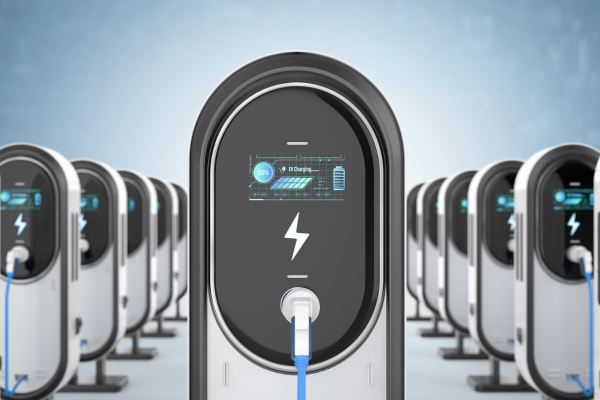
Essar Green Mobility has outlined plans to deploy 30,000 LNG- and electric-powered trucks across India, backed by a network of 100 alternative fuel and charging hubs, marking one of the country's largest clean freight initiatives. The move is aimed at reducing emissions from freight transport, which remains a major contributor to overall transport-related pollution. Advertisement


The company estimates that the proposed expansion could lower carbon dioxide emissions by around one million tonnes annually from freight operations. According to Essar, the shift away from diesel in heavy transport can succeed only if clean alternatives meet both operational and cost requirements of the logistics industry, an issue the group is attempting to address through scale and integration.
Essar's strategy brings together vehicle manufacturing, fleet operations and fuelling infrastructure into a single model. The green mobility platform combines Blue Energy Motors for truck manufacturing, GreenLine Mobility Solutions for operating fleets, and Ultra Gas & Energy Limited (UGEL) for building LNG, electric charging and battery-swapping infrastructure. The company believes this end-to-end structure can reduce high upfront costs and infrastructure gaps that have slowed adoption of low-emission freight technologies in India.
GreenLine Mobility currently operates more than 800 LNG-powered trucks serving sectors such as steel, cement, fast-moving consumer goods and chemicals. These vehicles have collectively travelled over 70 million kilometres and reduced nearly 19,756 tonnes of carbon emissions, an impact the company equates to saving about 790,262 trees. Each 55-tonne LNG truck is capable of carrying up to 40 tonnes of cargo and has a driving range of roughly 1,200 kilometres on a single tank.
The expansion plans are supported by a recent equity raise of USD 275 million, which included a USD 20 million investment from Zerodha co-founder Nikhil Kamath. The funds are expected to accelerate the induction of more than 10,000 additional LNG and electric trucks and support the rollout of 100 LNG refuelling stations, EV charging points and battery-swapping facilities across key freight corridors.
Essar's management has indicated that the programme is designed as a dual-fuel strategy. LNG-powered trucks will be deployed for long-haul routes, while electric trucks will cater to short-haul and urban logistics, where electrification is more efficient. Charging and battery-swapping facilities are being integrated into multi-fuel hubs to improve fleet utilisation and reduce downtime.
UGEL currently operates six LNG refuelling hubs located along major industrial corridors, including Bhilwara, Anand, Chakan, Pune, Jalna, Toranagallu and Vallam. Each hub can service up to 600 trucks per month. The company plans to expand this network to 100 stations, covering nearly 85 per cent of India's long-haul freight routes. The rollout, backed by an investment of around INR 900 crore, is underway across states such as Gujarat, Tamil Nadu, Maharashtra, Rajasthan, Haryana, Punjab, Karnataka, Odisha, Chhattisgarh and Jharkhand.
The initiative aligns with the government's broader push to reduce emissions, improve logistics efficiency and promote cleaner fuels. Analysts, however, note that sustained policy support and long-term private investment will be necessary to achieve large-scale adoption of clean freight solutions.
India's freight sector remains one of the most carbon-intensive parts of the economy, with adoption of cleaner technologies historically constrained by cost and infrastructure challenges. Essar's approach seeks to overcome these barriers by controlling the full value chain and ensuring consistent vehicle supply, fuel availability and operational efficiency.
Source PTI

5th Jun, 2025

25th May, 2023

11th May, 2023

27th Apr, 2023
Advertisement





 Facebook
 Whatsapp
