Advertisement








When should a housing society in Mumbai start considering re...
From GST on JDAs to SEBI’s REIT reclassification and the S...
Stay ahead in the world of real estate with our daily podcas...
Stay ahead in the world of real estate with our daily podcas...
Gujarat has announced the Integrated Renewable Energy Policy 2025 and the Green Hydrogen Policy 2025 to accelerate its clean energy transition. The renewable policy targets over 100 gigawatts of capacity by 2030, with a strong focus on grid stability, battery storage and advanced technologies. The green hydrogen policy aims for production of up to 3 million metric tonnes annually by 2035, backed by large-scale renewable capacity and electrolysers. Together, the policies are expected to attract investments of around INR 5 lakh crore and generate significant employment.
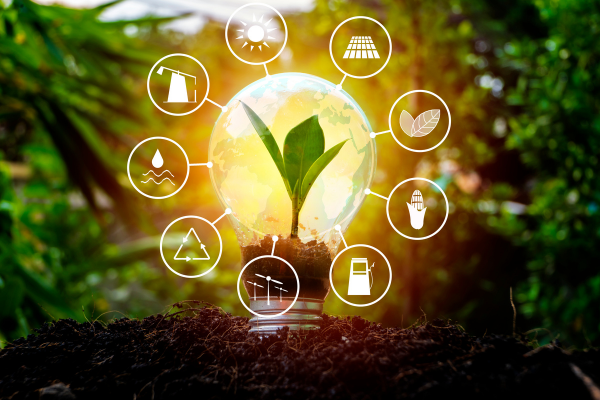
The Gujarat government has introduced two new policies aimed at accelerating the state's shift towards clean and sustainable energy while strengthening its position in India's renewable energy landscape. The Integrated Renewable Energy Policy 2025 and the Gujarat Green Hydrogen Policy 2025 are intended to expand capacity, attract investments and address climate-related challenges through long-term planning. Advertisement


The policies were unveiled in Gandhinagar during a state-level event led by Chief Minister Bhupendra Patel. The move aligns with India's Nationally Determined Contributions and the Viksit Gujarat@2047 vision, which focuses on economic growth alongside environmental responsibility. Gujarat has been among the early movers in renewable energy, with large-scale solar and wind installations over the past decade forming the base for this next phase.
Under the renewable energy policy, the state has set an ambitious target of crossing 100 gigawatts of installed renewable capacity by 2030. This is expected to significantly contribute to India's national goal of achieving 500 gigawatts of non-fossil fuel-based energy capacity within the same timeframe. The policy focuses on improving grid stability and encouraging innovation to make renewable power more reliable and scalable.
A central feature of the policy is the promotion of Battery Energy Storage Systems to support large-scale integration of renewable energy. Both grid-connected and co-located BESS projects linked with solar, wind and hybrid installations have been encouraged. Strategic locations for such storage systems will be identified by the Gujarat Energy Development Agency in coordination with GETCO, the State Load Despatch Centre and distribution companies to ensure smoother power evacuation and grid management.
To address long-standing execution challenges, the policy offers relaxations in commissioning timelines for renewable projects, particularly those set up for captive consumption and third-party sales. Timelines for evacuation infrastructure have been rationalised based on voltage levels rather than project capacity, and additional time has been allowed for commissioning of projects and transmission lines to reduce implementation delays.
The policy also supports wind repowering and refurbishment in line with the National Repowering Policy. Existing wind turbine generators can now be upgraded without mandatory dismantling, and the allowed timeline for repowering has been extended up to 24 months. On-demand renewable energy connectivity will be enabled through the Akshay Urja Setu portal, while new transmission schemes will be developed in renewable-rich zones.
In an effort to diversify the clean energy mix, the policy promotes advanced and emerging technologies such as ocean and geothermal energy, concentrated solar thermal, building-integrated photovoltaics, rail and road-integrated photovoltaics, agrivoltaics and vertical-axis wind turbines. These technologies will be supported through pilot projects. The framework also encourages private participation, start-ups, employment generation and skill development across the green energy value chain.
Alongside renewable power, the Gujarat Green Hydrogen Policy 2025 lays out a roadmap to position the state as a major green hydrogen hub over the next decade. The policy targets green hydrogen production of up to 3 million metric tonnes per annum by 2035, supported by the development of nearly 75 gigawatts of renewable energy capacity and 30 gigawatts of electrolyser capacity.
The state government estimates that the green hydrogen policy could attract investments of around INR 5 lakh crore in the coming years and generate employment for nearly six lakh people, both directly and indirectly. The policy provides a structured framework covering production, storage, transportation and end-use of green hydrogen and its derivatives, including green ammonia and green methanol.
To ease project development, a single-window facilitation mechanism has been proposed for faster approvals and clearances. Green hydrogen projects will be prioritised in state-owned industrial estates, with support for essential infrastructure such as power connectivity and water supply. The policy also offers a 20 per cent capital subsidy for electrolysis-based projects, BESS installations and oxygen bottling plants, with similar incentives for biomass-based green hydrogen units.
To encourage adoption, the state will extend a 30 per cent capital subsidy to 20 green hydrogen refuelling stations. MSMEs adopting green hydrogen for energy use will be eligible for a subsidy of INR 50 per kg, aimed at lowering the cost barrier and expanding industrial usage.
Source PTI

5th Jun, 2025

25th May, 2023

11th May, 2023

27th Apr, 2023
Advertisement








 Facebook
 Whatsapp
