Advertisement










Private equity has played a significant role in shaping Indi...
In today’s real estate landscape, fitness is often treated...
In this episode of Prop Personalities, we sit down with Hars...
Luxury real estate is one of the most talked-about segments ...
Welcome to Prop Personalities by Prop News Time - a podcast ...
In a move aimed at improving efficiency and transparency in land administration, the District Collectors of Mumbai City and Mumbai Suburban held a joint meeting with leading real estate associations to address long-standing procedural challenges. The discussion focused on simplifying royalty applicability, reducing approval delays, avoiding duplication of physical surveys, and ensuring uniform practices across both jurisdictions. Emphasising SOP-driven reforms, the Collectors expressed commitment to coordinated governance and time-bound implementation. Industry bodies welcomed the collaborative approach, highlighting its potential to enhance ease of doing business while strengthening regulatory clarity. A steering committee will be formed to translate discussions into actionable, on-ground reforms.
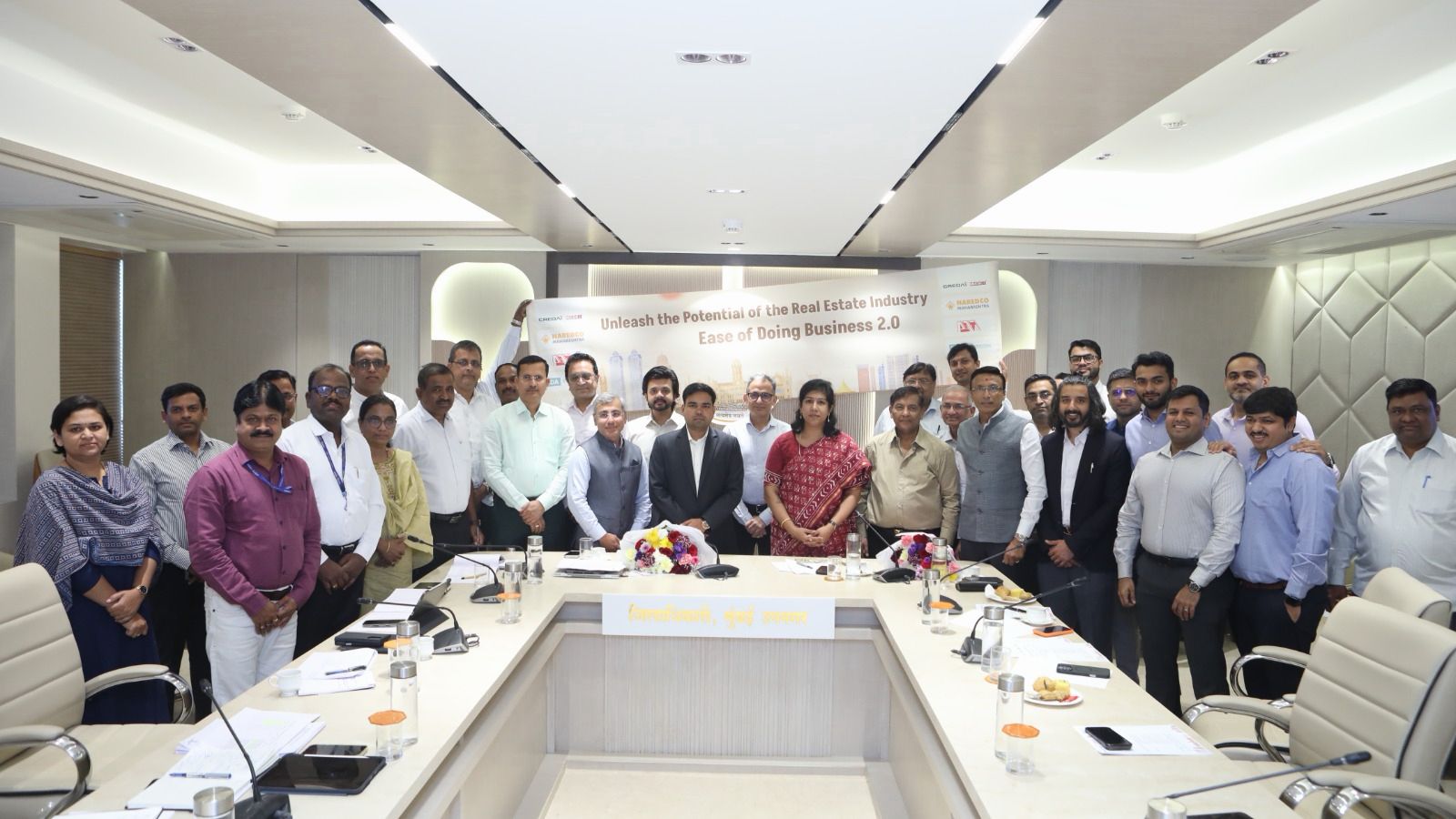
The District Collectors of Mumbai City and Mumbai Suburban have taken a significant step towards coordinated land governance by jointly engaging with key real estate bodies to address procedural and regulatory challenges affecting the sector. The meeting brought together senior officials from both Collectorates and representatives from CREDAI-MCHI, NAREDCO, BDA and PEATA, marking one of the first instances of such a unified, cross-jurisdictional dialogue. Advertisement


During the discussions, District Collector, Mumbai City, Aanchal Goyal acknowledged that several issues raised by the industry, particularly those related to royalty applicability, approval timelines and duplication of physical surveys, are substantive and require systemic correction. She emphasised the need for clear, standard operating procedures that simplify processes, reduce ambiguity and ensure consistency, while continuing to meet statutory and regulatory requirements.
District Collector, Mumbai Suburban, Saurabh Katiyar highlighted the importance of bringing both City and Suburban Collectorates onto a common platform. He noted that coordinated decision-making would help eliminate inconsistencies and improve transparency across land-related processes. Suggestions such as unified physical surveys, streamlined amalgamation and subdivision procedures, and better access to accurate land records were discussed, with assurances that these would be examined through a structured institutional framework.
A key focus of the meeting was the applicability of royalty on excavated soil. Industry representatives highlighted challenges such as royalty being levied even when excavated material is not transported outside the project site, along with concerns around short validity periods, inaccurate excavation calculations and approval delays. Both Collectors assured that simplified and time-bound SOPs would be introduced to comprehensively address these issues.
Another major reform discussed was the introduction of a single, unified physical survey that could be used for multiple purposes, including non-agricultural permissions, demarcation, amalgamation or subdivision, and handover of amenities. This measure is expected to significantly reduce duplication, repeated site visits and procedural delays.
Industry leaders welcomed the proactive and collaborative approach adopted by the administration. They noted that SOP-led clarity, unified surveys and predictable timelines would greatly enhance confidence and ease of doing business across the real estate ecosystem.
The meeting concluded with a shared commitment to sustained engagement. A steering committee comprising officials from the Collector's office and ancillary departments will be formed to identify bottlenecks, streamline procedures and recommend policy changes at the Collectorate or government level, ensuring that discussions translate into tangible, on-ground reforms for Mumbai's real estate sector.
Source: CREADI & NAREDCO Press Bureau

5th Jun, 2025

25th May, 2023

11th May, 2023

27th Apr, 2023
Advertisement





 Facebook
 Whatsapp
