Advertisement










Private equity has played a significant role in shaping Indi...
In today’s real estate landscape, fitness is often treated...
In this episode of Prop Personalities, we sit down with Hars...
Luxury real estate is one of the most talked-about segments ...
Welcome to Prop Personalities by Prop News Time - a podcast ...
New airlines approved to operate in India may take several years to launch commercial services due to a global shortage of aircraft, according to aviation veteran Dinesh Keskar. Speaking at IIM Nagpur, he said aircraft manufacturers have full order books until 2032, making near-term deliveries difficult even after regulatory approvals. While India's air travel demand continues to grow, limited aircraft availability remains the biggest hurdle for new entrants. Keskar also noted that domestic aircraft manufacturing is constrained by the lack of skilled manpower. The delay in airline launches could impact airport-linked infrastructure, logistics, and hospitality development, although long-term growth prospects for India's aviation and airport-led real estate ecosystem remain strong.
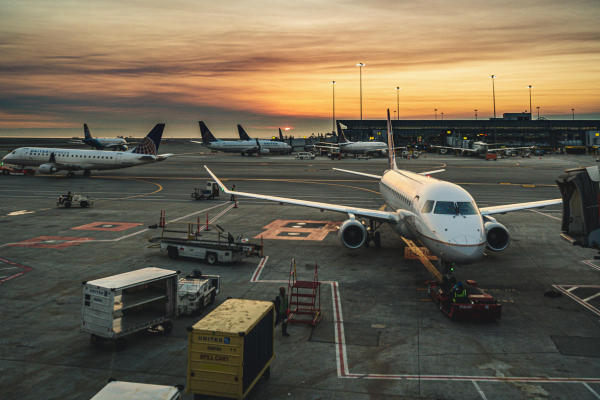
New airlines approved to operate in India may take several years to begin commercial services due to a global shortage of aircraft, driven by persistent supply-chain challenges, according to Dinesh Keskar, former Senior Vice President for Sales at Boeing. Advertisement


Speaking at a leadership session at the Indian Institute of Management (IIM) Nagpur, Keskar said that although the central government has granted approvals to new airline operators, actual launch timelines will depend on aircraft availability. He noted that major aircraft manufacturers worldwide have order books filled until 2032, limiting near-term delivery options for new entrants.
Even if an airline places an order today, aircraft deliveries could take around six years, Keskar said, adding that this makes immediate operations difficult for new airlines. The government recently issued no-objection certificates to two proposed airlines, Al Hind Air and FlyExpress, but industry experts believe their entry into the market will not be quick.
Keskar said supply constraints, rather than regulatory approvals, are the main bottleneck for aviation growth at present. He also addressed concerns around new trade tariffs introduced by the US administration, stating that the global aviation industry is likely to see limited impact as aerospace components are typically exempt from such duties.
While India's air passenger traffic continues to grow at a strong pace, Keskar said domestic aircraft manufacturing is currently not viable. The key constraint, he explained, is the lack of highly skilled manpower required for aircraft production.
Approvals and infrastructure alone are not sufficient, he said. Land, power and water may be available, but trained engineers and technicians are not easily found. He pointed out that Boeing operates only two aircraft manufacturing facilities globally, both located in the United States, highlighting the complexity and skill intensity of aircraft manufacturing.
Keskar also spoke about emerging aviation technologies, including Boeing's work on a 12-seater electric aircraft. He described the concept as promising but said it would take time before such aircraft become commercially viable.
Commenting on the structure of India's aviation market, Keskar expressed concern over the growing dominance of a single airline. Referring to recent operational disruptions in the sector, he said that excessive market concentration can create systemic challenges. Whenever a monopoly develops in any sector, it inevitably leads to problems, he noted.
The aviation sector has a strong linkage with real estate, particularly around airports, logistics hubs, hospitality assets and commercial development. Delays in airline launches can impact demand projections for airport-led real estate, including cargo facilities, business parks and transit-oriented developments. At the same time, sustained growth in passenger numbers continues to support long-term infrastructure expansion around major and regional airports.
During the session, Keskar also shared insights on global trade, aviation trends and his personal journey. He spoke about growing up in Amravati, studying engineering at Visvesvaraya National Institute of Technology in Nagpur, and his long association with the aviation industry.
Industry observers say that while short-term constraints may slow airline expansion, long-term fundamentals for Indian aviation remain strong. However, timelines for new airlines, and related real estate and infrastructure development, are likely to depend on how quickly global aircraft supply chains stabilise.
Source: PTI

5th Jun, 2025

25th May, 2023

11th May, 2023

27th Apr, 2023
Advertisement





 Facebook
 Whatsapp
