Advertisement








When should a housing society in Mumbai start considering re...
From GST on JDAs to SEBI’s REIT reclassification and the S...
Stay ahead in the world of real estate with our daily podcas...
Stay ahead in the world of real estate with our daily podcas...
The Union Environment Ministry has instructed states to prepare sector-wise action plans to tackle air pollution in Delhi-NCR and mandated monthly ministerial reviews to monitor progress. States like Rajasthan and Punjab are being asked to address gaps in public transport, truck parking, road redevelopment, and waste management. The ministry emphasized planting trees, deploying mechanical road sweepers, and enforcing emission control in industries. Efforts are also focused on electric bus infrastructure and community participation. These measures aim for visible improvement before the next high-pollution season, ensuring accountability and structured implementation across the region.
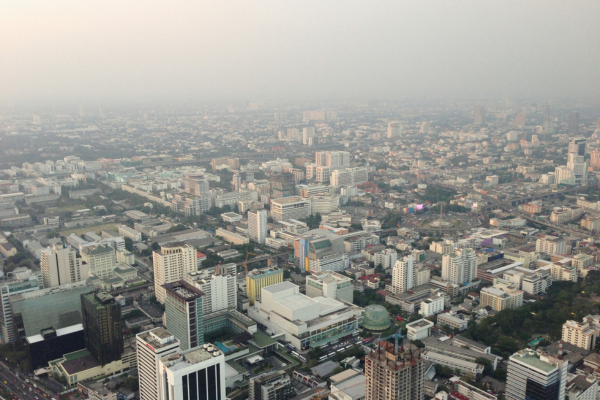
Union Environment Minister Bhupender Yadav has directed that action plans prepared by states to tackle air pollution in Delhi-NCR will undergo monthly ministerial reviews starting this month. This decision follows a series of meetings with the Rajasthan and Punjab governments to assess pollution control strategies and accelerate execution. Advertisement


The ministry has asked states to prepare sector-specific action plans with clearly assigned responsibilities. As these plans are being prepared about eight months ahead of the next pollution season, focused execution is expected to deliver tangible results. Rajasthan's plans have highlighted gaps in public transport in Alwar, Bhiwadi, Neemrana, and Bharatpur, which need immediate attention.
The minister recommended prioritizing the procurement of electric buses and enhancing charging infrastructure in urban areas, highways, and expressways. Unplanned truck parking along major corridors, particularly in Bhiwadi and Neemrana, was flagged as a pressing issue, requiring the identification of parking lots and structured parking plans to prevent congestion. City-specific road redevelopment, traffic congestion mitigation, and liquidation of legacy waste are also part of the strategy. Mechanical Road Sweeping Machines will be deployed wherever gaps exist. Around 600 locations in Alwar and Bhiwadi have been identified for roadside tree plantation with community involvement.
Industrial units failing to install Online Continuous Emission Monitoring Systems (OCEMS) will face closure notices immediately. Awareness campaigns for industrial emission control and municipal solid waste management through resident welfare associations are planned. Greening activities will be implemented using local plant species to improve air quality.
Complementing central directives, regional authorities are maintaining crop residue management machinery to curb stubble burning, with Punjab reporting a reduction compared with previous years. Compressed bio-gas plants are also promoted to manage agricultural residue sustainably. Urban agencies in the capital region have increased the use of mist sprays at metro stations and are installing anti-smog guns at construction sites to reduce dust and particulate matter. The Delhi Pollution Control Committee is progressing on a new headquarters to strengthen environmental monitoring and enforcement.

5th Jun, 2025

25th May, 2023

11th May, 2023

27th Apr, 2023
Advertisement








 Facebook
 Whatsapp
