Advertisement








When should a housing society in Mumbai start considering re...
From GST on JDAs to SEBI’s REIT reclassification and the S...
Stay ahead in the world of real estate with our daily podcas...
Stay ahead in the world of real estate with our daily podcas...
The government has announced plans for a 7 kilometre twin tube tunnel connecting Chaumasi in Kalimath Valley to Sonprayag, aimed at improving access and safety for Kedarnath pilgrims. Alongside this, a feasibility study is being conducted for a pedestrian tunnel and walkway to facilitate direct shrine access. Road widening from one lane to two lanes is also planned to handle growing traffic. These initiatives complement the ongoing 12.9 kilometre Sonprayag Kedarnath ropeway project by Adani Enterprises, which will further reduce travel time and manage increasing pilgrim numbers efficiently.
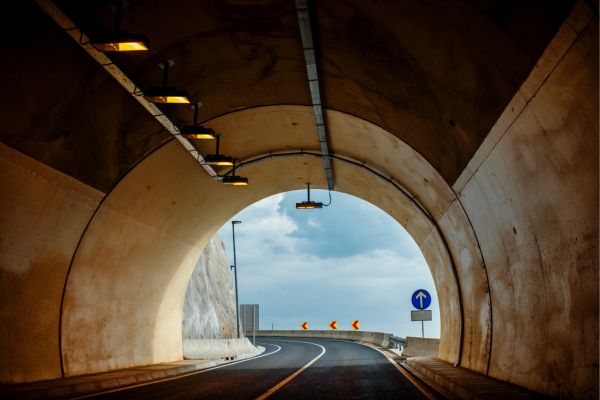
The government has advanced plans to construct a 7 kilometre twin tube tunnel on the route to Kedarnath, linking Chaumasi in Kalimath Valley near Guptkashi to Sonprayag. This initiative is designed to reduce travel time for pilgrims and improve safety along a route that often faces challenging weather conditions and traffic congestion. The tunnel will not only serve as a faster travel corridor but also include emergency exit provisions to enhance safety during natural hazards or unforeseen events. Advertisement


In addition, a feasibility study is being conducted for a pedestrian tunnel and walkway from Chaumasi, which will provide safer and more direct access for pilgrims walking to the shrine. The existing road network, mainly National Highway 107, currently operates as a single-lane road through the Kalimath Valley. Officials have proposed widening it into a two-lane corridor to manage the anticipated rise in pilgrim and tourist traffic once the tunnel becomes operational.
The government has also taken into account the sharp increase in pilgrim numbers in recent years. Last season, around 18 lakh devotees visited Kedarnath, and projections suggest further growth in the coming decade. Authorities are therefore focusing on creating robust infrastructure that can handle this surge while ensuring safety, especially during the monsoon season when landslides and flash floods are more frequent.
Geological and hydrological surveys are planned in advance of the tunnel construction to mitigate risks associated with the Himalayan terrain. This approach draws lessons from earlier tunnel projects in Uttarakhand, where difficult geological conditions caused delays and structural challenges. The planning phase emphasizes risk assessment and safety measures to ensure the tunnel can withstand seismic and weather-related events.
Alongside the tunnel, the 12.9 kilometre Sonprayag Kedarnath ropeway project, awarded to Adani Enterprises, continues to progress. The ropeway is expected to transport around 1,800 passengers per hour in each direction, significantly cutting travel time and easing congestion on the road. Together, the tunnel, road expansion, and ropeway form a coordinated approach to managing pilgrim movement efficiently and safely, providing multiple options for both vehicles and pedestrians.

5th Jun, 2025

25th May, 2023

11th May, 2023

27th Apr, 2023
Advertisement








 Facebook
 Whatsapp
