Advertisement








When should a housing society in Mumbai start considering re...
From GST on JDAs to SEBI’s REIT reclassification and the S...
Stay ahead in the world of real estate with our daily podcas...
Stay ahead in the world of real estate with our daily podcas...
India's flexible workspace market is set for strong growth, with total flex office stock in the top seven cities projected to exceed 100 million sq ft by 2027, up from around 72.3 million sq ft in 2025. Rising enterprise demand, particularly from technology, BFSI firms, and Global Capability Centres (GCCs), is driving this expansion. Bengaluru and Delhi NCR remain dominant, while Pune and Chennai show high penetration and fast growth. Tier II cities are increasingly targeted by operators, and flex space's share of overall office inventory is expected to reach over 10 per cent.
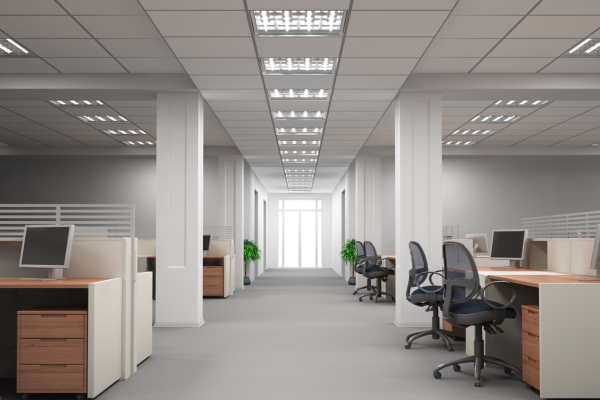
India's flexible workspace sector is projected to expand significantly in the coming years, with the combined stock in the seven largest metropolitan markets expected to surpass 100 million square feet by 2027, rising from roughly 72.3 million sq ft in 2025. The growth is largely driven by enterprises increasingly opting for flexible, managed, and technology-enabled office environments. Operators are responding with customised workspace solutions that cater to corporate requirements for scalability and adaptability. Advertisement


Flex space's share of total office inventory is expected to grow from around 8.5 per cent in 2025 to over 10.5 per cent by 2027. Annual seat uptake is forecast to reach nearly 200,000 seats, reflecting a rise of about 2 per cent compared with 160,000 seats per year in 2024-2025. This shows that companies are actively seeking flexible setups that can accommodate both hybrid work models and rapid business expansion.
Bengaluru continues to be the largest contributor, holding over 22 million sq ft of operational flex space, accounting for roughly 31 per cent of the national total. Delhi NCR follows with nearly 12.5 million sq ft, together representing about half of India's current flex inventory. Pune has the highest flex space penetration relative to total office stock, while Chennai has witnessed rapid growth, expanding its footprint more than five-fold since 2021.
Enterprise occupiers account for approximately 70 per cent of seat uptake. Within this, technology and BFSI companies make up nearly 60-65 per cent of demand. Engineering, manufacturing, and consulting firms are also gradually increasing their adoption of flexible workspaces. Global Capability Centres have become a key segment, contributing 40-45 per cent of enterprise demand in 2025 and expected to account for nearly half of uptake in 2026-2027, largely driven by higher-value operations.
Operators are increasingly focusing on fully managed, tech-enabled workspaces with sustainability features to meet evolving corporate requirements. Secondary Business Districts within major cities have emerged as prime locations due to accessibility and lower occupancy costs. Meanwhile, Tier II cities such as Ahmedabad, Coimbatore, Jaipur, and Kochi are attracting operators, offering rentals that are 30-35 per cent lower than top metropolitan centres. By 2027, these emerging markets are projected to contribute 10-15 per cent of the country's flex office stock, highlighting a strategic push beyond traditional urban hubs.

5th Jun, 2025

25th May, 2023

11th May, 2023

27th Apr, 2023
Advertisement








 Facebook
 Whatsapp
