Advertisement










Private equity has played a significant role in shaping Indi...
In today’s real estate landscape, fitness is often treated...
In this episode of Prop Personalities, we sit down with Hars...
Luxury real estate is one of the most talked-about segments ...
Welcome to Prop Personalities by Prop News Time - a podcast ...
The Delhi government has planned to install anti-smog guns at inter-state bus terminals to control dust pollution, beginning with the Kashmere Gate ISBT. A tender has been issued for eight roof-mounted units at the terminal, which handles more than 2,600 buses daily. The project is estimated to cost around INR 38.44 lakh. The move forms part of Delhi's wider air pollution control efforts, which already include anti-smog guns on buildings, mist spraying systems on roads and mechanised sweeping across key corridors.
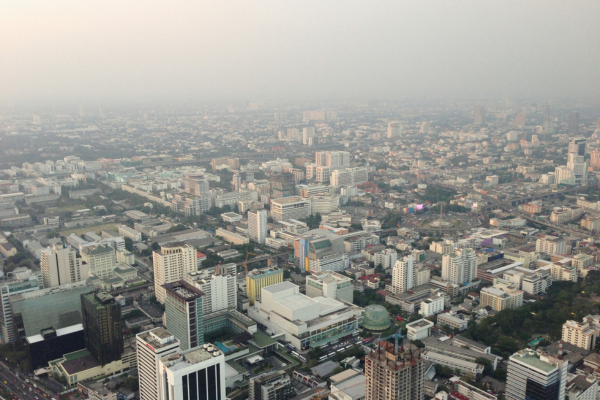
The Delhi government has decided to extend the use of anti-smog guns to inter-state bus terminals as part of its efforts to control dust-related air pollution in the city. The plan will begin with the Kashmere Gate ISBT, one of the busiest transport hubs in the capital. Advertisement


The Delhi Transport Infrastructure Development Corporation has floated a tender to install eight roof-mounted, auto-swing anti-smog guns at the Kashmere Gate terminal. These units are designed to spray fine water mist up to a distance of 30 metres to suppress dust particles generated by heavy bus movement. Each system will be connected to a 1,000-litre stainless steel water tank to ensure uninterrupted operation. The estimated cost for installing these units at Kashmere Gate is around INR 38.44 lakh.
Kashmere Gate ISBT, which has been operational since 1976, is the oldest of Delhi's three inter-state bus terminals. It manages more than 2,600 bus movements every day across nearly 60 bays, serving interstate routes, city buses and tourist services. The scale of daily operations and constant vehicular movement make dust control a persistent challenge at the terminal.
The decision to introduce anti-smog guns at ISBTs builds on measures already taken across Delhi to address air quality concerns. The city has earlier installed over 150 anti-smog guns on high-rise buildings and deployed more than 500 pole-mounted mist spraying systems along major roads. In addition, mechanised road sweepers and water sprinklers are being used regularly to reduce road dust. Authorities have also set a broader target of installing 2,500 mist spraying units across the city.
Officials involved in the project have indicated that bus terminals were identified as priority locations due to continuous traffic movement and the concentration of dust and emissions in enclosed terminal areas. Similar installations may be considered at other ISBTs after reviewing the outcome at Kashmere Gate.
Source PTI
FAQ
Q1. What step has the Delhi government taken to control air pollution at bus terminals
The Delhi government has decided to install anti-smog guns at inter-state bus terminals to control dust-related air pollution. This initiative is part of the city's broader air quality management strategy and will begin at the Kashmere Gate ISBT, one of the busiest transport hubs in the capital.
Q2. What are the key features of the anti-smog guns planned for Kashmere Gate ISBT
At Kashmere Gate ISBT, eight roof-mounted, auto-swing anti-smog guns will be installed. These units can spray a fine water mist up to a distance of 30 metres to suppress dust particles. Each system will be connected to a 1,000-litre stainless steel water tank to ensure continuous and effective operation.
Q3. What is the estimated cost of installing anti-smog guns at Kashmere Gate ISBT
The estimated cost for installing the eight anti-smog guns at Kashmere Gate ISBT is around INR 38.44 lakh. The tender for this project has been issued by the Delhi Transport Infrastructure Development Corporation.
Q4. Why was Kashmere Gate ISBT selected as the first location for this initiative
Kashmere Gate ISBT was selected because of its high level of daily activity and continuous vehicular movement. The terminal handles more than 2,600 bus movements every day across nearly 60 bays, making dust control a persistent challenge due to constant emissions and road dust.
Q5. How does this initiative fit into Delhi's wider air pollution control efforts
The installation of anti-smog guns at ISBTs builds on existing measures across Delhi, including anti-smog guns on high-rise buildings, pole-mounted mist spraying systems on major roads, and mechanised road sweeping. Authorities have also set a target of installing 2,500 mist spraying units citywide, with bus terminals identified as priority areas due to high dust concentration.

5th Jun, 2025

25th May, 2023

11th May, 2023

27th Apr, 2023
Advertisement





 Facebook
 Whatsapp
