Advertisement










Private equity has played a significant role in shaping Indi...
In today’s real estate landscape, fitness is often treated...
In this episode of Prop Personalities, we sit down with Hars...
Luxury real estate is one of the most talked-about segments ...
Welcome to Prop Personalities by Prop News Time - a podcast ...
The road transport ministry has outlined its key priorities for 2026, with a strong focus on rolling out seamless, barrier-free tolling on national highways and introducing a fresh Road Safety Bill in Parliament. The push comes as India continues to record nearly 1.8 lakh road deaths annually. Alongside policy reforms, several long-pending expressways are scheduled for completion through 2026. The ministry is also accelerating highway project awards, launching a public InvIT, and addressing structural bottlenecks that continue to delay hundreds of highway projects across the country.
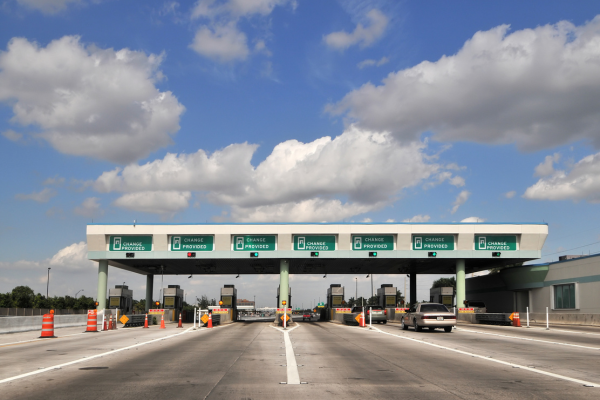
The road transport ministry has identified barrier-free tolling and road safety legislation as its central focus areas for 2026, as it looks to tackle persistent issues of congestion, revenue leakage and high accident fatalities on national highways. Road accidents continue to claim around 1.8 lakh lives every year, underlining the urgency behind the policy push. Advertisement


A series of large highway and expressway projects are lined up for inauguration over the coming year. These include the 1,362 km Delhi-Mumbai Expressway, targeted for completion by November 2026, the Amritsar-Jamnagar highway by December 2026, the Bengaluru-Chennai Expressway by June 2026, the Ahmedabad-Dholera Expressway by March 2026, the Indore-Hyderabad highway by May 2026, and the Delhi-Dehradun Expressway by January 2026. Many of these corridors have faced repeated delays in the past and are seen as critical for improving freight movement and regional connectivity.
On tolling reforms, the ministry plans to deploy multiple seamless, barrier-free tolling systems across national highways. An initial set of 10 tenders has already been floated. According to the minister, the cost of toll collection is expected to fall sharply from around 15 percent of total collections to about 3 percent. On annual toll revenues of roughly INR 50,000-60,000 crore, this could translate into savings of up to INR 8,000 crore each year, while also reducing waiting times at toll plazas and closing operational loopholes.
The new tolling framework combines Automatic Number Plate Recognition cameras supported by AI analytics with RFID-based FASTag systems. Vehicles will be charged automatically based on digital identification, without stopping at plazas. In cases of non-payment, electronic notices will be issued, and continued violations could lead to FASTag suspension and penalties linked to the VAHAN system.
Road safety remains a parallel priority. The ministry is preparing a new Road Safety Bill, which it plans to place before Parliament in the next session. The government has previously tried legislative measures in this area, alongside steps such as better road engineering, stricter enforcement and higher penalties for traffic violations. However, progress has been limited. India records around 5 lakh road accidents annually, with people aged 18-34 accounting for nearly two-thirds of fatalities. Official data shows road deaths rose by 2.3 percent in 2024 to more than 1.77 lakh, or about 485 deaths every day.
On the execution side, the highways ministry expects to award road projects covering about 12,000 km during 2025-26, and has set a higher target of 13,000-13,500 km for 2026-27. As part of its asset monetisation strategy, a public Infrastructure Investment Trust is slated for launch before March next year. The NHAI-sponsored Raajmarg Infra Investment Trust has already received approval from the Securities and Exchange Board of India and is aimed at attracting retail and domestic investors to highway assets.
Another major infrastructure milestone due in the coming months is the inauguration of the 13 km Zojila tunnel in April next year. Once operational, the tunnel will provide all-weather connectivity between Srinagar and Leh and reduce travel time across the Zojila pass from up to three hours to about 20 minutes.
Highway users have already seen some relief through the introduction of annual FASTag passes for private vehicles. Priced at INR 3,000, the pass allows up to 200 toll crossings in a year, bringing the average cost down to INR 15 per toll, compared to around INR 15,000 under the earlier system. The ministry has also reworked the build-operate-transfer model to revive private sector interest in highway development.
Despite these measures, challenges remain significant. According to government data, 649 highway projects worth about INR 4.2 lakh crore are currently delayed. The key reasons include land acquisition issues, contractor-related problems, force majeure events, law and order concerns, delays in forest and environmental clearances, pending railway approvals, utility shifting and other procedural bottlenecks. Dependence on imported materials such as bitumen and poor-quality detailed project reports have further added to execution risks.
Source PTI

5th Jun, 2025

25th May, 2023

11th May, 2023

27th Apr, 2023
Advertisement





 Facebook
 Whatsapp
