Advertisement








When should a housing society in Mumbai start considering re...
From GST on JDAs to SEBI’s REIT reclassification and the S...
Stay ahead in the world of real estate with our daily podcas...
Stay ahead in the world of real estate with our daily podcas...
The US government is working on a wide-ranging plan to counter China's growing hold over global port assets. The strategy includes supporting Western companies to acquire Chinese stakes, reviewing key maritime chokepoints, reviving US shipbuilding, and tightening controls on vessels linked to China. Major Chinese state-owned enterprises such as COSCO, China Merchants, and SIPG already own or manage significant port infrastructure worldwide, including Greece's Piraeus Port. Washington has expressed concern about the security and supply chain risks of this dominance and is looking for ways to strengthen its maritime position.
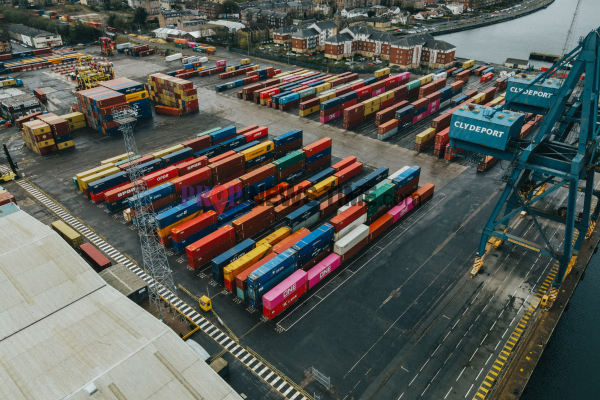
The US administration is preparing measures to reduce China's strong influence over global ports and maritime assets. Officials have raised concerns that the US commercial fleet is too limited to provide reliable support for military logistics during conflict and that growing reliance on Chinese-controlled ports creates vulnerabilities for trade and national security. Advertisement


A central part of the plan is to encourage Western and US firms to buy Chinese stakes in foreign seaports. One recent example is BlackRock's interest in acquiring the port operations of Hong Kong-based CK Hutchison across 23 countries. Such acquisitions are seen as a way to gradually shift ownership of strategic assets away from Chinese entities.
Chinese companies already hold significant influence in this sector. COSCO, one of the world's largest shipping and port operators, controls a 67 percent share in the Piraeus Port Authority in Greece. Washington has already listed COSCO among companies with military links and continues to monitor its activities closely. Other firms such as China Merchants and Shanghai International Port Group (SIPG) also manage or own overseas terminals, extending Beijing's reach in global shipping networks.
The US is paying particular attention to sensitive maritime chokepoints-narrow shipping passages critical for trade. The Federal Maritime Commission recently launched a review of such areas, including the Strait of Gibraltar, to understand potential risks from foreign control. Alongside this, officials are considering steps to rebuild US shipbuilding capacity, expand access to registries under US authority, and possibly introduce new fees for Chinese-flagged or Chinese-built vessels docking at American ports.
Concerns are not limited to Europe. In the Caribbean, Chinese investment in Jamaica's Kingston terminal has drawn attention, with US analysts warning that foreign equipment in key facilities may increase risks. In Australia, political leaders have also voiced support for reducing Chinese control, and US private equity firms have shown interest in taking over leases of some of these ports.
The current strategy builds on earlier warnings. A mid-2024 report by the Council on Foreign Relations found that Chinese firms were involved in more than 120 port projects worldwide. Previous US administrations had already placed restrictions on some Chinese companies and flagged them for military ties. The new push signals a stronger and more coordinated approach to address the issue.
Source Reuters

5th Jun, 2025

25th May, 2023

11th May, 2023

27th Apr, 2023
Advertisement








 Facebook
 Whatsapp
