Advertisement








When should a housing society in Mumbai start considering re...
From GST on JDAs to SEBI’s REIT reclassification and the S...
Stay ahead in the world of real estate with our daily podcas...
Stay ahead in the world of real estate with our daily podcas...
More than 20 lakh households across India have installed rooftop solar systems under the PM Surya Ghar Muft Bijli Yojana, and another 30 lakh are expected to be added soon, according to the Ministry of New & Renewable Energy. The scheme aims to benefit one crore households nationwide. The initiative has already enabled nearly half of its users to receive zero electricity bills, reflecting its impact on affordability and sustainability. With India targeting 550 GW of renewable energy by 2030, rooftop solar adoption is set to play a significant role.
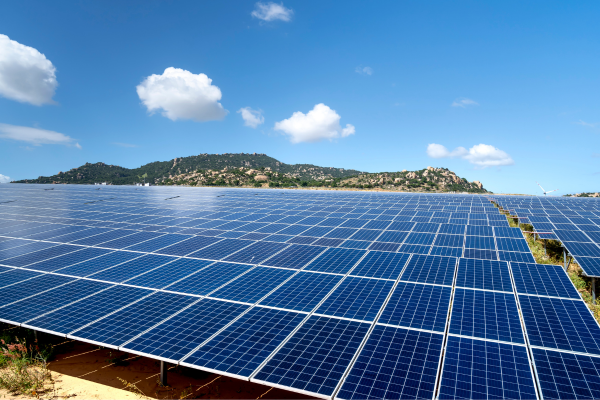
Over 20 lakh households in India have been equipped with rooftop solar systems under the PM Surya Ghar Muft Bijli Yojana, with another 30 lakh households expected to join shortly. The scheme, which targets one crore households, is being implemented across states on a demand-driven, first-come-first-serve basis. Advertisement


At a recent states' review meeting on the PM Surya Ghar scheme and PM-KUSUM scheme, Union Minister for New & Renewable Energy Shri Pralhad Joshi highlighted that the programme has already helped nearly half of its beneficiaries achieve zero electricity bills. He said this demonstrates how the scheme is reducing household energy expenses while promoting long-term sustainability.
The minister also announced approval for a utility-led model, designed for citizens who do not have rooftops to install solar panels. Several states had sought this model, and Andhra Pradesh has already presented a plan to roll it out at an accelerated pace. He urged other states to be proactive in adopting such approaches to maximize benefits under both schemes.
India's broader renewable energy goals were also emphasized. Out of the national target of 550 GW of renewable capacity by 2030, nearly 251.5 GW has already been installed from non-fossil fuel sources. To bridge the remaining gap of about 248 GW within the next five years, Joshi said close coordination between state agencies will be essential.
The solar manufacturing sector has also seen rapid progress. India currently has 100 GW of module manufacturing capacity, backed by investments worth INR 50,000 crore and direct employment for over 12,600 people. The government has set a target to achieve indigenously produced solar cells by 2028 and is now moving toward domestic production of wafers and ingots, strengthening the entire solar value chain within the country.
Regarding the PM-KUSUM 2.0 scheme, Joshi said the ministry will seek Union Cabinet approval for its next phase, which will follow once the ongoing phase concludes in March 2026. He further noted that the reduction in GST on renewable energy devices and services-from 12 percent to 5 percent-has made technologies like solar panels, windmills, biogas plants, and waste-to-energy systems more affordable, encouraging wider adoption.
While progress has been steady, Joshi pointed out challenges around grid connectivity, compliance, and licensing, urging states to resolve these issues promptly.
Source PTI

5th Jun, 2025

25th May, 2023

11th May, 2023

27th Apr, 2023
Advertisement








 Facebook
 Whatsapp
