Advertisement








When should a housing society in Mumbai start considering re...
From GST on JDAs to SEBI’s REIT reclassification and the S...
Stay ahead in the world of real estate with our daily podcas...
Stay ahead in the world of real estate with our daily podcas...
In a major move to boost India's clean energy transition, the Ministry of New & Renewable Energy (MNRE) and the Indian Wind Turbine Manufacturers Association (IWTMA) have agreed to establish dedicated task forces. The decision, made at a high-level roundtable, aims to expedite project execution and streamline policies to meet India's ambitious goal of 100 GW of wind energy by 2030. These task forces will address key challenges, including land acquisition and grid integration issues, with a focus on positioning India not only to meet its targets but also to become a global hub for wind energy manufacturing.
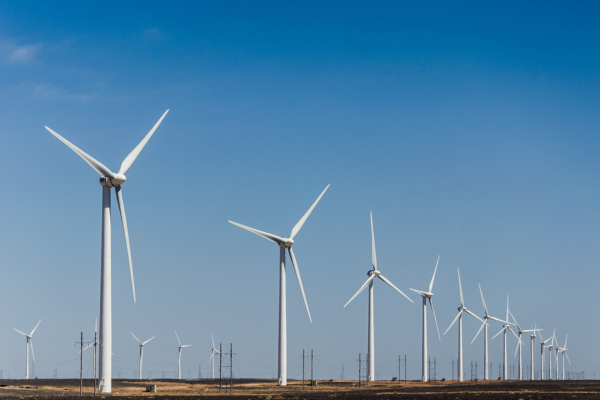
A collaborative effort between the Ministry of New & Renewable Energy (MNRE) and the Indian Wind Turbine Manufacturers Association (IWTMA) is set to accelerate India's renewable energy goals. Following a high-level roundtable, the two entities announced the formation of joint task forces to review existing policies and fast-track the execution of wind energy projects. The move comes as India works towards its 2030 target of 100 GW of wind power, a crucial component of its broader commitment to achieving 500 GW of non-fossil fuel capacity. Advertisement


Speaking at the event, Santosh Kumar Sarangi, Secretary of the MNRE, highlighted India's unique position in the global wind energy landscape, citing both its natural resources and its robust manufacturing base. The task forces, he stated, will ensure that India not only meets but also exceeds its wind energy target while strengthening its role as a global manufacturing hub.
The decision to establish the task forces is a direct response to a number of persistent challenges that have impeded the scaling of wind energy projects. These include the complex and time-consuming processes of land acquisition, inadequate grid and transmission infrastructure, and regulatory hurdles. The task forces will specifically address these issues to create a more efficient ecosystem for project development.
Girish Tanti, Chairman of the IWTMA, noted the "huge uptake and demand" for wind energy due to its ability to provide cost-effective, round-the-clock power. The "round-the-clock" concept is key to addressing the intermittency of renewable sources. It is achieved by combining wind energy with other complementary sources like solar and integrating it with modern battery energy storage systems to ensure a continuous power supply. The formation of these dedicated task forces marks a new chapter in advancing India's wind energy agenda, signaling a coordinated and determined approach from both the government and the industry.
Source- PTI

5th Jun, 2025

25th May, 2023

11th May, 2023

27th Apr, 2023
Advertisement








 Facebook
 Whatsapp
