Advertisement










Private equity has played a significant role in shaping Indi...
In today’s real estate landscape, fitness is often treated...
In this episode of Prop Personalities, we sit down with Hars...
Luxury real estate is one of the most talked-about segments ...
Welcome to Prop Personalities by Prop News Time - a podcast ...
The East-West Industrial Corridor Highway in Arunachal Pradesh is a transformative infrastructure project designed to enhance regional connectivity and bolster economic growth along the lower Himalayan foothills. Stretching nearly 967 km from the tri-junction of Bhutan, Assam, and Arunachal Pradesh to that of Nagaland, Assam, and Arunachal Pradesh, the two-lane highway forms part of the Special Accelerated Road Development Programme for the North East (SARDP-NE). Integrating an existing national highway section and extending through nine districts, it aims to connect strategic border areas while advancing India's 'Look East' policy. Spearheaded by the state government with support from central ministries, the project combines multiple funding and construction models to deliver a key industrial corridor with significant strategic and economic implications.
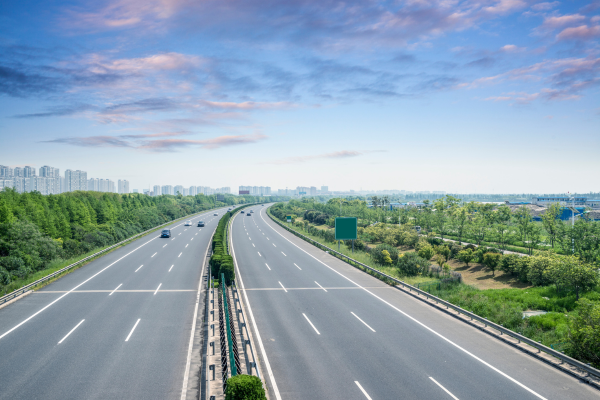
The East-West Industrial Corridor Highway, proposed as a two-lane route spanning 966.78 km, is poised to become a crucial artery along the lower foothills of the Himalayas in Arunachal Pradesh. Beginning at Bhairabkunda where the borders of Bhutan, Assam, and Arunachal Pradesh converge the highway stretches eastward to Kanubari, located at the tri-junction of Nagaland, Assam, and Arunachal Pradesh. Advertisement


This corridor forms a vital part of the Special Accelerated Road Development Programme for the North East (SARDP-NE), reflecting the central government's focus on enhancing connectivity in the region. The highway will integrate an existing 274.20 km stretch between Pasighat and Manmao, which already meets national highway standards, while approximately 692.58 km of new construction or upgrades will complete the route. Designed to accommodate industrial and commercial traffic, this two-lane highway aims to serve as a significant industrial corridor.
Strategically positioned near the India-China Line of Actual Control (LAC) and bordering Bhutan and Myanmar, the highway enhances national security by improving accessibility to sensitive areas. Moreover, it supports India's 'Look East' policy by strengthening infrastructure links to Southeast Asia, facilitating economic and geopolitical engagement.
The Government of Arunachal Pradesh (GoAP) leads the initiative, with oversight and coordination involving the Ministry of Road Transport and Highways (MoRTH), National Highways Authority of India (NHAI), Border Roads Organisation (BRO), and various ministries including Environment, Defence, and External Affairs. This multi-agency collaboration is crucial given the complex planning requirements and strategic nature of the project.
Funding primarily comes from the Central Government through MoRTH, with GoAP contributing to pre-construction tasks such as land acquisition and Detailed Project Report (DPR) preparation. Around 776 km of the highway is planned to be developed under the Build-Operate-Transfer (BOT) Annuity mode, while the remaining sections will be executed through Engineering, Procurement, and Construction (EPC) contracts or Item Rate contracts.
This ambitious project has been in discussion since at least 2015 when the then Union Minister Nitin Gadkari agreed in principle to fund the highway as a state highway, conditional on Arunachal Pradesh completing essential preparatory work. The successful realisation of the corridor will mark a significant milestone in the development of Arunachal Pradesh's infrastructure, economy, and national security framework.
Its potential to catalyse industrial growth in a previously inaccessible region can spur socio-economic development and create new opportunities for local communities. As the government continues to navigate the complex logistical and environmental challenges, the corridor's progress will remain a critical indicator of the North East's growing prominence in India's infrastructure landscape.

5th Jun, 2025

25th May, 2023

11th May, 2023

27th Apr, 2023
Advertisement





 Facebook
 Whatsapp
