Advertisement










When should a housing society in Mumbai start considering re...
From GST on JDAs to SEBI’s REIT reclassification and the S...
Stay ahead in the world of real estate with our daily podcas...
Stay ahead in the world of real estate with our daily podcas...
Foreign investors increasingly favor land plots over apartments in Dubai's real estate market, drawn by greater flexibility, higher returns, and long-term value potential. Plot transactions reached a record high earlier this year, with over 180,000 deals valued above AED 500 billion. Prime areas like Emirates Hills, Palm Jumeirah, and Dubai Hills are attracting high-end buyers, while more affordable investment zones such as Dubai South, JVC, and Dubailand are gaining traction among mid-range investors. Experts say the average returns on land plots significantly surpass those of apartments, boosted by tax incentives, upcoming mega projects, and favorable regulations.
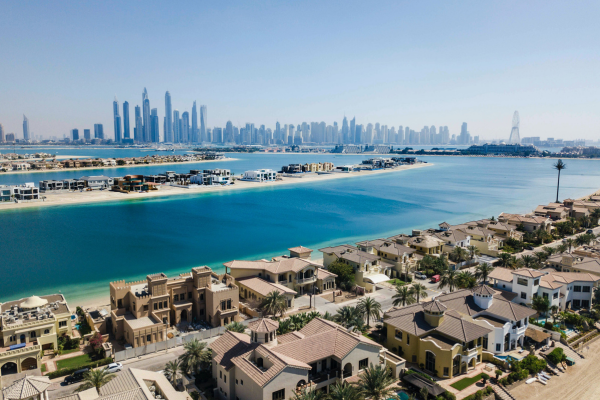
Historically a magnet for global investors, Dubai's real estate market is witnessing a notable shift in investment patterns. Earlier this year, foreign investors increasingly turned their attention from apartments to land plots, driven by higher returns, greater flexibility, and long-term appreciation potential. Advertisement


In the property landscape, a plot refers to undeveloped land with commercial classification, suitable for construction projects or resale. These can be used to develop office spaces, retail outlets, villas, or townhouses. Many investors are also acquiring such land intending to resell it later at a profit, banking on Dubai's expanding urban landscape.
The market recorded a surge in plot transactions over the past year, crossing 180,000 deals collectively valued at over AED 500 billion. Resale profits alone contributed nearly AED 60 billion, marking a 34% jump compared to the year before. When viewed over five years, the growth has been staggering-up by 1,300%.
This uptrend highlights the growing confidence investors have in Dubai's real estate future. Much of this optimism stems from transparent digital processes, clear regulatory frameworks, and long-term development strategies implemented by Dubai's Land Department and the local government.
Brokerage firm Betterhomes observed that foreign buyers were especially active in high-end locations such as Emirates Hills, Dubai Hills, and Palm Jumeirah, where average land plot prices hover around AED 50 million. However, regions with a lower investment threshold are also gaining momentum.
Dubai South, strategically located near Al Maktoum International Airport and Expo City, offers strong prospects for commercial and residential development at more accessible rates. Similarly, Dubailand has emerged as a popular zone for investors eyeing long-term appreciation, especially with the ongoing infrastructure expansion.
Jumeirah Village Circle (JVC) is another hotspot, particularly among mid-budget investors. It offers relatively affordable plots and benefits from high rental demand, thanks to its central location.
According to Olga Poletskaya, CEO of Colife Invest, average returns from land plots range between 15% and 25%, significantly outpacing the 7% to 10% typically seen in the apartment and villa segments. She pointed out that some deals have even delivered double returns.
One striking example is the resale of a plot on an artificial sand island shaped like a seahorse, where the seller achieved a 242% return, earning USD 23 million after buying it for USD 9.9 million and holding it for just two years.
Several factors are at play. Plot prices in developing districts are rising faster than completed properties, giving investors a potential edge. There's also unmatched flexibility owners can construct customized buildings or simply hold the plot for future resale.
Additionally, entry prices are often lower than finished homes, and Dubai's tax-free property regime (with no property tax or capital gains tax) adds a significant edge.
Passive income potential is another draw; landowners can lease the space for purposes such as warehousing or parking. With upcoming mega-projects like Expo City, Al Maktoum Airport's expansion, and the Dubai Urban Plan 2040, demand for land is expected to intensify through 2030.
The shift reflects broader market maturity, where investors are increasingly making calculated bets aligned with infrastructure growth and future city planning. As Dubai continues to position itself as a global urban hub, land investments are likely to become a cornerstone of strategic real estate portfolios.

5th Jun, 2025

25th May, 2023

11th May, 2023

27th Apr, 2023
Advertisement








 Facebook
 Whatsapp
