Advertisement








When should a housing society in Mumbai start considering re...
From GST on JDAs to SEBI’s REIT reclassification and the S...
Stay ahead in the world of real estate with our daily podcas...
Stay ahead in the world of real estate with our daily podcas...
The newly constructed vertical lift rail bridge at Pamban, linking Ramanathapuram with Rameswaram, has been officially completed and handed over to Southern Railway. Replacing the 108-year-old British-era cantilever bridge, this modern structure is a technological feat designed to withstand the severe corrosive climate of the Bay of Bengal. Executed by Rail Vikas Nigam Limited (RVNL) with inputs from Spanish firm TYPSA and Indian institutes, the project faced multiple challenges from monsoon delays to COVID-19-related disruptions resulting in a cost escalation from INR 279 crore to INR 531 crore. Notably, over 97% of the materials used were domestically sourced.
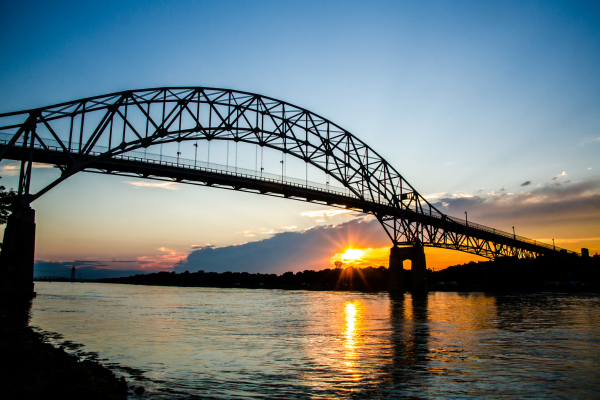
Glistening under the summer sun, the new Pamban sea bridge has emerged as a shining symbol of Indian engineering prowess. This advanced vertical lift bridge now connects the mainland of Ramanathapuram with the island of Rameswaram, streamlining train operations across the Palk Strait. It replaces the century-old British-built cantilever bridge, which had grown structurally weak due to corrosion, forcing trains to decelerate while crossing. Advertisement


Determined to modernise the ageing infrastructure, Southern Railway commissioned a single-piece lift span bridge between two sub-structures. Since India lacked any other bridge with a vertical lift span apart from the original Pamban bridge, the engineers of Rail Vikas Nigam Limited (RVNL), the agency responsible for implementing the project, explored design inspirations from abroad.
According to RVNL's Chairman and Managing Director, Pradeep Gaur, the team assessed nearly 2,000 bridges in the United States before concluding that a vertical lift span would best meet Indian Railways' needs in terms of stability and affordability. They selected a design that would endure Pamban's severe corrosion conditions-the second-most corrosive maritime environment in the world.
Spanish consulting firm TYPSA was brought on board to finalise the structural design, which was subsequently reviewed by IIT-Madras and modified by IIT-Bombay. The modifications included reinforcing the vertical lift with an additional 60 tonnes of steel for greater structural stability. This change required new machinery and extended timelines. Compounding the delays was the disruption in global supply chains due to the COVID-19 pandemic. For instance, a U.S. company producing composite sleepers for the project had to halt production after completing only 500 of the 2,500 units due to pandemic-induced shutdowns.
Construction teams at the site encountered considerable logistical and environmental hurdles. Limited space in the sea, strong winds, and a narrow access road from the Pamban side hindered the movement of massive equipment. The shallow yet turbulent sea, combined with monsoon constraints that allowed work only half the year, further complicated the process. Materials could only be delivered via barges, which frequently ran aground at low tide and had to wait for high tide to resume operations.
The delay, lasting over two years, pushed the cost up from INR 279 crore to INR 531 crore. Yet Mr. Gaur pointed out that the longest vertical lift bridge in Hamburg, Germany, took five years to build despite its shorter 133-metre span. In contrast, the Pamban bridge spans 2.08 km with a 72.5-metre lift span and was completed in roughly the same period. He expressed confidence that with current experience, a similar bridge could now be built in just three years.
To tackle the region's corrosion challenges, RVNL adopted a global standard painting scheme after studying proven methods in Florida, considered the world's most corrosive zone. The painting system, which includes zinc metallising, Epilux zinc-rich primer, and Polysiloxane paint, has been proven to withstand corrosion for up to 40 years. Though designed to last 38 years per coat, Mr. Gaur suggested that with proper maintenance, it could remain effective for over 55 years. Indian Railways typically repaints steel structures every five years, but the old Pamban bridge had deteriorated so badly that repainting was needed every three months. Mr. Gaur noted that this robust new coating could delay the next paint job for at least five decades.
The commissioning of the new bridge earlier this week also restored train services between Mandapam and Rameswaram after more than two years. Rail traffic had been suspended since late December 2022 due to the deteriorating condition of the old structure.
The completion of the new Pamban sea bridge signifies a transformative step in Indian infrastructure, blending cutting-edge technology, international collaboration, and domestic execution. Beyond its operational significance, the project has set a new benchmark in corrosion resistance, design longevity, and construction quality under harsh maritime conditions.

5th Jun, 2025

25th May, 2023

11th May, 2023

27th Apr, 2023
Advertisement








 Facebook
 Whatsapp
