Advertisement










Private equity has played a significant role in shaping Indi...
In today’s real estate landscape, fitness is often treated...
In this episode of Prop Personalities, we sit down with Hars...
Luxury real estate is one of the most talked-about segments ...
Welcome to Prop Personalities by Prop News Time - a podcast ...
Jaipur Metro Line-II, connecting India Gate to Ambabari, is set to begin construction in mid-2025, marking a major boost for the city's urban transport system. The 23.8 km corridor, featuring both elevated and underground sections, will pass through key areas like Ajmer Road, Sodala, Civil Lines, and MI Road. The first phase will prioritize the 12 km stretch from India Gate to Ajmer Road. Funding is being secured from institutions like AIIB and JICA, alongside state contributions. The project aims to ease traffic congestion, reduce private vehicle use, and stimulate real estate growth along the metro route.
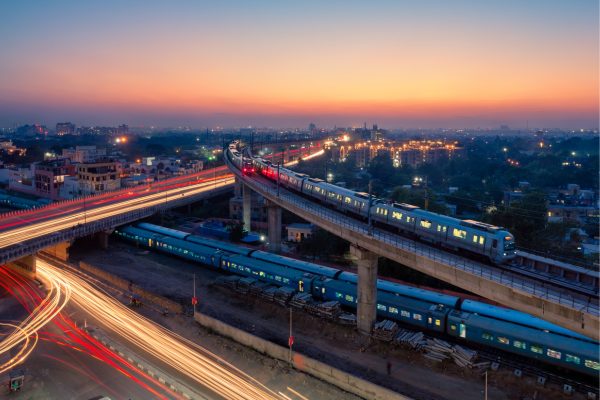
The construction of Jaipur Metro Line-II is set to begin in mid-2025, marking a significant step in the city's urban transport development. This new corridor, which will run from India Gate to Ambabari, aims to enhance connectivity across Jaipur, easing congestion and improving commuting efficiency. The project, which has been in the planning stage for several years, is now gaining momentum with approvals and funding coming through. Advertisement


Jaipur Metro Line-II will span approximately 23.8 km and include both elevated and underground sections. The corridor will pass through major residential and commercial hubs, including areas like Ajmer Road, Sodala, Civil Lines, and MI Road, ensuring a well-integrated transport network. The first phase of the project, covering around 12 km from India Gate to Ajmer Road, is expected to be prioritized, with construction set to begin in mid-2025.
The project is expected to significantly improve urban mobility in Jaipur, reducing dependence on private vehicles and easing traffic congestion on key roads. Currently, Jaipur Metro's only operational line, the 9.6 km Phase 1A (Mansarovar to Chandpole), caters to a limited number of passengers. The expansion with Line-II is expected to attract more commuters by providing faster and more convenient travel options.
One of the key challenges in executing the project has been securing funding and approvals. The Rajasthan government has been in discussions with financial institutions, including the Asian Infrastructure Investment Bank (AIIB) and Japan International Cooperation Agency (JICA), for financial assistance. A substantial portion of the funding is expected to come from these international agencies, while the state government will also allocate resources.
The Jaipur Metro Rail Corporation (JMRC) has been working on detailed project reports (DPRs) and has taken insights from metro systems in other Indian cities to ensure smooth execution. Cities like Bengaluru, Pune, and Chennai have recently expanded their metro networks, learning from the implementation challenges faced in Delhi and Mumbai. Jaipur's new metro corridor is being planned with modern infrastructure, focusing on multimodal integration with buses and other local transport options.
In addition to reducing travel time, the metro expansion is expected to drive real estate growth along the corridor. Areas near planned metro stations, such as Ajmer Road and Civil Lines, are likely to see a rise in property demand, similar to what happened in Delhi and Bengaluru after metro expansions. Developers in Jaipur are already anticipating increased interest in residential and commercial properties along the Line-II route.

5th Jun, 2025

25th May, 2023

11th May, 2023

27th Apr, 2023
Advertisement





 Facebook
 Whatsapp
