Advertisement










Private equity has played a significant role in shaping Indi...
In today’s real estate landscape, fitness is often treated...
In this episode of Prop Personalities, we sit down with Hars...
Luxury real estate is one of the most talked-about segments ...
Welcome to Prop Personalities by Prop News Time - a podcast ...
Chhatrapati Shivaji Maharaj International Airport (CSMIA) authorities have proposed a significant increase in the User Development Fee (UDF). If approved, the revised charges are expected to come into effect from the next financial year. The proposal suggests raising UDF to INR 463 for international passengers and INR 325 for domestic travellers. While the Mumbai International Airport Limited (MIAL) has sought to hike the UDF, it has simultaneously recommended a 35 per cent reduction in landing and parking charges to provide some relief to airlines. A final decision on the proposed charges is anticipated to be made following a stakeholder meeting held earlier this week in New Delhi.
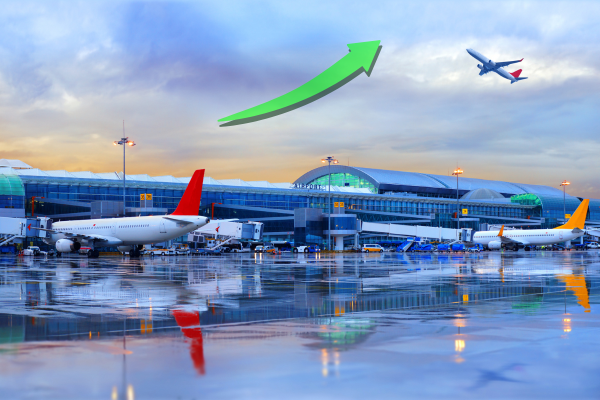
Flying out of Mumbai's Chhatrapati Shivaji Maharaj International Airport (CSMIA) is likely to become more expensive, with authorities proposing a significant increase in the User Development Fee (UDF). If approved, the revised charges are expected to come into effect from the forthcoming financial year. A final decision regarding the proposed UDF hike was anticipated to be taken during a meeting held earlier this week in New Delhi. Advertisement


According to the proposal, the UDF for international travellers may rise to INR 650, while domestic passengers could be required to pay INR 325. At present, international passengers are charged INR 187 as UDF, and domestic travellers are not subjected to any such fee. As is customary, this fee is embedded in the price of an airline ticket, similar to taxes and fuel surcharges. In previous instances where airports have introduced or increased these charges, airlines have typically passed the cost on to passengers.
A source quoted by PTI stated that the proposed tariff structure has already been submitted to the Airport Economic Regulatory Authority (AERA) for its approval. The source mentioned that the proposal is broadly aligned with what AERA has previously sanctioned for Mumbai International Airport Ltd (MIAL). AERA is responsible for determining tariffs at all major airports across India-defined as those handling 3.5 million passengers or more annually.
While MIAL has sought approval for the UDF increase, it has simultaneously proposed a 35% reduction in landing and parking charges to ease the financial burden on airlines. This reduction is expected to help airlines manage their operational costs more effectively, potentially enabling them to maintain competitive fares despite the higher UDF.
CSMIA's infrastructure is aging and in urgent need of modernisation. Over the next five years, the airport will invest INR 10,000 crore towards upgrading the airport to international standards, with a focus on enhancing passenger convenience. Planned improvements include self-baggage drop facilities, digital travel solutions, e-gates, facial recognition systems, upgraded lounges, and various sustainability initiatives. MIAL also plans to demolish Terminal 1, which currently handles 15 million passengers per year, to construct a new terminal with an increased capacity of 20 million annual passengers.
Mumbai airport, the second busiest in India, currently operates from a single runway and two terminals, handling around 55 million passengers annually. The existing Terminal 2, along with the upcoming Navi Mumbai International Airport will collectively manage the capacity gap created by the demolition of Terminal 1.

5th Jun, 2025

25th May, 2023

11th May, 2023

27th Apr, 2023
Advertisement





 Facebook
 Whatsapp
