Advertisement








When should a housing society in Mumbai start considering re...
From GST on JDAs to SEBI’s REIT reclassification and the S...
Stay ahead in the world of real estate with our daily podcas...
Stay ahead in the world of real estate with our daily podcas...
The Bengaluru-Chennai Expressway, a key infrastructure project, is set to boost connectivity and economic growth across Karnataka, Andhra Pradesh, and Tamil Nadu. Spanning 262 km, the expressway will cut travel time between the two cities from six hours to three. While progress is strong in Karnataka, construction delays in Andhra Pradesh and Tamil Nadu have pushed the completion deadline to June 2026. Once operational, the expressway will enhance logistics efficiency, drive real estate development in areas like Hoskote and Sriperumbudur, and strengthen industrial links. Land values along the corridor are rising, positioning the route as a future growth hub.
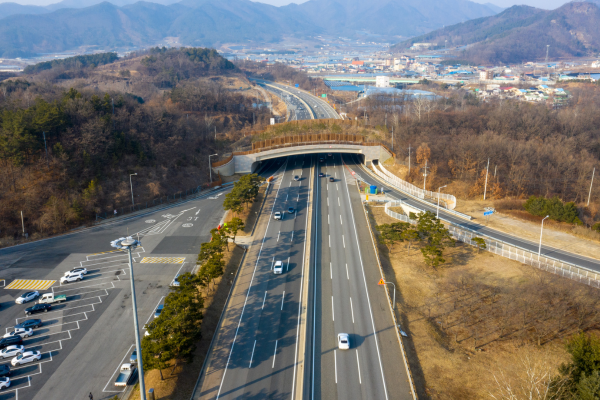
The Bengaluru-Chennai Expressway, one of South India's most ambitious infrastructure projects, is set to significantly enhance regional connectivity while unlocking new opportunities for economic and real estate growth. Originally expected to be completed by August 2025, the National Highways Authority of India (NHAI) has now revised the project timeline, with full commissioning likely by June 2026 due to construction delays in Andhra Pradesh and Tamil Nadu. Advertisement


Stretching nearly 262 kilometers, this greenfield expressway will link Hoskote near Bengaluru to Sriperumbudur near Chennai, passing through Karnataka, Andhra Pradesh, and Tamil Nadu. With a design speed of 120 km/h, it aims to cut the travel time between the two metro cities from over six hours to approximately three, reducing fuel consumption and enhancing logistics efficiency along one of South India's busiest trade corridors.
Progress has been notable in Karnataka, where a 68 to 70-kilometer section between Hoskote and Bethamangala was completed and informally opened to public traffic in December 2024. This stretch currently handles approximately 1,600 to 2,000 vehicles daily. However, the expressway's sections in Andhra Pradesh and Tamil Nadu remain under construction, with officials confirming that the remaining work will likely take until mid-2026 to finalize
While addressing a query raised in the Rajya Sabha, Union Minister for Road Transport Shri Nitin Gadkari confirmed the new deadline, attributing delays to infrastructure-related bottlenecks, including the relocation of electricity towers along the expressway. According to NHAI engineers, land acquisition did not present significant challenges, as much of the expressway traverses open land. However, securing approvals for utility relocations has extended project timelines.
Despite these hurdles, the expressway is poised to act as a crucial economic catalyst, particularly in satellite towns and industrial belts such as Hoskote and Sriperumbudur. Improved accessibility is expected to fuel demand for residential and commercial properties in these regions, drawing investor interest and encouraging large-scale developments.
The project is also expected to strengthen the industrial and logistics linkages between Bengaluru and Chennai, both key manufacturing and technology centers. Enhanced connectivity will likely drive trade volumes, reduce freight costs, and create a more efficient transportation network across South India.
Meanwhile, traffic congestion on feeder roads leading to the expressway remains a pressing concern. Entry points near Bengaluru, including Old Madras Road, SV Road Metro Station, and KR Pura, are witnessing bottlenecks, prompting authorities to propose widening the Bengaluru-Kolar highway from four lanes to ten lanes to ease traffic flow and accommodate the projected surge once the expressway becomes fully operational.
Although modern safety features and traffic management systems have already been incorporated into the expressway, NHAI is awaiting final regulatory clearances before initiating toll collection across operational segments.
Beyond transportation and trade benefits, the expressway is expected to reshape regional real estate dynamics. Land values along the corridor are already witnessing an upward trend, with developers eyeing these pockets for residential and commercial projects. Hoskote and Sriperumbudur, in particular, are emerging as key real estate hotspots, driven by improved accessibility and proximity to industrial zones.
Despite construction delays shifting the full launch of the Bengaluru-Chennai Expressway to mid-2026, the project remains a cornerstone for South India's infrastructural and economic expansion. With its potential to slash travel times, reduce logistic costs, and unlock significant real estate value along its route, the expressway is poised to drive long-term growth across Karnataka, Andhra Pradesh, and Tamil Nadu. As connectivity between Bengaluru and Chennai strengthens, the corridor is likely to evolve into a key growth engine for industries, investors, and local communities, redefining the economic landscape of South India.

5th Jun, 2025

25th May, 2023

11th May, 2023

27th Apr, 2023
Advertisement








 Facebook
 Whatsapp
