Advertisement








When should a housing society in Mumbai start considering re...
From GST on JDAs to SEBI’s REIT reclassification and the S...
Stay ahead in the world of real estate with our daily podcas...
Stay ahead in the world of real estate with our daily podcas...
The Delhi Metro Rail Corporation (DMRC) announced the introduction of urban freight services on its network, aiming to transport packages across Delhi-NCR during non-peak hours. The initiative, in partnership with logistics company Blue Dart, is designed to facilitate faster movement of time-sensitive shipments by utilising the last coaches of the first few trains each day. Inspired by a similar pilot project on the Madrid Metro, DMRC intends to adopt a hybrid model combining passenger and freight transportation. The project seeks to enhance supply chain efficiency, reduce road congestion, and promote environmentally sustainable logistics.
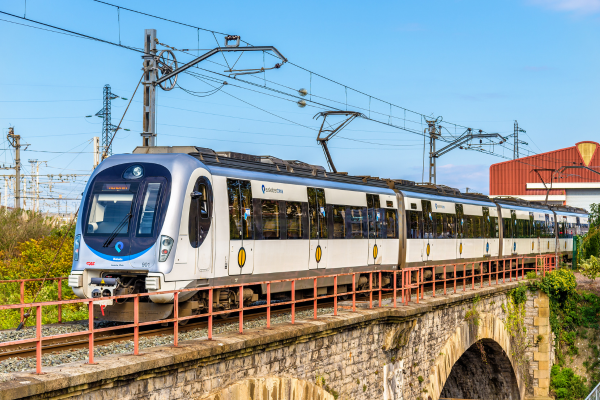
The Delhi Metro Rail Corporation (DMRC) announced earlier this week that it would be introducing urban freight (cargo) services on its network. Packages are set to be transported across the Delhi-NCR region via metro trains during non-peak hours. Advertisement


DMRC has signed a memorandum of understanding (MoU) with logistics company Blue Dart to facilitate the faster movement of time-sensitive shipments. They noted that the last coaches of the first few trains of the day would be utilised for this purpose, thereby minimising any impact on passenger services. According to the officials, DMRC had taken inspiration from the Madrid Metro, where a similar pilot project is currently being implemented to transport cargo.
Anuj Dayal, principal executive director of corporate communications at DMRC, told multiple reporters that this innovative initiative-described as the first-of-its-kind in the entire South Asia Pacific region-reaffirmed the commitment of both DMRC and Blue Dart towards environmental stewardship and the advancement of more sustainable logistics solutions.
Dayal explained that this solution would lessen dependence on road transport, which in turn would alleviate congestion and decrease vehicular emissions. He added that DMRC would optimise its resources through this service while reinforcing its pledge to provide environmentally friendly transport options. DMRC added that by integrating first-mile and last-mile connectivity through metro-enabled logistics solutions and Micro Parcel Hubs, the project would improve supply chain efficiency.
The Madrid Metro commenced its pilot project in October 2024, using a dedicated train to deliver parcels between 7 and 8 pm. DMRC clarified that it had been studying the Madrid project but intended to implement a hybrid model in Delhi-one where passengers and freight share the same train, rather than deploying a dedicated train solely for cargo.
Dayal also mentioned that DMRC was actively collaborating with Madrid Metro to exchange insights and best practices related to urban freight transportation. He said that initial trials had already been conducted on the Blue Line and that the initiative would be gradually expanded to other metro lines, with comprehensive services to be introduced in a phased manner.
Delhi Metro's passenger ridership had suffered a significant decline following the Covid-19 pandemic, raising concerns about its revenue-generating capacity. While daily ridership figures are presently reaching all-time highs, the Union government has been exploring ways to enhance the profitability of metro systems across India.
As Delhi Metro gradually rolls out this service across its lines, it marks a significant step towards integrating public transport with last-mile logistics, ultimately enhancing urban living standards while strengthening metro profitability.

5th Jun, 2025

25th May, 2023

11th May, 2023

27th Apr, 2023
Advertisement








 Facebook
 Whatsapp
