Advertisement










Private equity has played a significant role in shaping Indi...
In today’s real estate landscape, fitness is often treated...
In this episode of Prop Personalities, we sit down with Hars...
Luxury real estate is one of the most talked-about segments ...
Welcome to Prop Personalities by Prop News Time - a podcast ...
Patna is undergoing a major infrastructure overhaul, led by the INR 13,365.77 crore Patna Metro project, with the 6.6-km priority corridor set to open by August 15, 2025. The city will also host India's longest road bridge-the 9.76-km Kacchi Dargah-Bidupur Bridge-over the Ganges, and a INR 3,712.40 crore Patna-Arrah-Sasaram expressway. Under the Smart Cities Mission, 17 of 33 projects are complete, while the proposed Greater Patna plan will extend city limits to 14 new blocks. Together, these initiatives aim to ease congestion, boost connectivity, and prepare Patna for a projected 6 million population by 2050.
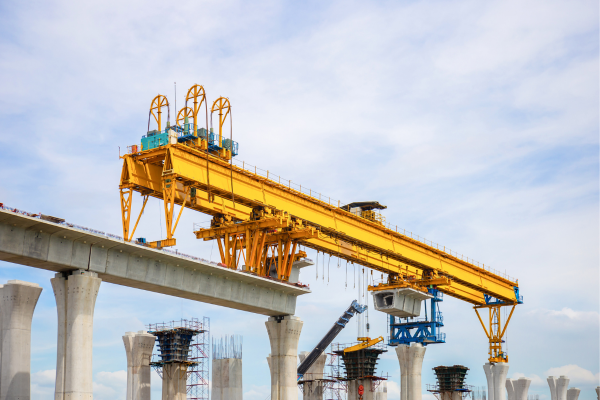
Patna, the capital of Bihar, is undergoing a significant transformation with a range of ambitious infrastructure projects. At the heart of this transformation is the Patna Metro Rail Project, one of the largest urban infrastructure initiatives in the region. The project comprises two corridors-Corridor 1 runs east-west from Danapur to Khemni Chak, covering 16.86 km, while Corridor 2 spans 14.05 km from Patna Junction to New ISBT in a north-south direction. Advertisement


The INR 13,365.77 crore project is being executed by the Delhi Metro Rail Corporation (DMRC) and will feature 24 stations in total, including underground and elevated sections. The first segment, covering the 6.6-km priority corridor from Malahi Pakri to Patliputra Bus Terminal, is scheduled to be operational by August 15, 2025. The entire metro project is expected to significantly ease congestion in Patna's narrow and crowded roads and offer a cleaner, faster alternative for daily commuters.
Alongside urban transport, the government is investing in regional highway development through the Patna-Arrah-Sasaram corridor. This four-lane access-controlled expressway will span 120.10 kilometers and improve connectivity between major commercial towns in south-central Bihar. Built under the Hybrid Annuity Model, the project is estimated to cost INR 3,712.40 crore and is set to facilitate smoother movement of goods and passengers between Patna and the southern part of the state, enhancing economic integration.
Another iconic project shaping Patna's future is the Kacchi Dargah-Bidupur Bridge, a 9.76-km long six-lane extradosed bridge being built over the Ganges River. Once completed, it will be India's longest road bridge, linking Kacchi Dargah on Patna's southern edge to Bidupur in Hajipur. The bridge is expected to drastically reduce travel time across the river, easing pressure on the Mahatma Gandhi Setu and enhancing connectivity between northern and southern Bihar. The project is anticipated to be completed by mid-2025 and is being closely monitored by the state road construction department.
Under the Smart Cities Mission, Patna has launched multiple projects to upgrade basic urban services and public spaces. Out of 33 planned projects, 17 have been completed while the remaining are in various stages of implementation. These initiatives include LED street lighting, solid waste management improvements, smart bus stops, and digital monitoring of public services. Though the implementation has been slower than anticipated, officials expect a pickup in pace by the end of 2025 as key contracts have been awarded and project execution is being tracked digitally.
Looking further ahead, the proposed Greater Patna Development Plan is expected to redefine how the city expands. The plan envisions extending administrative boundaries to include 14 blocks from adjacent subdivisions such as Danapur, Phulwari Sharif, and Bihta. This will help in systematically managing urban sprawl and guide development planning through 2050. With provisions for new roads, urban amenities, institutional hubs, and residential zones, Greater Patna is envisioned to support a population of nearly 6 million over the next two decades.

5th Jun, 2025

25th May, 2023

11th May, 2023

27th Apr, 2023
Advertisement





 Facebook
 Whatsapp
