Advertisement










Private equity has played a significant role in shaping Indi...
In today’s real estate landscape, fitness is often treated...
In this episode of Prop Personalities, we sit down with Hars...
Luxury real estate is one of the most talked-about segments ...
Welcome to Prop Personalities by Prop News Time - a podcast ...
Smart cities in India are reshaping the real estate market by integrating technologies such as IoT and AI, making urban spaces more sustainable, efficient, and liveable. These advancements have led to increased investments, driven by modern infrastructure, digital connectivity, and government initiatives like the Smart India Mission. Smart cities are becoming key hubs for both residential and commercial properties, with a growing demand for smart homes and commercial spaces. Additionally, the focus on sustainability and green building certifications is attracting long-term investors, further enhancing the value of properties.
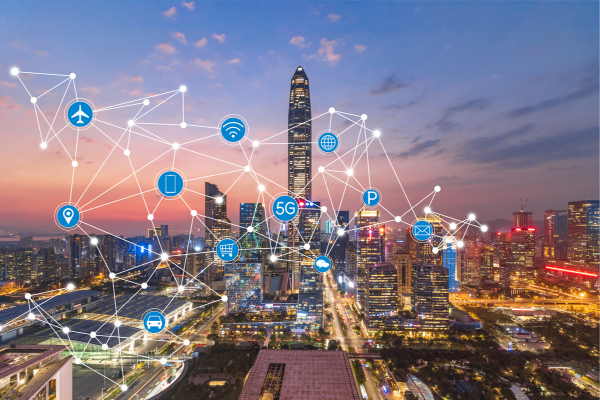
The notion of smart cities has revolutionised urban landscapes in India. They have opened up new prospects in the real estate industry. Today, cities have become more efficient, sustainable and habitable, owing to the integration of technologies like the Internet of Things (IoT) and Artificial Intelligence (AI). This trend has resulted in a significant increase in real estate investments. Contemporary infrastructure, digital connectivity and environment friendly solutions that appeal to businesses and households have become significant drivers of this expansion. Moreover, with India's growing urbanisation, government initiatives like Smart India Mission are playing a major role in the modernisation of urban spaces. These efforts focus on smart infrastructure, enhanced transportation and governance to add to the real estate value while generating long-term investments. Advertisement


Real estate stands at the core of smart city development, offering physical venues where technology and innovation may coexist. The integration of smart infrastructure in residential and commercial buildings is transforming the real estate market. It is making residential houses more desirable by enhancing energy efficiency, safety and technological advancement. As a consequence, Mordor Intelligence has predicted that the Indian smart homes market will reach USD 19.31 billion by 2030.
Furthermore, smart cities are observing an increase in demand for commercial properties. This is because firms are seeking places with high-speed internet, sustainable infrastructure and improved security. Cities like Bengaluru, Pune and Hyderabad are now emerging as key investment hubs. They are also attracting firms looking for contemporary work environments.
Meanwhile, the emergence of smart residential properties has significantly changed the landscape. These properties include IoT-enabled appliances, automated energy systems and intelligent security solutions, becoming the new normal. Buyers now invest in houses that provide convenience, efficiency and environmental benefits, encouraging developers to include smart technology in their constructions.
Due to their forward-thinking infrastructure and high return on investment, smart cities have become popular globally. The value of properties in smart cities increases more rapidly than in any other area in India. Modern infrastructure, seamless connection and a technologically oriented atmosphere are all key factors behind this growth. As per a McKinsey report, these factors can increase the property value in smart cities by 10-20 per cent.
Additionally, government incentives, such as tax breaks and regulatory assistance, boost the investment potential of smart city real estate. Certain policies also help in encouraging green buildings and energy-efficient designs, attracting investors that focus on long-term value.
Modern- age developers prefer renewable energy, intelligent waste management systems and sustainable materials to develop buildings that align with global environmental standards. They are also procuring green certifications that showcase their commitment towards sustainable development practices. For instance, the Indian Green Building Council (IGBC) certification programme allows developers to perform their environmental responsibility effectively. These efforts not only increase property rates but also attract investors looking for sustainable options. An IGBC research report has also predicted that the Indian green building market size will surpass USD 50 billion by the end of 2025.
The rapid expansion of smart cities is altering the real estate industry, urging developers to innovate and build future-ready spaces. The focus has shifted from just location to building greener infrastructure. A key trend is the growth of mixed-use complexes, which combine residential, business and leisure entertainment into a unified ecosystem. These complexes lessen the commute times and encourage walking while making them even more appealing to modern clients.
Also, smart transport systems are influencing smart city development plans. With the rise of electric cars and AI traffic management, developers are putting pedestrian-friendly zones in their plans. Digital innovations are further altering real estate investing. Smart contracts and blockchain-based property transactions are accelerating the buying and selling process, lowering fraud and enhancing investor trust. Cities that will successfully integrate smart technologies will emerge as prime destinations in the country, offering long-term growth and investment opportunities.

5th Jun, 2025

25th May, 2023

11th May, 2023

27th Apr, 2023
Advertisement





 Facebook
 Whatsapp
