Advertisement








When should a housing society in Mumbai start considering re...
From GST on JDAs to SEBI’s REIT reclassification and the S...
Stay ahead in the world of real estate with our daily podcas...
Stay ahead in the world of real estate with our daily podcas...
The Vizhinjam International Seaport, located near Thiruvananthapuram, Kerala, is poised to become a major transshipment hub, reducing India's reliance on ports like Colombo, Singapore, and Dubai. Developed under a INR 20,000 crore investment by the Adani Group and Kerala government, the port features a natural depth of 24 meters, enabling it to accommodate Ultra Large Container Ships (ULCS). With trial operations underway since July 2024, Vizhinjam has already handled 100,000 TEUs. Expansion plans aim to increase capacity to 3 million TEUs by 2028, integrating cruise terminals and boosting regional economic growth.
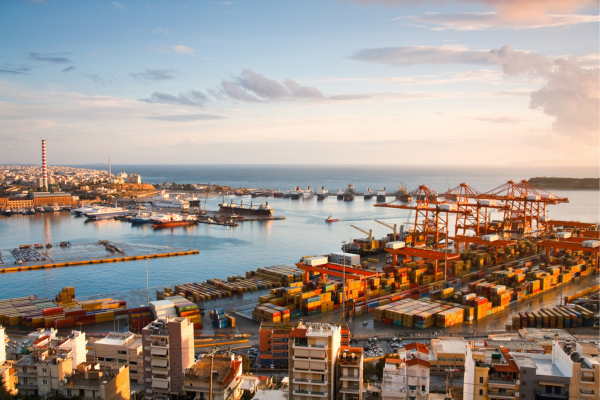
The Vizhinjam International Seaport, located near Thiruvananthapuram in Kerala, India, represents a significant advancement in the nation's maritime infrastructure. Strategically positioned just 10 nautical miles from the crucial east-west international shipping route, the port is poised to become a pivotal transshipment hub, enhancing India's role in global trade networks. Advertisement


The concept of developing a major port at Vizhinjam dates back to the early 1990s. In August 2015, the Kerala government formalized an agreement with Adani Vizhinjam Port Private Limited (AVPL), a subsidiary of the Adani Group, to develop the port. Under this public-private partnership, Adani Group secured the rights to operate the port for 40 years, with an option to extend by an additional 20 years. The agreement stipulated that the Kerala state government would begin receiving a share of the port's revenue after 15 years of operation. The project's initial valuation was approximately INR 7,525 crore, with the state government providing a grant of INR 1,635 crore to support development.
Construction commenced in December 2015, with ambitious targets set for operational readiness. However, the project encountered multiple delays due to factors such as Cyclone Ockhi in 2017, material shortages, local protests from fishing communities concerned about environmental impacts, and disruptions caused by the COVID-19 pandemic. Despite these challenges, the port achieved a significant milestone in October 2023, when the first cargo vessel from China docked, delivering crucial infrastructure components.
The port's infrastructure is designed to accommodate some of the world's largest container ships, including Ultra Large Container Ships (ULCS) exceeding 24,000 TEUs. With a natural depth of 24 meters, Vizhinjam requires minimal dredging, offering cost advantages over other ports. The initial phase includes a breakwater extending 3.1 kilometers, with plans to reach 4.5 kilometers in subsequent phases. State-of-the-art Super Post-Panamax cranes have been installed, featuring an outreach of 72 meters and a lifting height of 74 meters, facilitating efficient cargo handling.
In July 2024, the port entered its trial operations phase, marking the arrival of its first mothership, the container carrier "San Fernando." By November 2024, during the trial period, Vizhinjam had handled over 100,000 TEUs and welcomed 46 ships, demonstrating its operational capabilities and potential to alleviate India's reliance on foreign transshipment hubs like Colombo, Singapore, and Dubai.
Financially, the Vizhinjam project represents a substantial investment in India's port infrastructure. The Adani Group has committed an additional USD 1.2 billion (approximately INR 10,000 crore) towards the second phase of development, aiming to expand the port's capacity to 3 million TEUs by 2028. This investment is part of a broader commitment, with total projected expenditures reaching INR 20,000 crore by 2028, shared between the Adani Group and the Kerala state government.
The port's development is structured across multiple phases. Phase One, completed in December 2024, established foundational infrastructure and initiated trial operations. Phases Two and Three, slated for completion by 2028, will further enhance capacity and operational scope, positioning Vizhinjam as India's largest port within the next decade.
Beyond cargo handling, Vizhinjam is set to feature a dedicated cruise terminal, leveraging Kerala's rich cultural and natural attractions to boost tourism. The terminal will accommodate some of the world's largest cruise ships, with berths extending up to 600 meters. Additionally, the port's proximity to Thiruvananthapuram International Airport, located just 16 kilometers away, enhances its appeal for crew changes and passenger transfers.
The development of Vizhinjam International Seaport is anticipated to have profound economic implications. By reducing dependency on foreign transshipment hubs, it is expected to lower logistics costs, enhance trade efficiency, and stimulate regional economic growth. The project has already generated significant employment opportunities during its construction phase and is projected to create numerous direct and indirect jobs upon full operation.

5th Jun, 2025

25th May, 2023

11th May, 2023

27th Apr, 2023
Advertisement








 Facebook
 Whatsapp
