Advertisement








When should a housing society in Mumbai start considering re...
From GST on JDAs to SEBI’s REIT reclassification and the S...
Stay ahead in the world of real estate with our daily podcas...
Stay ahead in the world of real estate with our daily podcas...
CBRE's report, Decarbonising Asia Pacific's Office Buildings, reveals that 51% of the region's office space now holds green building certification-a 6.5% increase year-on-year. This shift highlights growing commitment among landlords and occupiers to reduce carbon emissions and enhance property value. Ada Choi, CBRE's Head of Research for Asia Pacific, noted that while some occupiers delay net-zero goals due to business expansion and AI-related energy demand, many are strengthening commitments by formally setting targets. Cities like Sydney, Melbourne, Singapore, and Tokyo lead in green adoption, while India and China are making steady progress. Green-certified buildings command rental premiums of up to 4%, with the highest premiums seen in Mumbai, Hong Kong SAR, and Bangalore.
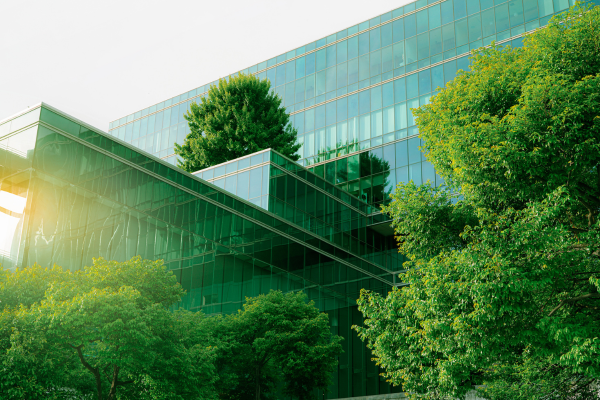
CBRE's latest report, titled "Decarbonising Asia Pacific's Office Buildings," stated that more than half, or 51%, of the office space across the Asia Pacific region has now obtained green building certification. This achievement represents a 6.5% year-on-year increase, indicating steady progress towards sustainable real estate practices in the region. Advertisement


Green-certified office buildings are playing a critical role in supporting the decarbonisation objectives of the real estate sector. Both landlords and occupiers are viewing the transition towards greener buildings as essential, not only for contributing to global climate goals but also as an opportunity to foster innovation and stimulate economic growth. Decarbonising office buildings has become a strategic priority, offering long-term value and resilience to property portfolios.
Ada Choi, who is the Head of Research for Asia Pacific at CBRE, remarked that although some occupiers are delaying their net zero commitments for 2030 due to factors such as business expansion and heightened energy demand associated with AI adoption, a growing number of companies are displaying strong dedication to their net zero targets by formally establishing their goals. She also mentioned that large asset owners are making consistent progress in their efforts to decarbonise real estate holdings. CBRE anticipates that the disparity between what landlords are offering and what occupiers are committing to will gradually lessen, ultimately resulting in both parties aligning their timelines for achieving net zero objectives.
The report highlighted that major cities such as Sydney, Melbourne, Singapore, and Tokyo are at the forefront of green building adoption. At the same time, mainland China and India are making notable progress in acquiring green building certifications. Green-certified buildings are also attracting rental premiums, which can reach up to 4% more than non-green buildings. However, the extent of these premiums varies depending on the green adoption rate within different markets. The most significant rental premiums have been recorded in cities including Mumbai, Hong Kong SAR, and Bangalore.
As of the second quarter of 2024, the average occupancy rate for Grade A green buildings across the Asia Pacific region reached 83%. This figure is approximately 2% higher than the occupancy rate for non-green office buildings. Among the cities that boast the highest occupancy rates for these sustainable properties are Seoul, Taipei, and Singapore, reflecting strong demand for green-certified office spaces.

5th Jun, 2025

25th May, 2023

11th May, 2023

27th Apr, 2023
Advertisement








 Facebook
 Whatsapp
