Advertisement










When should a housing society in Mumbai start considering re...
From GST on JDAs to SEBI’s REIT reclassification and the S...
Stay ahead in the world of real estate with our daily podcas...
Stay ahead in the world of real estate with our daily podcas...
Dubai's property market is soaring, with record-breaking sales and profits driven by foreign investors and an influx of expats. In 2024, Dubai ranked as the third-best-performing luxury real estate destination, with prices rising 16.9%. Major developers like Emaar and Binghatti saw profits more than double, while Aldar in Abu Dhabi also posted significant growth. Unlike past speculative booms, this rally is supported by stable population growth and government initiatives, including visa reforms. Luxury waterfront properties remain in high demand. With investor confidence strong and new projects underway, Dubai's real estate market is set to sustain its momentum through 2025.
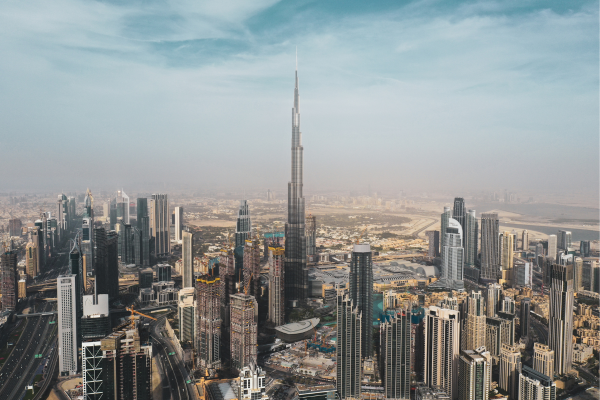
Dubai's property market keeps rising, with builders posting record earnings and record-breaking sales volumes. Dubai ranked as the third-best-performing destination for prime property in the world in 2024, with prices increasing by 16.9%, according to the Knight Frank Cities Index. This is fueled by expats moving to the city and foreign investors willing to take advantage of the hot market. Advertisement


Emaar Development PJSC, the construction arm of the conglomerate behind Dubai's iconic tallest tower, achieved a record profit of 7.6 billion dirhams (USD 2 billion) in 2024, which was double its earnings from 2022. Similarly, Binghatti Holding Ltd. also reported more than double the profits compared to the previous year. Neighboring Abu Dhabi also witnessed impressive growth. Aldar Properties PJSC beat analysts' expectations, with annual revenues growing 62% year-on-year to 23 billion dirhams.
Industry players foresee Dubai property prices continuing their appreciation path through to 2025, although growth could slightly be less brisk. Mohammed Ali Yasin, CEO and founder at Oracle Financial Consultancy and Investments, said the growth in the population has been a major fuel behind this upsurge, a trend likely to continue.
Dubai real estate has suffered sharply in the past, but this time around, the rally has been exceptionally long-lasting. After the global financial crisis of 2008, Dubai property prices dropped by almost 50% in some areas. Again, in 2014, prices dropped following declining oil prices and oversupply, prompting a protracted downturn. Over the years preceding the pandemic, prices continued to fall as developers introduced a high number of projects, which flooded the market. Prices fell to record lows in 2020 in more than a decade.
The recovery began in 2021, as Dubai's government introduced liberal visa reforms, such as the Golden Visa programme, encouraging expatriates and investors to settle in the country. Dubai's swift pandemic response, including early vaccination drives and a rapid reopening of its economy, also bolstered investor confidence. The delayed Expo 2020, held in 2021, acted as a catalyst, drawing global attention and foreign investments to the real estate market.
The most helped segment has been the luxury market, specifically waterfront villas in the city's landmark palm-shaped islands. Demand has been driven by high-net-worth buyers, including Russians hedging assets, crypto billionaires, and bankers shifting from Asia. Unlike speculative growth in the period 2010-2014, the ongoing rally is perceived as more sustainable given the focus of policies and stable population growth.
Smaller developers, which themselves were forced to restructure in previous slumps, are seeing a rebound. Deyaar Development PJSC, for example, registered an increase in its 2024 profit of 7.56%, or 473.9 million dirhams.
Investor sentiment for the sector remains strong, as property stocks have received broad backing. Emaar Properties' shares have rallied more than 70% over the last year, with all analysts strongly suggesting a "buy" rating. Likewise, the stock of Aldar increased by over 70%, while that of Deyaar shot up by 276%. Developers are pouring these gains into new developments to meet the increased demand from residents around the world. Yasin noted that businesses are actively bringing out new developments, anticipating that the influx of new residents would continue to propel the market forward.
Dubai's property sector is experiencing a golden era, with record-breaking profits, strong investor confidence, and surging demand. The current rally, bolstered by population growth, government initiatives, and global interest, showcases the resilience and appeal of the UAE's real estate market. The sustained recovery, unlike previous speculative booms, reflects a more stable and strategic growth trajectory. As developers launch fresh projects to catch up with soaring demand, the real estate of Dubai is bound to continue to be a crossroads for investors globally well through 2025, emphasizing the city's stature as a focal point for high-end and premier real estate.

5th Jun, 2025

25th May, 2023

11th May, 2023

27th Apr, 2023
Advertisement








 Facebook
 Whatsapp
