Advertisement








When should a housing society in Mumbai start considering re...
From GST on JDAs to SEBI’s REIT reclassification and the S...
Stay ahead in the world of real estate with our daily podcas...
Stay ahead in the world of real estate with our daily podcas...
The INR 75,000 crore Great Nicobar Island Development Project is set to position the Andaman and Nicobar Islands as a key maritime and logistics hub. Anchored by the International Container Transshipment Terminal (ICTT) at Galathea Bay, capable of handling 14.2 million TEUs, the project also includes an international airport, a gas and solar power plant, and greenfield coastal cities. While expected to reduce India's reliance on foreign ports and boost regional trade, environmental concerns remain due to large-scale deforestation and potential impacts on indigenous communities. Phase 1 of the ICTT is slated for completion by 2028.
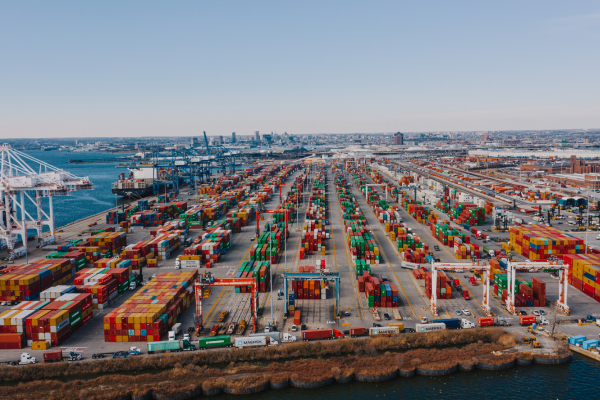
The Andaman and Nicobar Islands, an archipelago located at the juncture of the Bay of Bengal and the Andaman Sea, have long been recognized for their strategic significance and rich biodiversity. In recent years, the Indian government has embarked on an ambitious development agenda, aiming to transform these islands into a pivotal maritime and logistics hub. Central to this vision is the Great Nicobar Island Development Project, a comprehensive infrastructure initiative with an estimated investment of INR 75,000 crore (approximately USD 9.4 billion). Advertisement


The Andaman and Nicobar Islands hold a geostrategic position, overseeing the critical maritime routes of the Strait of Malacca, through which a significant portion of global trade transits. Recognizing this, the Indian government, through its policy think tank NITI Aayog, conceived the development project to bolster national security, enhance regional connectivity, and stimulate economic growth. The project is spearheaded by the Andaman and Nicobar Islands Integrated Development Corporation (ANIIDCO), reflecting a coordinated effort to harness the islands' potential.
The Great Nicobar Island Development Project integrates multiple critical infrastructure components aimed at transforming the region into a strategic and economic hub. At the heart of the project is the International Container Transshipment Terminal (ICTT) at Galathea Bay, which is designed to handle a capacity of 14.2 million Twenty-Foot Equivalent Units (TEUs). With a natural depth exceeding 20 meters, Galathea Bay provides an optimal location for docking large container vessels, significantly reducing India's reliance on transshipment hubs such as Colombo and Singapore. This terminal is expected to bolster India's position in global maritime trade.
Another key component is the Great Nicobar International Airport (GNIA), a greenfield airport designed with a peak-hour handling capacity of 4,000 passengers. The airport will serve both civilian and military operations, enhancing regional connectivity and strengthening India's strategic presence in the Indian Ocean.
To meet the energy demands of the island's anticipated growth, the project includes the Great Nicobar Gas and Solar Power Plant (GNGSPP), which will generate 450 MVA of power. This infrastructure is envisioned to provide a sustainable and stable power supply, supporting industrial, commercial, and residential needs.
Additionally, the project outlines the development of Greenfield Coastal Cities, designed to accommodate the expected population influx and economic activities. These cities will be planned with a focus on sustainable urban development, ensuring a balance between infrastructure expansion and environmental conservation.
The project has garnered attention due to its environmental and social implications. Approximately 8.5 lakh (850,000) trees are slated for felling, raising concerns about deforestation and habitat loss. To mitigate this, compensatory afforestation is planned in Haryana's Aravalli region. Additionally, the project area is home to rare fauna, including the Leatherback sea turtle and the indigenous Shompen tribe. Conservation plans have been proposed, such as establishing alternative nesting sites and designating conservation areas on Little Nicobar, Menchal Island, and Meroe Island. However, the Tribal Council of Campbell Bay has expressed concerns over the creation of wildlife sanctuaries without adequate consultation, emphasizing their traditional coexistence with the island's wildlife.
As of January 2023, the government has invited bids for the INR 41,000 crore International Container Transshipment Port at Galathea Bay, with Phase 1 expected to be operational by 2028, handling 4 million TEUs. The project has attracted interest from major entities, including Adani Ports & SEZ and the Container Corporation of India.
In September 2024, the government officially notified the ICTT at Galathea Bay as India's 13th major port, underscoring its strategic importance. The development is aligned with the Maritime India Vision 2030, aiming to enhance India's maritime infrastructure and trade capabilities.
In conclusion, the Andaman and Nicobar Islands are on the cusp of a transformative journey, with substantial investments aimed at developing key infrastructure projects. While the objectives of economic growth and strategic enhancement are clear, it is imperative to balance development with environmental sustainability and social responsibility, ensuring that the unique ecological and cultural heritage of the islands is preserved for future generations.

5th Jun, 2025

25th May, 2023

11th May, 2023

27th Apr, 2023
Advertisement








 Facebook
 Whatsapp
