Advertisement








When should a housing society in Mumbai start considering re...
From GST on JDAs to SEBI’s REIT reclassification and the S...
Stay ahead in the world of real estate with our daily podcas...
Stay ahead in the world of real estate with our daily podcas...
The Uttarakhand Metro is a transformative 73-kilometre light rapid transit system designed to ease traffic congestion and improve connectivity between Dehradun, Haridwar, and Rishikesh. With two primary corridors, the project will feature modern trains, eco-friendly technology, and state-of-the-art amenities, aiming for completion by 2026. This ambitious INR 40,150 crore project, funded through a collaboration between the central and state governments, will also serve as a catalyst for economic growth, boosting real estate development and business activities along its route. The Uttarakhand Metro promises a cleaner, faster, and more sustainable transportation solution for residents and visitors alike.
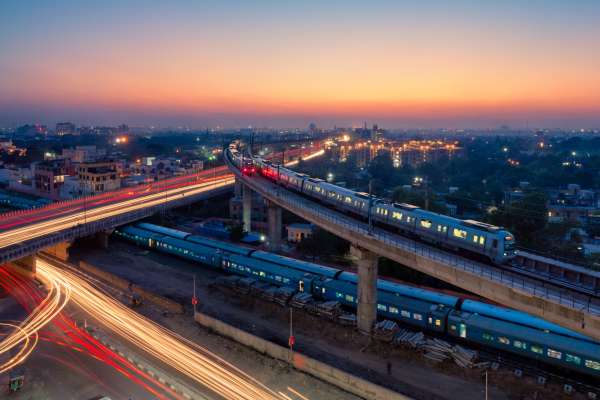
The Uttarakhand Metro, also referred to as the Dehradun-Haridwar-Rishikesh Metro, is an ambitious light rapid transit system designed to provide sustainable, efficient, and modern public transportation across the cities of Dehradun, Haridwar, and Rishikesh. With the increasing population, rapid urbanization, and the growing challenges of traffic congestion in these cities, the metro project aims to alleviate these issues by offering a reliable and eco-friendly mode of transportation. The development of the Uttarakhand Metro is expected to enhance the urban mobility of the region and make daily commuting more efficient for residents and visitors alike. Advertisement


The Uttarakhand Metro project has been under consideration for many years, with the need for such a system becoming more pressing as the cities in the state continue to grow. Initially proposed as part of a broader urban development strategy, the project gained traction with the establishment of the Uttarakhand Metro Rail Corporation Limited (UkMRC). The state government signed an agreement with the Delhi Metro Rail Corporation (DMRC) to prepare the Detailed Project Report (DPR) in 2016, and the project's DPR was approved by the Unified Metropolitan Transport Authority (UMTA) in June 2020.
The Uttarakhand Metro project will be carried out in phases, covering a total of 73 kilometres. It will consist of two major corridors that will link key cities and regions in the state. The first line, known as Line 1, will connect Haridwar to Rishikesh, covering approximately 32 kilometres. This line will include 10 stations and run parallel to the National Highway NH-34, connecting two major religious and tourist destinations. The second line, Line 2, will link Nepali Farm to Dehradun, covering 41 kilometres and integrating one of the most important urban hubs in the state with the surrounding areas. This line will have multiple stations, facilitating easy access between the city and suburban areas.
The metro system will operate on standard gauge tracks, with 750V DC third rail traction, a modern and efficient power system that minimizes energy consumption while providing high operational efficiency. The metro will feature three-coach trains with plans to increase to four-coach trains as demand grows. The trains are expected to have an average speed of 25 km/h, with a top speed of 70 km/h, making it an ideal option for fast and comfortable urban travel. The metro will be a combination of elevated and at-grade sections to ensure the minimal disruption of existing infrastructure and to navigate the varied geography of the region.
The estimated total cost of the Uttarakhand Metro project is INR 40,150 crore, a significant investment in the state's infrastructure. Funding will be sourced from the central government, the state government, and international financial institutions. The project's financial model reflects a strategic partnership between the state and central governments to support large-scale infrastructure development, while also considering future sustainability.
As of December 2024, the project is in its final stages of planning, with the DPR expected to be submitted and approved in the coming months. Construction is anticipated to begin in 2025, with the first phase of the project expected to be completed by 2026. Upon completion, the Uttarakhand Metro will significantly improve the mobility between Dehradun, Haridwar, and Rishikesh, providing a much-needed solution for the daily commute. The metro will also serve as a catalyst for the development of key areas along its route, including residential, commercial, and industrial zones.
The Uttarakhand Metro will be equipped with state-of-the-art features, such as air-conditioned coaches, CCTV surveillance, and automated fare collection systems, ensuring safety, comfort, and convenience for passengers. Furthermore, all metro stations will be equipped with escalators, elevators, and facilities for differently-abled individuals, making the system accessible and inclusive for all users.
One of the most important aspects of the Uttarakhand Metro is its potential impact on the local economy. With improved connectivity, the metro is expected to boost the real estate sector by increasing the demand for residential and commercial properties near metro stations. Moreover, the metro system will stimulate economic activity by providing a faster and more reliable mode of transport for workers, students, and tourists. By reducing traffic congestion, the metro will also help improve the quality of life for residents, encouraging business growth and investments in the region.
Although the Uttarakhand Metro project has faced challenges such as delays in land acquisition and environmental clearance, the government remains optimistic about its successful implementation. Efforts are being made to resolve these issues, and as the state continues to grow, there is a collective sense of urgency to see the project through.
In conclusion, the Uttarakhand Metro represents a bold and visionary step towards addressing urban mobility challenges in one of India's most beautiful and culturally rich states. By reducing traffic congestion, promoting sustainable transportation, and supporting economic development, the metro will contribute to making Uttarakhand's cities more connected, accessible, and future-ready. As construction progresses, the Uttarakhand Metro will undoubtedly become an essential part of the region's infrastructure, transforming the way residents and tourists move between Dehradun, Haridwar, and Rishikesh.

5th Jun, 2025

25th May, 2023

11th May, 2023

27th Apr, 2023
Advertisement








 Facebook
 Whatsapp
