Advertisement










Private equity has played a significant role in shaping Indi...
In today’s real estate landscape, fitness is often treated...
In this episode of Prop Personalities, we sit down with Hars...
Luxury real estate is one of the most talked-about segments ...
Welcome to Prop Personalities by Prop News Time - a podcast ...
By 2029, Mumbai airport will undergo a major transformation, including a redeveloped Terminal 1 (T1) and a possible relocation of the ATC tower to free up space. MIAL plans to construct a INR 894 crore, 3 km-long S-shaped airside tunnel to improve baggage and passenger transfers between Terminals 1 and 2. Additionally, T1 will be demolished and replaced, increasing its capacity to 2 crore passengers per annum (CPA), while T2's capacity will rise to 4.5 crore CPA, bringing Mumbai airport's total capacity to 6.5 crore CPA. Efforts to enhance runway efficiency could raise aircraft movements from 48 to 52-55 per hour, reinforcing Mumbai's status as a key aviation hub.
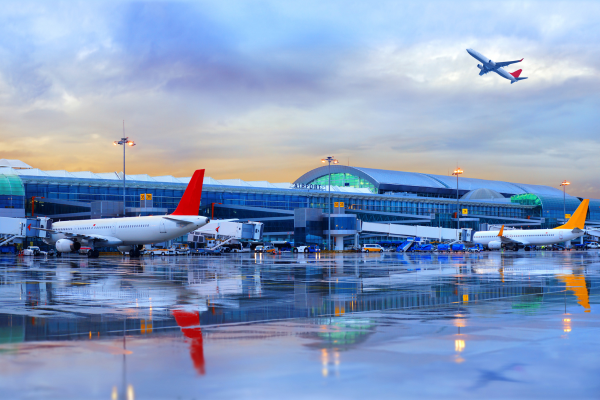
By 2029, Mumbai airport is expected to present a significantly different appearance. Apart from a completely redeveloped Terminal 1 (T1), Mumbai International Airport Ltd (MIAL) has been contemplating relocating the iconic 275-foot-tall air traffic control (ATC) tower in an effort to release valuable airside space. Advertisement


In its consultation paper regarding the determination of the airport's aeronautical tariff for the fourth control period, covering April 2024 to March 2029, MIAL mentioned that various locations were being evaluated for relocating the ATC technical block from its current site. It further stated that the relocation would take place once a new location was finalised.
MIAL has also proposed the construction of an S-shaped airside tunnel, spanning over three kilometres in length. This tunnel, estimated to cost INR 894 crore, is planned to be constructed below the runway between Terminals 1 and 2. The purpose of the tunnel is to facilitate the transfer of passengers and baggage between the aprons of the two terminals more efficiently.
Regarding the S-shaped tunnel, a consultation paper noted that during nighttime, some flights operating at T2 were required to be parked at the T1 apron due to a shortage of stands at T2. Consequently, passengers and baggage needed to be transported between the T1 and T2 aprons via the perimeter road surrounding runway 14-32, a process that consumed a significant amount of time. This situation was reported to be particularly challenging during the monsoon season.
The airport's overall capacity is determined by two key factors: runway capacity, which refers to the number of flights that can be operated per hour, and terminal building capacity, referring to the number of passengers that can be handled at the security and immigration counters. At present, Mumbai airport's combined runway and terminal capacity enables it to handle 5.5 crore passengers annually (CPA). Terminal 2 (T2) accounts for 4 crore CPA, while Terminal 1 (T1) has a capacity of 1.5 crore CPA.
MIAL has announced plans to demolish the current Terminal 1 later this year to pave the way for a new terminal, projected to have a capacity of 2 crore CPA by 2029. Additionally, the airport operator plans to increase T2's capacity to approximately 4.5 crore CPA, which will elevate Mumbai airport's total terminal capacity to 6.5 crore CPA. This expansion will thus accommodate an additional 1 crore passengers per annum.
One of the persistent challenges faced by Mumbai airport is its operation on a single runway. The main runway currently manages between 42 and 44 flights per hour. The Airports Economic Regulatory Authority (AERA) has commissioned a study to assess how the airport's aircraft movements might be increased. An independent study conducted by NATS indicated that by reducing the spacing between arrival-departure-arrival sequences, runway capacity could be enhanced from 48 to approximately 52-55 movements per hour.
Jacobs, a consultant appointed to conduct a capacity assessment study at T2, recommended several enhancements. These included establishing a dedicated crew facility, creating bus boarding gates at the northwest pier extension, adding check-in desks at each island, and reconfiguring the customs handbag screening facility.
The proposed redevelopment of Mumbai airport by 2029 signals a major step towards addressing existing capacity constraints and improving operational efficiency. The focus on optimising aircraft movements and infrastructure upgrades is expected to not only ease current operational challenges but also strengthen Mumbai airport's position as a key aviation hub in the coming years.
Source: Times of India

5th Jun, 2025

25th May, 2023

11th May, 2023

27th Apr, 2023
Advertisement





 Facebook
 Whatsapp
