Advertisement










When should a housing society in Mumbai start considering re...
From GST on JDAs to SEBI’s REIT reclassification and the S...
Stay ahead in the world of real estate with our daily podcas...
Stay ahead in the world of real estate with our daily podcas...
Office space absorption across 11 major Asia-Pacific (APAC) markets grew 15.9% YoY to 94.7 million sq. ft. in 2024, led by India, Mainland China, and Japan, according to Colliers. India dominated the market with 66.4 million sq. ft. leased, with Bengaluru and Hyderabad driving over half of Grade A office demand. Global capability centres (GCCs) leased 15 million sq. ft., accounting for 40% of India's leasing. New supply in India rose 7% YoY, maintaining 17% vacancy levels. APAC's office sector is expected to see steady demand-supply dynamics in 2025, reinforcing India's position as a key hub for corporate expansions and outsourcing.
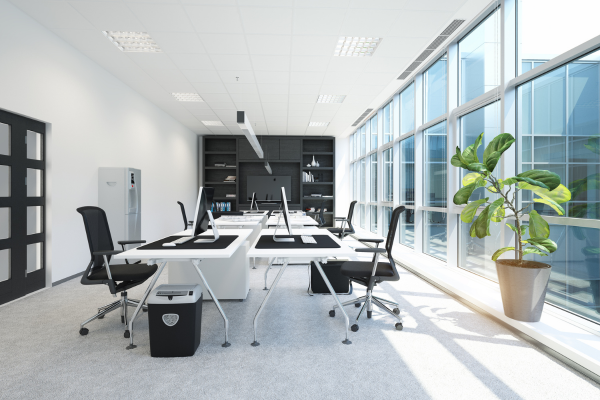
Office space absorption across the top 11 Asia Pacific (APAC) markets increased by 15.9% year-on-year to 94.7 million sq ft, driven by India, Mainland China, and Japan, according to a recent report by Colliers. Advertisement


The second half of 2024 was particularly robust, with office demand in the region reaching 50.6 million sq ft, a 6.1% rise compared to the same period in 2023. This growth was notable in markets such as India and Japan, with Australia showing impressive gains from a lower base. However, leasing activity remained relatively subdued in New Zealand, the Philippines, South Korea, Hong Kong, and Taiwan during this period.
The report identified corporate expansions, return-to-office initiatives, and the growth of global capability centres as significant drivers of the increased office space demand in APAC. The analysis covered key markets, including Australia, Mainland China, Hong Kong, India, Indonesia, Japan, New Zealand, the Philippines, Singapore, South Korea, and Taiwan.
India's office market activity was particularly strong, with 66.4 million sq ft of leasing during 2024, led by a stronger second half. With 37 million sq ft of gross leasing in H2 2024, India continued to lead office leasing activity in the APAC region, witnessing an 11% year-on-year rise compared to H2 2023.
In India, technology firms and flexible space operators together accounted for 46% of the total demand across the top six cities during H2 2024. New supply remained robust, with over 30.3 million sq ft of completions in H2 2024, a 7% year-on-year growth across these cities.
Bengaluru and Hyderabad led the office market activity during H2 2024, cumulatively driving more than half of the country's Grade A space demand and supply. Despite an uptick in both leasing activity and new supply, India's vacancy levels largely remained stable at around 17%.
Arpit Mehrotra, Managing Director of Office Services at Colliers India, noted that contrary to larger trends, India witnessed a 7% year-on-year growth in new supply, contributing 60% of the new supply in the APAC region during H2 2024. He anticipated improved demand-supply dynamics in 2025, supported by balanced economic growth and likely moderation in inflation.
Vimal Nadar, Senior Director and Head of Research at Colliers India, observed that during H2 2024, global capability centres (GCCs) leased 15 million sq ft of office space in India, accounting for over 40% of the overall leasing during the period. He suggested that factors such as rental arbitrage, abundant talent, and language proficiency would continue to support the expansion of GCCs and outsourcing hubs in India.
Colliers' research estimates both demand and supply to strengthen across most APAC markets in 2025, with vacancy rates expected to remain range-bound.
The APAC office market's substantial growth in 2024 underscores the region's resilience and adaptability in the face of evolving corporate real estate dynamics. India's prominent role, characterised by robust leasing activities and stable vacancy rates, highlights its appeal as a hub for technology firms and global capability centres. Looking ahead, the anticipated strengthening of both demand and supply across most APAC markets in 2025, coupled with stable vacancy rates, suggests a balanced and optimistic outlook for the region's office sector.

5th Jun, 2025

25th May, 2023

11th May, 2023

27th Apr, 2023
Advertisement








 Facebook
 Whatsapp
