Advertisement








When should a housing society in Mumbai start considering re...
From GST on JDAs to SEBI’s REIT reclassification and the S...
Stay ahead in the world of real estate with our daily podcas...
Stay ahead in the world of real estate with our daily podcas...
Ahmedabad is experiencing a skyscraper boom, with its tallest commercial building (150m, 45+ floors) planned near Nirma University, Gota. This surpasses the current tallest (147m, 43 floors) near Rajpath Club. The Ahmedabad Municipal Corporation (AMC) and Ahmedabad Urban Development Authority (AUDA) have approved 23+ high-rises over 100m, fueled by revised FSI regulations under Gujarat's CGDCR. This trend mirrors Mumbai and Bengaluru, where skyscrapers dominate urban growth. Ahmedabad's evolving skyline and policies are attracting major real estate investments, positioning it as a key player in India's high-rise real estate sector.
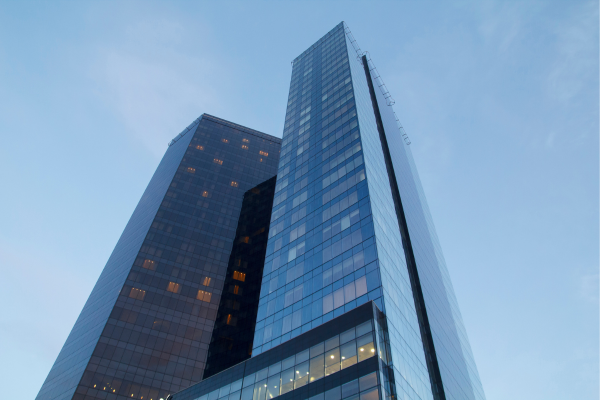
Ahmedabad is witnessing a significant rise in skyscraper construction, particularly along SG Road and its surrounding areas. The city is on track to see its tallest commercial building yet, at 150 metres, which will be located opposite Nirma University in the Gota ward. This new skyscraper, which is expected to have more than 45 floors, will surpass the current tallest structure in the city-a 147-metre, 43-floor commercial building near Rajpath Club. The proposal for this new tower has already been submitted to the state government's special technical committee for approval and, once granted, will mark a new milestone for Ahmedabad's urban landscape. Advertisement


The city has already set a precedent in Gujarat's vertical growth. The Ahmedabad Municipal Corporation (AMC) has approved 23 buildings over 100 metres tall, including 18 residential and 5 commercial buildings. The Ahmedabad Urban Development Authority (AUDA) has also approved six such high-rises, with five more still in various stages of approval. This growth has been facilitated by the introduction of the Gujarat Comprehensive General Development Control Regulations (CGDCR) in December 2014, which raised the Floor Space Index (FSI) for areas like Ashram Road, allowing for taller buildings. Ashram Road was allocated an FSI of 5.4, while areas within a 200-metre buffer of the Metro and BRTS routes were designated an FSI of 4.
Before these regulatory changes, buildings were typically approved for a height of 22 floors, mostly not exceeding 70 metres. However, after the 2017 and 2018 amendments to the CGDCR, the city has seen approvals for much taller buildings. The regulations increased the FSI to 3.5 and 4 for roads wider than 30 metres, which opened the door for buildings exceeding 100 metres in height. This policy shift was part of a broader move by the state government, starting in 2021, to approve buildings taller than 100 metres in major cities across Gujarat, including Ahmedabad, Surat, Rajkot, Vadodara, and Gandhinagar. As of September 2024, data from the state government shows that Surat and Gandhinagar have both received approvals for two buildings over 100 metres, while Vadodara has seen one such approval.
This trend in Ahmedabad closely mirrors the urban transformation seen in other major cities in India. In Mumbai, the financial capital, there has been a significant rise in high-rise buildings, especially in commercial zones like Bandra-Kurla Complex and Worli. For instance, the Palais Royale in Worli, which stands at a staggering 320 metres, is the tallest building in Mumbai and one of the tallest in India. The city also continues to see the rise of iconic skyscrapers such as the World One Tower (442 metres) and the Lodha Bellissimo in Lower Parel.
Similarly, Bengaluru, which has experienced rapid urbanization, has witnessed a notable surge in high-rise buildings, especially in the IT hubs of Whitefield and Outer Ring Road. The city is home to the Prestige Ferns Residency, which stands at 115 metres, and the World Trade Center in Bangalore, at 126 metres, both of which have contributed to Bengaluru's vertical growth. These cities, along with Ahmedabad, are following similar trajectories toward high-rise construction, a result of improved regulations, a burgeoning demand for commercial and residential space, and an increasing desire to accommodate the rapidly growing populations.
With these developments, Ahmedabad is cementing its position as a key player in the real estate sector, not just within Gujarat but across the country. The ongoing infrastructure improvements, combined with favorable policies such as the increase in FSI and easing of restrictions, are attracting both national and international developers. As the city continues to evolve, it is clear that Ahmedabad's skyline will soon rival those of other major metropolitan areas in India, contributing to the overall economic and infrastructural growth of the region.

5th Jun, 2025

25th May, 2023

11th May, 2023

27th Apr, 2023
Advertisement








 Facebook
 Whatsapp
