Advertisement










Private equity has played a significant role in shaping Indi...
In today’s real estate landscape, fitness is often treated...
In this episode of Prop Personalities, we sit down with Hars...
Luxury real estate is one of the most talked-about segments ...
Welcome to Prop Personalities by Prop News Time - a podcast ...
The construction of Mumbai Metro 7A, intended to link Gundavali with Chhatrapati Shivaji Maharaj International Airport, has been halted due to a breach of the Airport Authority of India's (AAI) air funnel zone regulations. The Mumbai Metropolitan Region Development Authority (MMRDA) has since sought a revised clearance from AAI to recommence work. The 3.42-kilometre-long corridor, featuring both elevated and underground sections, is being built by J Kumar Infraprojects Ltd, with consultancy provided by Systra MVA Consulting. AAI had initially approved construction with a height restriction 2.9 metres lower than the project's specifications. MMRDA has requested AAI to reconsider, arguing that adjusting the metro line's height is technically unfeasible.
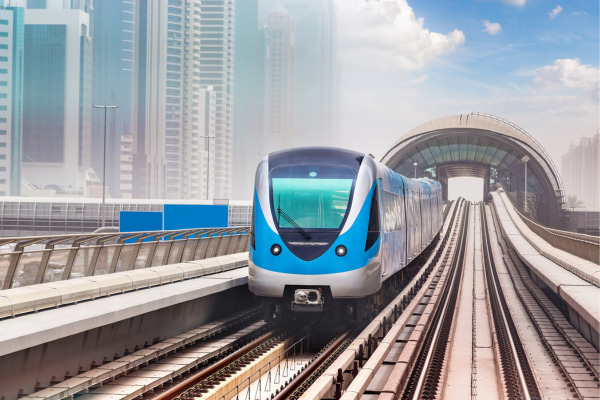
The construction of the Mumbai Metro 7A, designed to establish a connection between Gundavali and Chhatrapati Shivaji Maharaj International Airport, has been brought to a halt following a violation of the Airport Authority of India's (AAI) air funnel zone restrictions. In response, the Mumbai Metropolitan Region Development Authority (MMRDA) has submitted a request for a revised clearance from AAI to facilitate the resumption of work. Advertisement


An air funnel zone serves as a designated flight path, akin to road lanes, ensuring that aircraft maintain safe altitude and positioning. Any obstruction within this zone poses a risk to aviation safety.
The 3.42-kilometre-long Metro 7A corridor, which includes both elevated and underground sections, is being constructed by J Kumar Infraprojects Ltd. General consultancy services for the project are being provided by Systra India and Consulting Engineers Group Ltd, operating under a consortium named Systra MVA Consulting.
MMRDA had sought clearance from AAI in November 2023 for the construction of the Airport Colony station and ramp area. This approval was granted in early January 2024; however, the permitted height was set 2.9 metres lower than the original project design specifications. This constraint immediately led to construction delays, as the affected sections could not proceed without adhering to the specified height limitations. As a result, MMRDA was compelled to halt construction, disrupting the project's overall timeline.
Towards the end of January 2024, MMRDA submitted another request for height clearance for the viaduct section between the Airport Colony station and the ramp. The situation worsened in mid-March when AAI issued a fresh No Objection Certificate (NOC) imposing additional height restrictions. The permissible height of the viaduct was further reduced to a range of 0.53 metres to 2.75 metres, which is insufficient for the safe operation of the metro system. Consequently, construction was once again brought to a standstill.
MMRDA has since urged AAI to reconsider these restrictions, asserting that modifying the metro line's height is not a viable solution due to engineering complexities involved in maintaining the required gradient of the ramp. A senior MMRDA official mentioned that the approval process for revised clearance remains in progress.
According to an internal document accessed by Hindustan Times, the issue arose due to an oversight by the General Consultant, as the station's design did not align with the NOC's stipulated height limitations. Architectural drawings were reportedly prepared with greater height specifications. Experts from the General Consultant were expected to ensure compliance with AAI's restrictions before finalising the Airport Colony station's design.
The persistent delays have significantly affected both the project's timeline and costs, in addition to causing inconvenience to passengers travelling to the airport. Originally slated for completion in 2021, the project has encountered multiple extensions, with the latest deadline now set for December 2026 at an estimated cost of INR 812 crore.
While Mumbai Metro Line 3 currently provides airport connectivity, last-mile accessibility remains a challenge, requiring passengers to take an extended detour to reach Terminal 2. The completion of Metro 7A is expected to bridge this gap by linking the Aqua Line with Terminal 2, making its completion essential for enhancing Mumbai's transit infrastructure.

5th Jun, 2025

25th May, 2023

11th May, 2023

27th Apr, 2023
Advertisement





 Facebook
 Whatsapp
