Advertisement








When should a housing society in Mumbai start considering re...
From GST on JDAs to SEBI’s REIT reclassification and the S...
Stay ahead in the world of real estate with our daily podcas...
Stay ahead in the world of real estate with our daily podcas...
The 1,271-km Surat-Chennai Economic Corridor (SCEC), part of Bharatmala Pariyojana Phase II, is set to transform connectivity between India's western and southern regions. With an estimated cost of INR 45,000 crore, the expressway will reduce travel time from 35 to 16 hours, benefiting industries like textiles, automobiles, and logistics. The project, executed under a hybrid annuity model, will drive real estate growth in tier-2 and tier-3 cities while incorporating smart highway technology and eco-friendly measures. Expected to be operational by December 2026, SCEC will enhance trade efficiency and economic integration between Gujarat, Maharashtra, Karnataka, Telangana, Andhra Pradesh, and Tamil Nadu.
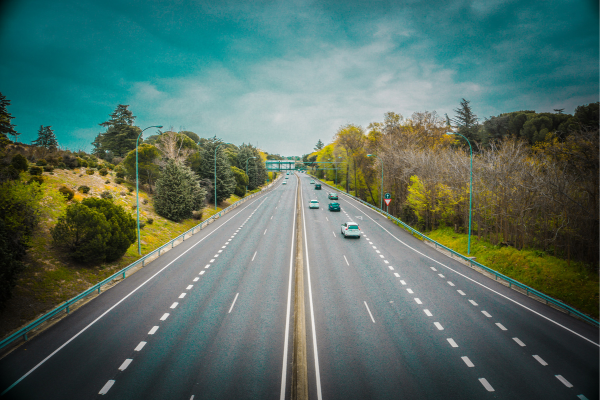
The Surat-Chennai Economic Corridor (SCEC) is a significant infrastructure project designed to enhance connectivity between India's western and southern regions. Spanning approximately 1,271 kilometers, this high-speed expressway will link key industrial and logistics hubs across Gujarat, Maharashtra, Karnataka, Telangana, Andhra Pradesh, and Tamil Nadu. As part of the government's broader plan to boost economic activity through strategic infrastructure development, this corridor is expected to significantly reduce travel time, facilitate seamless movement of goods, and promote industrial growth along its route. Advertisement


The Surat-Chennai Economic Corridor is an integral part of Bharatmala Pariyojana Phase II, a nationwide initiative launched in 2021 to expand India's road network and improve trade connectivity. Recognizing the need for a faster and more efficient transportation link between the industrially developed western states and the manufacturing and port-based economies of the south, the Ministry of Road Transport and Highways (MoRTH) conceptualized the project in 2021. The aim was to enhance logistics efficiency and enable businesses in textiles, automobiles, pharmaceuticals, and agriculture to transport goods more effectively between Surat, Nashik, Pune, Bengaluru, Tirupati, and Chennai, among other major centers.
The expressway starts in Surat, Gujarat, and extends southward, passing through Navsari, Valsad, Nashik, Ahmednagar, Solapur, Kalaburagi, Raichur, Gadwal, Kurnool, Kadapa, Tirupati, and Tiruvallur, before reaching Chennai in Tamil Nadu. Designed for a speed limit of 120 km/h, the corridor will integrate both greenfield (newly built) and brownfield (existing road upgrades) development to ensure faster and safer transit. The project is being executed in multiple phases, with the Surat-Solapur section covering approximately 564 kilometers and the Solapur-Chennai section spanning 707 kilometers. While the first phase focuses on land acquisition and environmental clearances, the second phase involves tendering and awarding construction contracts to infrastructure firms.
The construction of the Surat-Chennai Economic Corridor is being carried out in a hybrid annuity model (HAM), which combines government funding with private investments to share risks and expedite execution. The total estimated cost of the project is INR 45,000 crore (approximately USD 5.5 billion), with a significant portion allocated to land acquisition, construction, and environmental mitigation efforts. Funding is being sourced through budgetary support from the central government, loans from financial institutions, and private sector participation. As of early 2025, substantial progress has been made in the Surat-Solapur segment, where land acquisition is in its final stages, while the Solapur-Chennai section has entered the initial construction phase, with major roadwork expected to begin by mid-2025.
The expressway is expected to reduce travel time between Surat and Chennai from approximately 35 hours to about 16 hours, significantly improving the movement of goods and services between these regions. Businesses in sectors such as automobile manufacturing, textiles, pharmaceuticals, food processing, and logistics will benefit immensely from the reduced transportation costs and enhanced supply chain efficiency. For instance, Surat's textile exporters will find it easier to ship goods to Chennai's ports for international distribution, while Chennai's automobile industry will have a more efficient route to reach markets in western India.
Apart from industrial benefits, the Surat-Chennai Economic Corridor is set to transform real estate markets along its route. Improved connectivity will make tier-2 and tier-3 cities like Nashik, Solapur, and Raichur more attractive for businesses and residential projects, as companies seek to set up warehouses, manufacturing units, and office spaces in these regions. The demand for commercial real estate, logistics parks, and industrial hubs is expected to rise as businesses take advantage of the corridor's strategic location. This will also drive job creation in logistics, construction, and allied industries, further stimulating local economies.
The project also prioritizes environmental sustainability, given that parts of the corridor pass through ecologically sensitive areas, including the Western Ghats. To minimize environmental impact, the National Highways Authority of India (NHAI) is incorporating wildlife underpasses, afforestation initiatives, and eco-friendly construction practices into the project design. Advanced traffic management systems and smart highway technology, such as automated toll collection, CCTV surveillance, and emergency response units, will also be implemented to ensure safety and efficiency.
While the Surat-Chennai Economic Corridor is expected to be a game-changer for India's infrastructure landscape, it faces certain challenges. Land acquisition remains a contentious issue in Maharashtra and Karnataka, where negotiations with local communities are ongoing. Environmental activists have raised concerns about deforestation and the impact on wildlife habitats, particularly in Karnataka and Tamil Nadu. Addressing these concerns through compensation policies, alternative routes, and ecological restoration measures will be critical to maintaining public support for the project.
Once completed, the corridor will play a vital role in India's long-term economic growth. By linking industrial clusters, major ports, and commercial hubs, it will create a seamless trade network that benefits multiple sectors. The expressway will also serve as a foundation for future infrastructure developments, including multi-modal transport hubs and smart logistics zones, further strengthening India's position as a global manufacturing hub.
The Surat-Chennai Economic Corridor is expected to be fully operational by December 2026, marking a new era in India's infrastructure development. The expressway will not only improve regional connectivity but also drive industrial expansion, real estate development, and job creation. With a strong financial backing, government support, and a strategic vision, this project is set to become one of India's most significant highways, bridging economic gaps between the western and southern regions while laying the groundwork for sustained growth in the coming decades.

5th Jun, 2025

25th May, 2023

11th May, 2023

27th Apr, 2023
Advertisement








 Facebook
 Whatsapp
