Advertisement










Private equity has played a significant role in shaping Indi...
In today’s real estate landscape, fitness is often treated...
In this episode of Prop Personalities, we sit down with Hars...
Luxury real estate is one of the most talked-about segments ...
Welcome to Prop Personalities by Prop News Time - a podcast ...
The Maharashtra government has decided to rehabilitate approximately 18,000 slum households from the Sanjay Gandhi National Park (SGNP) to Thane district, as per directives from the chief minister. At a recent meeting, the city and suburban collectors conveyed their inability to provide land for rehabilitation, prompting the decision to relocate residents closer to Mumbai, excluding Palghar. Previous rehabilitation plans, including 90 acres in Aarey Colony, faced legal hurdles, with a high court stay impeding progress. The state government, under scrutiny from the Bombay High Court for inaction, has also proposed a protective wall around SGNP at a cost of approximately INR 196 crore.
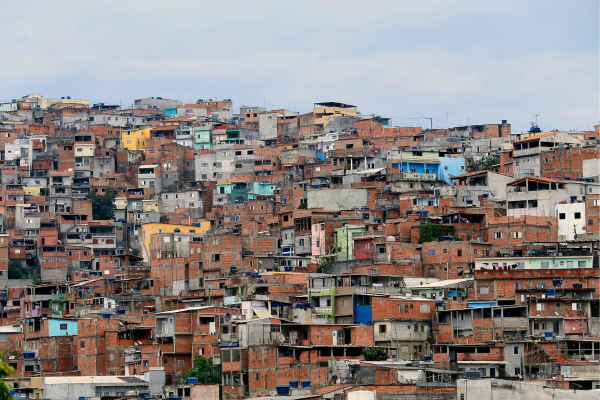
The Maharashtra government has initiated the rehabilitation of around 18,000 slum households residing on forest land in Sanjay Gandhi National Park (SGNP), relocating them to areas within Thane district. According to sources, the chief minister recently held a meeting at Mantralaya, directing officials to facilitate the relocation to land parcels in Thane, which is the nearest viable option to Mumbai. Additionally, sources revealed that the chief minister dismissed the possibility of shifting residents to Palghar district, citing its considerable distance from Mumbai, and emphasised the need for a closer alternative. Advertisement


Previously, the government had designated 90 acres in Aarey Colony for rehabilitating slum dwellers, including SGNP tribals. However, the zonal master plan for SGNP is still pending, although the eco-sensitive zone around the park was finalised in 2016. Furthermore, a Bombay High Court stay order has halted slum rehabilitation projects in Aarey Colony. Sources suggest that the slum dwellers will likely be relocated to either Murbad or Bhayander in Thane district.
The meeting was also attended by the deputy chief minister Eknath Shinde, who also serves as the housing minister and guardian minister for Thane. Facing criticism from the Bombay High Court over persistent encroachments and the prolonged issue of slum rehabilitation, the state government has now proposed constructing a protective wall around SGNP. The estimated cost of the project stands at approximately INR 196 crore.
The government is expected to submit detailed plans and administrative approvals for the protective wall, which is planned to cover regions such as Mulund, Yeoor, Ghodbunder Road (Thane), areas near Vihar Lake, Dahisar, and Magathane.
The issue of slum rehabilitation at SGNP has been ongoing for decades. In 1997, the Bombay High Court had mandated the relocation of 33,000 slum households whose names were recorded in the electoral rolls as of 1 January 1995. Each slum household was required to contribute INR 7,000 towards the relocation.
At that time, the government had proposed grazing land in Kalyan for rehabilitation, but this was met with opposition from both slum dwellers and local residents. By 2002, the government approved 85 acres in Chandivali for the relocation in two phases. The first phase successfully relocated 12,000 households, but the second phase, which was meant to house the remaining 11,000 residents, was never executed.
Earlier this year, the Bombay High Court once again instructed the state government to identify alternative sites for relocation and expedite the process. Following this directive, SGNP officials issued fresh notices to 7,000 slum dwellers residing between Dahisar and Malad, requesting them to provide documents such as election ID cards, electricity bills, and payment receipts of INR 7,000 to verify their eligibility for free housing.
The state government is also promoting the Housing for All initiative under the Pradhan Mantri Awas Yojana. In addition to free housing, rental housing options are being encouraged, allowing ineligible individuals to rent homes, which could later be converted into ownership properties after a period of ten years.
Addressing the rehabilitation of slum households at Sanjay Gandhi National Park is a complex issue that intertwines environmental concerns, legal battles, and socio-economic challenges. While the government's renewed efforts signal a commitment to resolving the matter, the success of the relocation largely depends on efficient execution, cooperation from stakeholders, and overcoming legal barriers.

5th Jun, 2025

25th May, 2023

11th May, 2023

27th Apr, 2023
Advertisement





 Facebook
 Whatsapp
