Advertisement










Private equity has played a significant role in shaping Indi...
In today’s real estate landscape, fitness is often treated...
In this episode of Prop Personalities, we sit down with Hars...
Luxury real estate is one of the most talked-about segments ...
Welcome to Prop Personalities by Prop News Time - a podcast ...
Thane is undergoing a major transformation through large-scale slum rehabilitation and redevelopment led by the Mumbai Metropolitan Region Slum Rehabilitation Authority (MMR SRA). Supported by frameworks like the Unified Development Control and Promotion Regulations (UDCPR) and the Maharashtra Town Planning Act, these projects aim to improve living standards while optimizing land use. Key developments, such as Shree Saianand CHS and Ajinkya Maharashtra CHS, integrate rehabilitation with urban planning. The MMR SRA is ensuring transparency by inviting public feedback, promoting inclusive decision-making. These efforts are shaping Thane into a more sustainable and habitable city while addressing housing challenges.
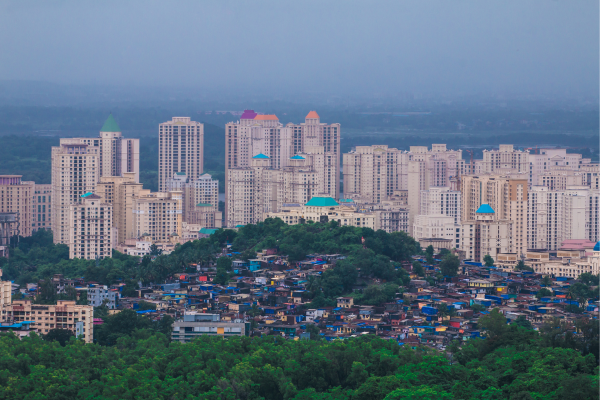
Thane is being transformed through large-scale slum rehabilitation and re-development schemes. These initiatives, led by the Mumbai Metropolitan Region Slum Rehabilitation Authority (MMR SRA), are intended to address age-old issues of urbanization while promoting sustainable development for the city. Various regions, such as Shree Saianand CHS, Ajinkya Maharashtra CHS, and others, are leading this charge, exemplifying a progressive strategy towards enhancing living standards and maximizing land use. Advertisement


The city's development advancements are rooted in holistic planning structures, including the Thane Municipal Corporation's Revised Development Plan, which was partially approved in 1999. This is supported by the Town Planning Scheme of Thane, which has been operational since 1985. The Unified Development Control and Promotion Regulations (UDCPR) of December 2020 further rationalized planning standards, developing a strong framework for urban projects.
These rules establish a common policy for redevelopment operations, allowing the authorities to eliminate inconsistencies and redirect underutilized or misclassified land plots effectively. For example, "open space" or "school zones" areas under previous plans have been suggested to be reclassified to provide space for the rehabilitation of slum dwellers, so that land is used in a manner beneficial to the maximum number of individuals.
The MMR SRA, which was created in 2020, is the planning agency for slum rehabilitation in areas beyond the Brihanmumbai Municipal Corporation (BMC) boundary. The authority is empowered under the Maharashtra Regional and Town Planning Act, 1966, and the Maharashtra Slum Areas (Improvement, Clearance, and Redevelopment) Act, 1971. The authority has to deal with the dual challenge of rehabilitating the slum dwellers along with aligning itself with the city's long-term planning strategies. By citing Section 37 of the Town Planning Act, the MMR SRA has launched changes in development plans for a number of areas. The final goal still is to reconcile the demands of slum residents with the greater needs of urban infrastructure.
A number of projects reflect the changing dynamics of Thane's redevelopment process. Shree Saianand CHS on Final Plot No. 70 in Pachpakhadi was originally demarcated as "open space" in the development plan and "playground" in the town planning scheme. But since it is a declared slum, the area has been designated for redevelopment under the Slum Rehabilitation Scheme to provide in-situ rehabilitation for its occupants. Likewise, Ajinkya Maharashtra CHS at Final Plot No. 67 was allotted for "primary and secondary school" purpose in earlier plans. The redevelopment plan aims to maintain the classification but include the rehabilitation requirements of slum dwellers.
Such is the case of Rutu Park CHS, covering 6,165.30 sq.m., which depicts reclassification of land in order to incorporate slum rehabilitation in urban planning. It seeks to achieve better housing solutions while maintaining compliance with planning policies. Kanchan CHS, covering 2,226 sq.m., highlights the problem of reconciling land use. Having initially been earmarked for particular public purposes, it has now become part of the general movement of trying to meet the housing requirements of slum dwellers without sacrificing urban planning goals.
The MMR SRA has welcomed objections and suggestions from the stakeholders about planned changes. Proposals and plans are made available at different government offices and official websites to provide transparency and inclusion in decision-making. Citizens' participation not only ensures accountability but also ensures that redevelopment schemes conform to the expectations of local people. By responding to concerns and integrating feedback, the authorities seek to develop sustainable and inclusive cities.
Thane's slum rehab and redevelopment initiatives are examples of how the city is working toward sustainable urban growth. By using regulatory mechanisms, strengthening planning authorities, and engaging the public, the city is moving towards a more efficient and inclusive city. As the projects materialize, they have the potential to improve the standard of living of slum residents while contributing to the overall vision of a contemporary, habitable Thane.

5th Jun, 2025

25th May, 2023

11th May, 2023

27th Apr, 2023
Advertisement





 Facebook
 Whatsapp
