Advertisement










Private equity has played a significant role in shaping Indi...
In today’s real estate landscape, fitness is often treated...
In this episode of Prop Personalities, we sit down with Hars...
Luxury real estate is one of the most talked-about segments ...
Welcome to Prop Personalities by Prop News Time - a podcast ...
Noida International Airport, set to open in four months, faces major connectivity challenges. Located 90 km from Delhi's IGI Airport, its accessibility is hindered by limited public transport options. Long-term projects like a metro extension and rapid rail corridor are years away. To address the gap, a bus service with 175-200 electric buses on six routes has been announced, alongside a taxi collaboration with Mahindra Mobility. High cab fares and lengthy travel times may deter passengers, especially when IGI offers robust transport links. Immediate measures, such as reliable bus services, are crucial to ensure the airport's success and regional impact.
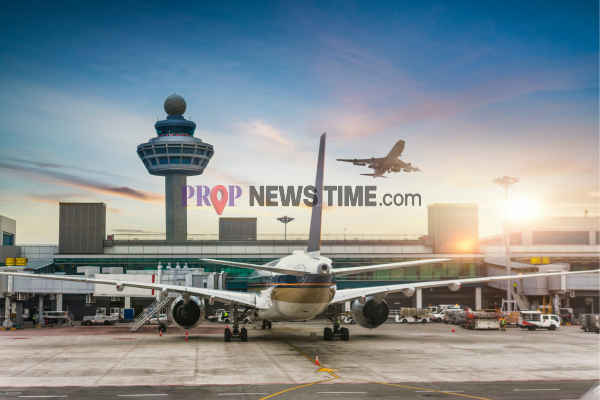
Noida International Airport, set to launch in four months, faces a critical challenge: connectivity. Located in Jewar, the airport is approximately 90 km from Delhi''s IGI Airport, 70 km from Connaught Place, 60 km from Noida City Centre, and 40 km from Pari Chowk, the nearest point on the metro grid. With public transport options to Jewar currently limited, ensuring accessibility will be vital for the airport's success. Advertisement


In its first phase, the airport aims to attract 5-6 million passengers annually. However, transport infrastructure remains underdeveloped. The only existing options are private and UP Roadways bus routes. Long-term projects, such as a 72 km rapid rail corridor and a Delhi Metro extension linking the Airport Express Line, are still in the planning stages and are not expected to be operational before 2030.
To address the immediate gap, Noida International Airport (NIA) recently announced a taxi service in collaboration with Mahindra Mobility. Additionally, Noida, Greater Noida, and Yamuna authorities have formed a special purpose vehicle (SPV) to launch a bus service connecting key locations to the airport. The service will initially include 175-200 electric buses, equipped with luggage space, operating on six routes, including Jewar to Botanical Garden metro station and Noida Sector 35 to the airport via Pari Chowk.
Rajeev Singh, a resident of Indirapuram in Ghaziabad, highlighted the cost concerns, noting that cab fares to Jewar could approach half the cost of a domestic flight. For instance, a one-way Uber Go trip from Noida Sector 52 to the airport is INR 1,365, while a journey from Pari Chowk costs INR 893. The lengthy travel times up to two hours from certain locations-further exacerbate the issue.
Stakeholders agree that the lack of cost-effective transport options may deter passengers from choosing the new airport. A real estate promoter emphasised, "The absence of reliable connectivity will make Jewar airport far less attractive to potential flyers." Concerns also exist about international passengers, who may prefer IGI Airport in Delhi due to its proximity to well-established transport links and tourist destinations like Agra and Mathura.
Experts argue that immediate attention to public transport is necessary to avoid losing passengers to IGI. S Velmurugan, chief scientist at the Central Road Research Institute, stated, "If connectivity issues are not addressed, passengers will opt for IGI, where travel is more convenient. Public transport, such as buses with at least 50 well-connected routes, is essential to ease travel for middle-class travellers."
Efforts are being made to resolve these challenges. Arun Vir Singh, CEO of Yamuna Expressway Industrial Development Authority (YEIDA) and Noida International Airport Ltd (NIAL), assured that transport services would be provided soon, with a network of electric bus routes linking the airport to key locations. However, financial models and timelines are still under discussion.
The Yamuna International Airport Pvt Ltd (YIAPL), a subsidiary of Zurich AG responsible for constructing the airport, has stated that the UP government and the Centre are working collaboratively to ensure seamless connectivity by road and rail. YIAPL added, "When the airport opens, we expect a range of mobility services for every budget, including intercity and long-haul buses, shuttles, taxis, and ride-sharing services."
Currently, the only completed connectivity infrastructure is a 750m elevated road linking the airport with the Yamuna Expressway. While this will ease the final leg of the journey, it does not address the broader transport needs of passengers from Delhi and other parts of NCR.
In contrast, Delhi's IGI Airport offers multiple transport options, including the Airport Express Line of the Delhi Metro, buses, cabs, and auto-rickshaws. A similar model in Bengaluru ensures seamless access to Kempegowda International Airport through a robust network of buses operated by the Bengaluru Metropolitan Transport Corporation.
Noida International Airport's success hinges on resolving its connectivity issues. While long-term projects promise significant improvements, immediate measures, such as the proposed bus service, must be prioritised to ensure the airport delivers on its potential as a world-class facility. Addressing these challenges will not only attract passengers but also establish the airport as a transformative force for the region.

5th Jun, 2025

25th May, 2023

11th May, 2023

27th Apr, 2023
Advertisement





 Facebook
 Whatsapp
