Advertisement








When should a housing society in Mumbai start considering re...
From GST on JDAs to SEBI’s REIT reclassification and the S...
Stay ahead in the world of real estate with our daily podcas...
Stay ahead in the world of real estate with our daily podcas...
The 594-km Ganga Expressway, connecting Meerut to Prayagraj, has achieved 69% completion, with major construction milestones reached, including 91% earthwork and 71% wet mix macadam. Developed under the DBFOT model with a cost of INR 40,000 crore, the project promises to boost connectivity and economic growth in Uttar Pradesh. The expressway will feature two major bridges, a 3.5-km airstrip, and 15 toll plazas. Expected to enhance tourism and trade, it is a key component of Uttar Pradesh's $1 trillion economy roadmap. Future phases aim to expand connectivity to Ballia and Uttarakhand, further strengthening regional infrastructure.
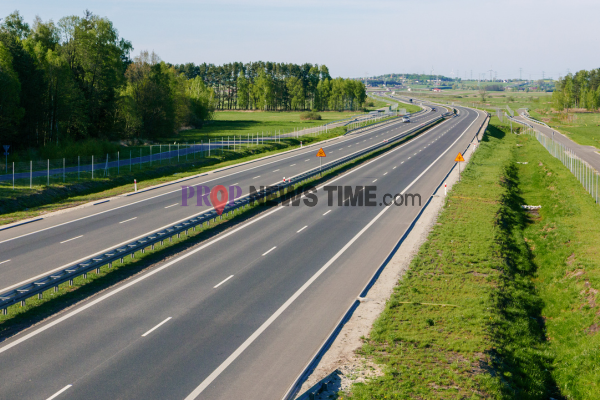
The Ganga Expressway is a landmark infrastructure project aimed at revolutionizing connectivity across the state of Uttar Pradesh. Stretching approximately 594 kilometers, this six-lane access-controlled expressway will connect NH-334 in Meerut to NH-2 in Prayagraj (Allahabad), significantly reducing travel time and enhancing economic opportunities across the region. With a total estimated cost of INR 40,000 crore, the expressway is being developed under the Design-Build-Finance-Operate-Transfer (DBFOT) model through a Public-Private Partnership (PPP), with Adani Enterprises and IRB Infrastructure Developers spearheading the construction. The Uttar Pradesh Expressways Industrial Development Authority (UPEIDA) is the nodal agency overseeing the project. Advertisement


Originally conceptualized in 2008, the Ganga Expressway was envisioned to connect Noida with Ballia to provide seamless east-to-west connectivity in Uttar Pradesh. However, the project was later revised, and Phase 1 now spans between Meerut and Prayagraj. Subsequent phases are planned to extend the corridor by an additional 110 kilometers towards Tigri on the Uttar Pradesh-Uttarakhand border and another 314 kilometers towards Ballia near Varanasi. The project aims to significantly improve the transportation network, linking major cities such as Baghpat, Hapur, Bulandshahr, Amroha, Moradabad, Rampur, Bareilly, Shahjahanpur, Hardoi, and Unnao.
The primary objectives of the expressway are to enhance connectivity, stimulate economic development, and promote tourism. By providing seamless connectivity between key urban centers and rural areas, the project will facilitate faster transportation, reduce congestion on existing highways, and empower local communities by improving access to markets and services. Additionally, the expressway will promote Uttar Pradesh's rich cultural and religious tourism, providing better access to significant sites along the Ganga River.
Designed as an access-controlled highway, the expressway will feature multiple entry and exit points to ensure smooth traffic flow. The infrastructure includes pedestrian overpasses, service roads for local traffic, rest areas for travelers, and safety measures such as emergency response systems and toll plazas at strategic locations. Notable features include two major bridges over the Ganga and Ramganga rivers, capable of accommodating large aircraft landings, making the expressway strategically important for defense and emergency operations. A 3.50-kilometer airstrip near Jalalabad tehsil in Shahjahanpur has been incorporated to facilitate emergency air operations.
To accommodate future traffic demands, the six-lane expressway is expandable to eight lanes in certain sections, with a maximum speed limit of 120 kilometers per hour. To cater to the needs of travelers, the expressway will have nine public amenities complexes, with the main toll plazas located at Meerut and Prayagraj, along with 15 ramp toll plazas at other strategic locations.
The construction of the Ganga Expressway has been planned with significant environmental considerations in mind. Comprehensive environmental impact assessments have been conducted to minimize the ecological footprint of the project, ensuring minimal disruption to the local flora and fauna. Measures such as afforestation, water conservation initiatives, and wildlife corridors are being implemented to mitigate environmental concerns.
Land acquisition for the project posed challenges, requiring extensive negotiations with landowners across 518 villages in 12 districts. The government has worked to ensure fair compensation for affected individuals, enabling the smooth acquisition of land and facilitating construction progress.
The foundation stone for the Ganga Expressway was laid by Prime Minister Narendra Modi on December 18, 2021. Construction on the project commenced shortly after its approval, and as of January 2025, the overall completion progress stands at approximately 69%, as reported by the Uttar Pradesh Expressways Industrial Development Authority (UPEIDA). Significant construction milestones have been achieved, with 91% of the earthwork for the main carriageway completed, ensuring a strong foundation for further development. Additionally, the compacted gravel (C&G) work has been fully completed, marking a crucial step in stabilizing the roadway. Progress on other key components includes 74% completion of the granular sub-base (GSB), which provides structural support for the pavement, and 71% completion of the wet mix macadam (WMM), a critical layer enhancing the road's durability. Furthermore, 68% of the dense bituminous macadam (DBM), which forms the binder course for the road surface, has been laid. In terms of structural developments, 1,390 out of the 1,481 planned structures, including bridges, culverts, and underpasses, have been successfully constructed, reflecting steady progress towards the project's overall completion.
The Ganga Expressway is expected to generate thousands of direct and indirect employment opportunities in sectors such as construction, logistics, tourism, and hospitality. Improved connectivity will enhance the movement of goods and people, facilitating better market access for farmers and small businesses along the route, which will potentially increase their income levels and contribute to overall regional economic growth.
The improved infrastructure is also expected to attract significant investments from both domestic and foreign investors, fostering industrial development in the region. The expressway will serve as a crucial link in boosting Uttar Pradesh's economy, which is aiming to achieve a $1 trillion economy target under the state's development roadmap.
One of the major objectives of the Ganga Expressway is to promote tourism in Uttar Pradesh by providing seamless connectivity to the state's numerous religious and cultural sites. Cities such as Prayagraj, which hosts the Mahakumbh Mela, and towns along the sacred Ganga River will benefit from increased tourist footfall due to improved access. The expressway will provide a smooth and fast travel experience, reducing travel time for pilgrims and tourists visiting historical temples, ghats, and heritage sites along the route.
The Ganga Expressway is being developed under a Public-Private Partnership (PPP) model, ensuring efficient use of public resources while leveraging private sector expertise. The total estimated cost of the project is INR 36,230 crore, with funding sourced from a mix of government budgets and private investments. The financial model is structured to ensure timely project execution while minimizing fiscal burdens on the state government.
The current Phase 1 of the expressway covers Meerut to Prayagraj, but future expansion plans under Phase 2 aim to extend the project further east to Ballia near Varanasi and north to Tigri on the Uttar Pradesh-Uttarakhand border. These expansions will enhance connectivity to additional economic hubs and religious destinations, further cementing the expressway's role in regional development.
The Ganga Expressway is a transformative infrastructure project that will reshape the economic and social landscape of Uttar Pradesh. By offering enhanced connectivity, fostering economic development, and promoting tourism, the expressway will play a pivotal role in the state's growth strategy. With construction progressing steadily and a strong focus on sustainability and regional development, the expressway is poised to become a key driver of progress, improving the lives of millions and boosting Uttar Pradesh's stature as a leading state in India.

5th Jun, 2025

25th May, 2023

11th May, 2023

27th Apr, 2023
Advertisement








 Facebook
 Whatsapp
