Advertisement










Private equity has played a significant role in shaping Indi...
In today’s real estate landscape, fitness is often treated...
In this episode of Prop Personalities, we sit down with Hars...
Luxury real estate is one of the most talked-about segments ...
Welcome to Prop Personalities by Prop News Time - a podcast ...
The Noida Authority is intensifying efforts to curb unauthorised construction across 80 villages within the Dadri-Noida-Ghaziabad investment region (DNGIR), also known as New Noida. CEO Lokesh M emphasized demolishing illegal structures following the October 2024 approval of the New Noida master plan. Warning boards and advertisements are being deployed to raise awareness. The industrial city, spanning 20,911 hectares, will develop in four phases over two decades, starting with 3,165 hectares by 2027. Authorities are working with farmers and village heads on land acquisition plans near key infrastructure. This proactive approach aims to balance development needs with local community interests.
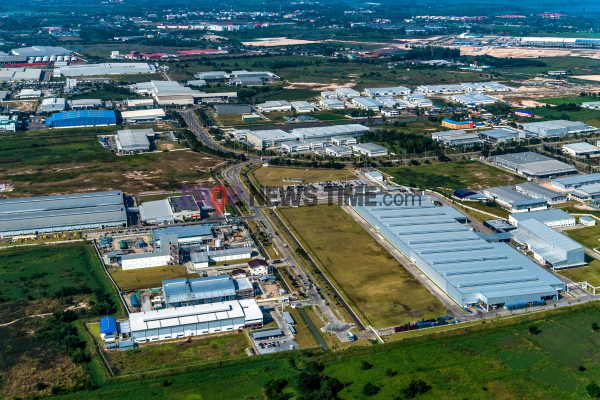
The Noida Authority has taken decisive steps to tackle unauthorised construction within 80 villages under the Dadri-Noida-Ghaziabad investment region (DNGIR), popularly known as New Noida. During a recent meeting, CEO Lokesh M, in collaboration with the Bulandshahr district magistrate CP Singh and officials from relevant authorities, emphasised the need to install warning boards cautioning villagers about the demolition of unauthorised structures. Advertisement


The CEO previously clarified that any construction commenced after the New Noida master plan's approval in October 2024 would be deemed illegal, warranting strict enforcement action. To enhance public awareness, advertisements highlighting the illegality of unapproved land purchases or constructions are being planned across the 80 villages, including 60 in Bulandshahr district.
Discussions also centred on determining land rates for direct purchases from farmers to facilitate the industrial city's development. Spanning 20,911 hectares, the project will be developed in four phases over the next two decades. While compensation rates were reviewed, no final decisions were made. The framework will consider circle rates and proximity to significant landmarks such as the Noida International Airport in Jewar. Authorities are consulting village heads and impacted families to address concerns and finalise agreements.
The initial phase will affect approximately 16,000 farmer families across 15 villages, with land acquisition focusing on areas near vital infrastructure like the Eastern Peripheral Expressway and GT Road. Surveys for land acquisition have already commenced.
The industrial city project stems from growing investor interest, as seen during the global investors summit last year, where numerous companies expressed plans to establish operations in New Noida. The development timeline envisions completing the first phase of 3,165 hectares by 2027, followed by subsequent phases covering 3,798 hectares (2027-2032), 5,908 hectares (2032-2037), and the final 8,230 hectares by 2041.
The Noida Authority's proactive measures against unauthorised constructions and its structured approach to industrial development aim to foster economic growth while addressing local concerns. By prioritising public awareness and engaging with affected communities, the project seeks to balance development needs with stakeholder interests. The phased development plan reflects a commitment to systematic urbanisation, ensuring that the region meets the demands of investors and residents alike over the coming decades.

5th Jun, 2025

25th May, 2023

11th May, 2023

27th Apr, 2023
Advertisement





 Facebook
 Whatsapp
