Advertisement








When should a housing society in Mumbai start considering re...
From GST on JDAs to SEBI’s REIT reclassification and the S...
Stay ahead in the world of real estate with our daily podcas...
Stay ahead in the world of real estate with our daily podcas...
India's industrial real estate sector is booming, with investments reaching USD 2.5 billion in 2024-a 190% increase from 2023. The surge is driven by the PLI scheme, the "China Plus One" strategy, and demand for logistics parks. Gujarat, Tamil Nadu, and Karnataka account for 72% of PLI investments, with firms like Foxconn and Tata expanding operations. Developers such as IndoSpace and Blackstone are investing heavily in logistics parks. With large-scale industrial hubs like AURIC and Dholera SIR, India's manufacturing shift is accelerating, solidifying the country's position as a global industrial powerhouse.
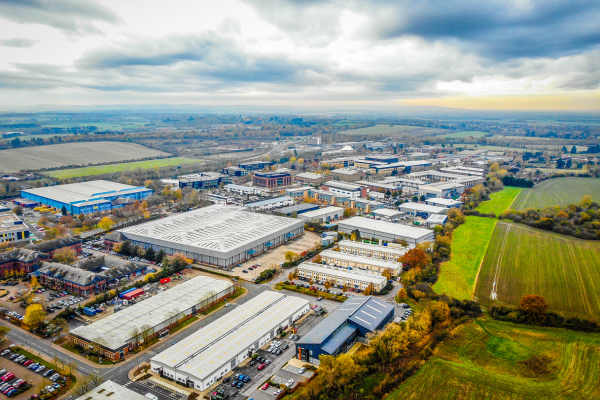
India's industrial real estate sector is experiencing a significant transformation, driven by substantial investments and strategic initiatives aimed at establishing the country as a global manufacturing hub. In 2024, institutional investments in Indian real estate surged to USD 6.5 billion, marking a 22% increase from the previous year. Notably, the industrial and warehousing segment emerged as the top contributor, attracting USD 2.5 billion in investments-a staggering 190% increase compared to 2023. This sector accounted for 39% of the total inflows, surpassing the office segment, which garnered USD 2.3 billion. Advertisement


The government's Production-Linked Incentive (PLI) scheme has been instrumental in this growth, offering financial incentives to manufacturers in key sectors such as electronics, pharmaceuticals, and textiles. Since its launch in 2020, the PLI scheme has successfully attracted over USD 17 billion in investments across 14 sectors, leading to the establishment of more than 1,300 manufacturing units nationwide. States such as Gujarat, Tamil Nadu, and Karnataka have emerged as primary beneficiaries, collectively accounting for approximately 72% of the total PLI capital expenditure. Gujarat alone is set to garner investments exceeding INR 36,000 crore, underscoring its pivotal role in India's industrial resurgence.
The "China Plus One" strategy, wherein companies diversify their manufacturing operations beyond China, has further bolstered India's position as a preferred destination. States like Tamil Nadu have become magnets for global companies, including Foxconn, Samsung, and Hyundai, drawn by robust infrastructure and a skilled workforce. This influx has spurred a surge in demand for industrial parks and logistics facilities within the state. IndoSpace, a leading warehouse developer, announced plans to increase its investment in Tamil Nadu by 41% over the next three years to accommodate the rising demand for industrial parks as more companies establish operations in India. The company's investment in the state will rise from USD 380 million to USD 536 million, which is expected to create over 8,000 new jobs. For example, Gujarat has attracted significant investments in the chemical and textile sectors, with companies setting up large manufacturing plants in industrial hubs like Dahej and Sanand. Similarly, Karnataka's aerospace and defense sectors have seen substantial growth, with global players establishing production facilities in the state's industrial corridors.
The expansion of logistics parks is a critical component of this industrial boom. Developers like IndoSpace have announced plans to invest up to INR 4,500 crore in new industrial and logistics parks in Tamil Nadu, aiming to meet the escalating demand from companies setting up operations in the region. Similarly, Blackstone's Horizon Industrial Parks and ESR Group's joint venture with GIC, valued at USD 750 million, are focused on developing state-of-the-art logistics facilities across India, enhancing the efficiency of supply chains and reducing operational costs.
In Maharashtra, the Aurangabad Industrial City (AURIC), inaugurated in 2019, represents India's first greenfield industrial smart city. Spread over 10,000 acres, AURIC is part of the Delhi-Mumbai Industrial Corridor Project and focuses on sectors such as textiles, food, defense, engineering, and electronics. Equipped with underground plug-and-play infrastructure, 60% of the land is designated for industrial use, while the remaining 40% is allocated for residential, commercial, and other purposes.
Gujarat's Dholera Special Investment Region (SIR) is another significant development, aiming to attract both national and international investments. The region is ready to kickstart its plug-and-play infrastructure, and companies like Tata are setting up India's first chip fabrication unit in Dholera, highlighting the area's potential in the semiconductor industry.
This surge in industrial real estate differs markedly from traditional real estate sectors. While residential and commercial real estate often grapple with market volatility and regulatory challenges, industrial real estate is experiencing sustained growth driven by manufacturing expansion and logistical advancements. The development of Multi-Modal Logistics Parks (MMLPs) under the government's Logistics Efficiency Enhancement Program exemplifies this shift, aiming to lower freight costs and improve supply chain efficiency through integrated facilities that combine various modes of transport and advanced storage solutions.
The surge in manufacturing activities has necessitated the development of advanced logistics and warehousing facilities to support efficient supply chain operations. Developers are responding by creating large-scale, integrated industrial and logistics parks equipped with modern amenities. For instance, Actis is capitalizing on this opportunity by investing in industrial and warehousing real estate assets suitable for the expansion of the new economy in India through its platform, Ample Parks.
This industrial real estate boom marks a departure from traditional real estate sectors such as residential and commercial properties. Unlike the cyclical nature of residential markets, industrial real estate is witnessing sustained demand driven by structural changes in the global manufacturing landscape and supportive government policies. The focus is now on creating specialized infrastructure that caters to the specific requirements of industries, including large floor spaces, high load-bearing capacities, and advanced technological integrations for automation and efficient operations.
In conclusion, India's ascent as a manufacturing hub is intricately linked to the rapid development of its industrial real estate sector. The confluence of favorable government policies, strategic global shifts in manufacturing, and proactive infrastructure development has created a conducive environment for industrial growth. As multinational corporations continue to establish and expand their operations in India, the demand for sophisticated industrial spaces and logistics facilities is expected to remain robust, cementing India's position in the global manufacturing arena.

5th Jun, 2025

25th May, 2023

11th May, 2023

27th Apr, 2023
Advertisement








 Facebook
 Whatsapp
