Advertisement






Follow us on Instagram, Facebook, YouTube, X, Spotify, Amazon Music, Apple Music and more.
The Gulf conflict has disrupted global supply chains, pushed...
REITs have changed the way commercial real estate is owned a...

What does it take to preserve a real estate legacy while bui...
What really powers the cloud? Behind every Google search, A...
A lot of what defines a home isn’t visible at handover. I...
3 minutes ago
Indian Hotels Company (IHCL), the Tata Group-owned hospitality company, has opened the 181-key Taj Palace in Lucknow, marking the launch of its second Taj hotel in the Uttar Pradesh capital. The hotel was inaugurated by Uttar Pradesh Chief Minister Yogi Adityanath on Wednesday. IHCL said the opening reflects Lucknow's growing importance as an economic and tourism centre, supported by infrastructure development, investment and rising visitor activity. The company currently operates a portfolio of 60 hotels across more than 20 cities in Uttar Pradesh, further expanding its hospitality presence in the state.Read more

33 minutes ago
Mumbai’s prime residential market recorded a 1.4% increase in capital values between January and June 2026, while prime rental values rose 1.2%, according to Savills India’s latest market report. The movement reflects continued growth in the city’s premium housing segment during the first half of the year. The report tracks prime residential markets and assesses changes in capital and rental values across key locations. Mumbai’s performance came amid continued demand for high-end homes, with the city remaining among the major prime residential markets covered by the global property consultancy. The findings indicate moderate price and rental growth in the segment during H1 2026.Read more

1 hour ago
Lincoln Property Company, Saber-Hightower and Waterfall Asset Management have acquired a USD 450 million mixed-asset portfolio spread across New York, New Jersey and Connecticut. The portfolio covers around 4 million square feet of existing properties and development sites spread across 300 acres. The acquisition is led by iPark 84, a 270-acre business park in East Fishkill, New York, with approximately 1.8 million square feet of existing space. The portfolio also includes development opportunities and is positioned around established infrastructure, industrial occupiers and available power capacity.Read more

1 hour ago
A Mohali court has rejected the bail plea of Punjab-based builder Ajay Sehgal in a money laundering case linked to the Suntec City project. Additional Sessions Judge Hardeep Singh held that Sehgal had not met the statutory conditions for bail under Section 45 of the Prevention of Money Laundering Act. The Enforcement Directorate alleged that proceeds of crime were generated, routed and siphoned off to conceal their origin. The court also noted the possibility of Sehgal absconding or tampering with evidence. The defence disputed the allegations, questioned the identification of any specific laundering transaction and cited the absence of a chargesheet in the underlying police case.Read more

2 hours ago
Mumbai’s struggle to preserve its limited open spaces is becoming increasingly visible as redevelopment, infrastructure projects, commercial activity and planning changes compete for land in the city. Recent reports by the Free Press Journal, Hindustan Times and The Times of India have highlighted concerns over public grounds, gardens, playgrounds and other ecological assets. A recent study by the Urban Design Research Institute and NAGAR found that public open space varies sharply across Mumbai’s 24 wards, from 9.4 sq m per resident in A Ward to just 0.5 sq m in B Ward. Separately, civic data cited by Hindustan Times shows that many of the 2,360 plots reserved for gardens, parks and playgrounds remain undeveloped or inaccessible. Architects, planners and residents have raised concerns that continued development pressure, coupled with delays in implementing an effective open spaces policy, could further reduce access to public land.Read more

Advertisement

2 hours ago
Zerodha co-founder Nikhil Kamath and entrepreneur Sreeram Reddy Vanga have invested a combined INR 250 crore in hyperscale data centre operator CtrlS Datacenters. Kamath has invested INR 200 crore, while Vanga has contributed INR 50 crore. Announced on Wednesday, 19 August, the capital will support CtrlS’s infrastructure expansion and capacity build-out across India as demand for AI, cloud computing and digital workloads increases. CtrlS operates 19 data centres across nine Indian markets with more than 370 MW of capacity and has another 4.4 GW of projects at various stages of execution.Read more

3 hours ago
The Bombay High Court has raised serious concerns over the inclusion of public land used as the clothes-drying area at Mumbai’s historic Mahalaxmi Dhobi Ghat in a slum rehabilitation scheme. The court has sought an explanation from the Brihanmumbai Municipal Corporation (BMC) on how the scheme was permitted on the land and whether the rights of the traditional washermen community were adequately considered. The matter brings renewed scrutiny to the redevelopment of valuable public land in Mumbai and the legal safeguards governing its use.Read more

3 hours ago
Supreme Infrastructure India Limited is looking to expand its building construction and housing activities, using its experience in engineering, procurement and construction (EPC), commercial buildings and institutional projects. The company has identified RCC frame structures and building projects as key areas for its next phase, alongside its wider infrastructure business. Its partnership with Brookfield for a Global Capability Centre in Powai is among the projects highlighting this capability. The company is also looking at opportunities in housing, redevelopment and urban development, with land assets and construction experience forming part of its approach to building a larger real estate pipeline.Read more

4 hours ago
New Zealand-based Fletcher Building has warned that continued economic, political and geopolitical uncertainty is likely to affect its first-half fiscal 2027 earnings, with a meaningful recovery in underlying volumes not expected until calendar 2027. The construction materials company returned to an annual group net profit of NZD 228 million, compared with a loss of NZD 419 million in the previous year. The improvement was supported by the sale of its Construction division and non-core assets. Revenue from its materials and distribution segment also increased nearly 10 per cent to NZD 5.92 billion.Read more

4 hours ago
Palghar Collector Indu Rani Jakhar has directed the National Highways Authority of India (NHAI) to remove unauthorised constructions and encroachments along the Mumbai-Ahmedabad National Highway within 15 days. The district administration has also asked the police to provide security during the clearance drive and NHAI to submit an Action Taken Report. A recent survey identified 114 encroachments covering 73,831 square metres of built-up area along the highway in Palghar district. The identified violations include hotels, eateries, shops, parking areas, puncture shops and tea stalls.Read more

Advertisement

5 hours ago
The Telangana government is targeting completion of the 3,245-acre Zahirabad Industrial Smart City by March 2028, with the project expected to attract around INR 15,000 crore in investment and generate nearly two lakh direct and indirect jobs. Telangana IT and Industries Minister D Sridhar Babu announced the timeline during a National Industrial Corridor Development and Implementation Trust meeting. The state holds a 51% stake through its land contribution, while the Centre is supporting infrastructure development. Water-supply tendering has been completed and other essential infrastructure is being developed under the Engineering, Procurement and Construction model.Read more

5 hours ago
The Enforcement Directorate has provisionally attached properties and other assets worth INR 71.60 crore in a money laundering investigation involving Gurugram-based 32nd Avenue Group. The action, taken on 19 August under the Prevention of Money Laundering Act, follows multiple FIRs registered by Delhi and Gurugram police against the group and its promoter-directors. The ED said investors were allegedly induced to purchase commercial units through promises of assured leases, fixed rental income and buy-back arrangements. The attachment covers 76 immovable and 38 movable properties across Gurugram, Goa and Maharashtra, including commercial units, land, bank balances and an inland vessel.Read more

6 hours ago
Vietnam's government has proposed changes to land acquisition rules to speed up housing and infrastructure development and support its target of achieving annual economic growth of at least 10% through 2030. Under the proposed amendments, authorities could acquire land and allow construction to begin before compensation and resettlement arrangements are fully completed. The changes follow delays to major projects caused by disputes between residents and developers over compensation. The government also plans to prioritise affected residents for new residential land in the same location and introduce clearer acquisition criteria and more transparent, data-based land valuation.Read more

Advertisement






6 hours ago
The Maharashtra government has lifted the freeze on allotment of state-owned land to cooperative housing societies, which had been in place since 2010. Under the revised policy, at least 20% of members in societies receiving government land will have to be from backward classes and 5% will have to be persons with disabilities. The government has also replaced the earlier lottery-based system with a public auction and bidding process. Land will be offered on a 30-year lease, with different base prices for Mumbai and the rest of Maharashtra.Read more

7 hours ago
The Union government is considering allowing newly completed highway stretches to carry normal traffic for two to three months before their formal inauguration, following instances of cracks, potholes, rutting, drainage problems and other premature defects appearing soon after opening. The proposal was discussed during a review of the Delhi-Mumbai Expressway last week, chaired by Union Road Transport and Highways Minister Nitin Gadkari. Officials said extended trials could help identify deficiencies under actual traffic and weather conditions, particularly during the monsoon, allowing contractors to rectify problems before a formal launch and the commencement of toll collection.Read more

Advertisement

7 hours ago
Kolte-Patil Developers has appointed Hrishikesh Parandekar as its Chief Executive Officer, with the appointment taking effect from August 24, 2026. Parandekar brings more than three decades of experience across real estate, investments and strategic leadership. He has previously held senior positions at Alpha Alternatives, McKinsey & Company, Morgan Stanley, Karvy Group, Ambit Holdings and Sugee Group. In his new role, he will focus on business expansion, operational performance and institutional strengthening. Kolte-Patil has developed more than 68 projects across Pune, Mumbai and Bengaluru, covering over 33 million square feet of saleable area.Read more

7 hours ago
Uttar Pradesh has entered into a three-year strategic agreement with the Dedicated Freight Corridor Corporation of India Ltd (DFCCIL) to strengthen freight movement, multimodal connectivity and logistics infrastructure across the state. The non-financial MoU, signed by Invest UP and DFCCIL, is aimed at improving access to dedicated freight corridors, supporting industrial development and identifying opportunities for logistics parks and freight-linked investments. The partnership is expected to help businesses use the state’s freight infrastructure more efficiently while supporting faster movement of goods and strengthening Uttar Pradesh’s position as a logistics and manufacturing hub.Read more

8 hours ago
By 2035, India's urban population is projected to reach 675 million, up from 483 million in 2020, an addition roughly equal to the current population of the United States, absorbed into cities over a single decade. That scale of change does not arrive overnight, and much of it is already visible: metro lines under construction, heat action plans now standard in two dozen cities, and smaller towns quietly overtaking the metros in consumer growth. This piece traces eight shifts already underway that will define what an Indian city looks like a decade from nowRead more

8 hours ago
US single-family homebuilding declined sharply in July as elevated mortgage rates and a growing inventory of unsold new homes weighed on construction activity. Single-family housing starts fell 9.9% from the previous month to a seasonally adjusted annual rate of 808,000 units, while the segment was down 15.7% from a year earlier. Permits for future single-family construction increased 2.5% during the month. Total housing starts, including multifamily properties, also declined, while overall residential building permits increased. The figures highlight continued pressure on the US housing market, where affordability remains a concern.Read more

8 hours ago
Delhi is likely to see the addition of around 6,000 luxury hotel rooms by 2030, as new hospitality projects expand the city’s premium accommodation capacity. The upcoming supply is expected to include luxury and high-end properties across key locations in Delhi-NCR. The increase in room inventory comes amid rising demand for quality accommodation from business travellers, tourists, corporate events and international visitors. The planned additions are expected to strengthen Delhi’s hospitality infrastructure and support the capital’s position as a major destination for business, tourism, conferences and large-scale events.Read more

Advertisement

9 hours ago
A two-day conclave of senior Income Tax Department officials in Jaipur focused on improving taxpayer services, reducing litigation and strengthening the department’s infrastructure and future functioning. The meeting, chaired by Central Board of Direct Taxes (CBDT) Chairman Ravi Agrawal, brought together Principal Chief Commissioners, Principal Directors General and other senior officials from across the country. Discussions covered e-HRMS, service matters, reservation policy, TDS administration, capacity building, systems, expenditure planning and coordination with other agencies. Officials also discussed infrastructure requirements at Income Tax offices and identified key priorities for the department.Read more

9 hours ago
The Allahabad High Court’s Lucknow bench has cleared the way for a proposed hotel project in Ayodhya by setting aside an order that had kept its land under the acquisition process. The court held that government departments should honour commitments made under the state’s investment and tourism policies, particularly when approvals had already been granted before an acquisition notification was issued. The case relates to 2,530 square metres of land in Kudakeshavpur Uparhar village, where Kalpana Nigam had proposed the Ramakulam Regency hotel. The state government has now been given six weeks to reconsider the land’s exemption from acquisition.Read more

10 hours ago
AstaGuru has expanded its international operations to Singapore, opening its second overseas headquarters after establishing a London office earlier this year. The Singapore office will be headed by Jillian Kwan as managing director and will focus on collector engagement, client advisory and sourcing consignments across Singapore and Southeast Asia. The office will also host specialist consultations, physical previews and events linked to select auctions. AstaGuru, founded in Mumbai in 2008, said the expansion will help connect Indian art, jewellery, watches and luxury collectibles with collectors across Southeast Asia and other international markets.Read more

10 hours ago
Redrose Vanijya LLP, a firm associated with Riju Jhunjhunwala of the LNJ Bhilwara Group, has purchased a 10,000 sq ft luxury apartment in a recently launched Max Group project in Noida for INR 37 crore. The transaction is understood to be the most expensive single-apartment sale reported in the city so far. The deal comes as Noida’s premium housing market expands, with developers launching high-end residences aimed at executives and affluent buyers. The project is part of Max Estates’ wider development plans following its acquisition of Boulevard Projects, which has significant residential, commercial and retail development potential.Read more

11 hours ago
ASK Property Fund, the real estate investment arm of Blackstone-backed ASK Asset & Wealth Management Group, has exited its investment in Shriram 122 West, a residential development by Shriram Properties in Mangadu, Chennai. The fund realised INR 340 crore against an investment of INR 215 crore, generating a gross investment multiple of about 1.6 times. The exit was announced on Tuesday, 18 August. ASK had provided growth capital to the project in 2023. Shriram 122 West has approximately two million sq ft of saleable area and is located on the outskirts of Chennai. The investment formed part of a co-investment platform between ASK Property Fund and Shriram Properties focused on residential and plotted development opportunities.Read more

Advertisement

11 hours ago
Chennai-based real estate developer GT Bharathi has secured a licence from the World Trade Centers Association (WTCA) to develop a World Trade Center business in Chengalpattu district, Tamil Nadu. The WTC is planned as the anchor of an integrated, IT-centric mixed-use township spanning approximately 150 acres, with a projected development value of around INR 7,000 crore. The proposed development will combine commercial and retail spaces, data centres, residential and luxury housing, education and hospitality facilities. GT Bharathi expects the project to create more than one lakh jobs at full build-out, with the masterplan planned in phases over roughly a decade.Read more

12 hours ago
India’s rapidly ageing population is prompting real estate developers and private equity investors to expand into senior living, with more than INR 13,000 crore committed to projects since 2025, according to Colliers. The investment reflects growing demand for organised retirement communities, assisted living and healthcare-linked housing as life expectancy rises and family structures change. Developers are increasingly treating senior living as a specialised residential asset class rather than a niche housing segment. The southern markets continue to lead the sector, while cities across western and northern India are attracting new projects and institutional capital.Read more

12 hours ago
The Bhopal Municipal Corporation (BMC) has issued around 6,800 notices to property owners as part of a citywide drive against unauthorised commercial use of residential and other properties. The action follows inspections by civic teams, which identified properties being used for commercial activities without the required permissions. The corporation has begun moving towards sealing properties where violations remain unresolved after notices and stipulated deadlines. The drive has also prompted objections from traders, who have sought regularisation of properties and raised concerns over the impact of sealing on established businesses. The civic body has maintained that enforcement will continue against violations of land-use norms.Read more

13 hours ago
Finance Minister Nirmala Sitharaman has asked public sector banks (PSBs) to address gaps in Priority Sector Lending (PSL) and focus on the quality and usefulness of credit rather than meeting targets alone. Banks are required to direct 40 per cent of their total adjusted net bank credit towards priority sectors, including agriculture, MSMEs and housing. At the PSB Confluence 2026, she called for greater lending to farmers growing pulses and oilseeds, along with better access to institutional credit for small and marginal farmers. The focus is also on improving financial inclusion and supporting productive economic activity.Read more

13 hours ago
Larsen & Toubro (L&T) has acquired 2.0875 crore units of Mumbai-based Nxt-Infra Trust for approximately INR 199 crore through an open market transaction, according to bulk deal data on the National Stock Exchange. The infrastructure major purchased the units at an average price of INR 95.33 per unit on August 18. A K Capital Finance sold more than 2.10 crore units at the same price, taking the value of its transaction to INR 200.67 crore. Nxt-Infra Trust is a Securities and Exchange Board of India-registered Infrastructure Investment Trust (InvIT) sponsored by Actis Highway Infra.Read more

Advertisement

14 hours ago
The Thane Municipal Corporation's general body has approved a 12 per cent hike in property tax for residential properties and 20 per cent for non-residential properties, along with a new property transfer fee linked to the government-approved market value of authorised properties. The decision, taken barely four months after the civic body presented a no-confidence-hit budget, has drawn opposition from both the NCP (SP) and the BJP, a partner in the ruling alliance, with critics alleging the proposal was cleared without adequate discussion.Read more

14 hours ago
Ceigall India and Sushee Infra and Mining’s joint venture has secured four road construction orders worth a combined INR 2,150 crore in Arunachal Pradesh. The projects, awarded by the National Highways and Infrastructure Development Corporation Limited, cover the construction and upgrading of road stretches in the state and form part of efforts to improve connectivity in the strategically important northeastern region. The orders add to Ceigall India’s road infrastructure portfolio and will expand its presence in Arunachal Pradesh, with the projects involving substantial construction activity across different sections of the state’s highway network.Read more

15 hours ago
Union Road Transport and Highways Minister Nitin Gadkari has warned that consultants responsible for defective detailed project reports (DPRs) would be held accountable for accidents and loss of life on highways. He also cautioned contractors against compromising construction quality, saying performance and financial audits would be used to assess their work and could lead to penalties or blacklisting. The ministry is also preparing tunnel tenders worth INR 2 lakh crore to INR 2.5 lakh crore. Industry representatives, meanwhile, raised concerns over the use of lowest-bid tenders and called for greater adoption of quality-cum-cost based selection for large and complex projects.Read more

15 hours ago
Regional Health Properties reported higher revenue and sales for the second quarter of 2026, while its net loss narrowed from a year earlier. The healthcare real estate company reported revenue of USD 24.44 million for the quarter, compared with USD 10.06 million in the same period last year. Sales increased to USD 10.44 million from USD 1.28 million. For the first six months of the year, revenue rose to USD 45.6 million, while the net loss narrowed to USD 2.01 million from USD 2.71 million a year earlier.Read more

16 hours ago
Global alternative investment firm Investcorp has acquired the India contract logistics business of 20Cube 3PL Solutions for about INR 500 crore. The investment will support the company’s technology expansion, pan-India network and growth in services as manufacturing activity increases across India. 20Cube currently operates more than 7 million square feet of warehousing space and plans to expand this to over 20 million square feet over the next four to five years. The company and Investcorp also plan to invest another INR 500-750 crore in acquiring complementary contract logistics businesses.Read more

Advertisement

16 hours ago
The Centre will release a second tranche of INR 275.52 crore to Gujarat and Sikkim under the Pradhan Mantri Rashtriya Krishi Vikas Yojana (PM-RKVY) and Krishonnati Yojana. Gujarat will receive INR 224.94 crore, while Sikkim will get INR 50.58 crore. The funds are intended to support agricultural productivity, modern farming practices, farm infrastructure and measures aimed at improving farmers’ incomes. The decision followed a review of the implementation of the two schemes with the agriculture ministers of both states. The Centre has also asked the states to complete approved projects within the stipulated timelines and assess their outcomes.Read more

17 hours ago
Finance Minister Nirmala Sitharaman and Commerce and Industry Minister Piyush Goyal are in Singapore for discussions aimed at strengthening India's economic partnership with the Southeast Asian financial hub. Goyal is leading a 70-member Indian business delegation seeking investment, trade and technology partnerships, while Sitharaman is heading the ministerial delegation for the fourth India-Singapore Ministerial Roundtable (ISMR). The talks will cover manufacturing, connectivity, digitalisation, healthcare, skills and sustainability. Bilateral trade reached USD 36.1 billion in 2025-26, while Singapore remained India's largest source of foreign direct investment during the year.Read more

17 hours ago
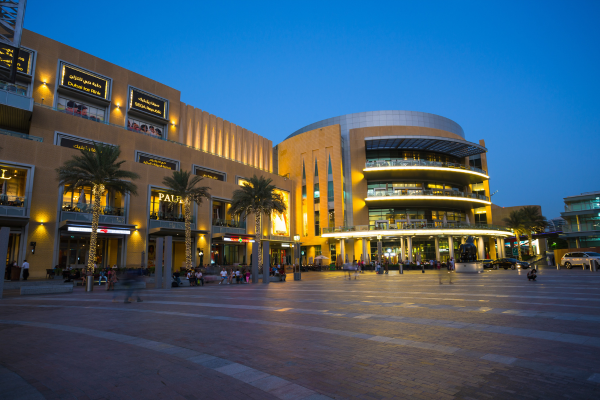
R City Mall in Mumbai’s Ghatkopar has received LEED Platinum Certification, recognising its performance against global standards for environmental responsibility, operational efficiency and sustainable practices. Developed by Runwal Realty, the 1.2-million-square-foot mall houses more than 350 national and international brands, over 50 dining outlets, a nine-screen multiplex, family entertainment centres and event spaces. The certification comes as sustainability becomes an increasing focus for retail properties and their operations. Runwal Realty said the recognition reflects its efforts to combine environmental practices with retail, dining and entertainment offerings at the destination.Read more
18 hours ago
Escorts Kubota will invest over INR 2,000 crore to develop a new manufacturing plant across 154 acres in YEIDA's Sector 10 in Gautam Buddha Nagar, Uttar Pradesh. The facility will be developed in phases and will manufacture tractors, farm implements, construction equipment and engines for domestic and global markets. The first phase is planned to add capacity for up to 60,000 tractors and 15,000 construction equipment units annually. The investment will be funded through proceeds from the company's earlier preferential share issue to Kubota Corporation and internal accruals.Read more

18 hours ago
The new integrated terminal at Nashik’s Ozar airport is being fast-tracked for completion by March 31, 2027, ahead of the Simhastha Kumbh Mela. The Nashik-Trimbakeshwar Kumbh Mela Authority reviewed construction progress on August 15 and directed agencies to accelerate the work along with related road and safety infrastructure. The airport expansion, approved at an estimated INR 556 crore, is designed to increase passenger-handling capacity from 300 to 1,000 passengers per hour. The broader works include a new terminal, expanded aircraft parking and passenger facilities, while access improvements are also being pursued.Read more

Advertisement

19 hours ago
RateGain Travel Technologies has entered into a partnership with Central Asian carrier VIETJET QAZAQSTAN to deploy its AirGain airfare pricing intelligence platform across key routes. Announced on August 18, the agreement will provide the airline’s commercial and revenue management teams with real-time visibility into competitor fares and pricing movements across multiple channels. AirGain will also support automated fare tracking, competitive benchmarking and dynamic pricing decisions. The deployment comes as VIETJET QAZAQSTAN expands its footprint in Central Asia and seeks faster access to market data to support its pricing strategy.Read more

19 hours ago
Germany-based KRONES has inaugurated a new manufacturing facility for bottling machinery at Vemagal Industrial Area in Karnataka’s Kolar district. The INR 315 crore facility, spread across 16,000 square metres, has been established in 18 months and is expected to create around 400 jobs. The company received approval for its investment proposal in October 2024 and was allotted 30 acres for the project. The facility will manufacture ErgoBloc packaging systems and machinery for different types of bottles, including equipment capable of producing up to 1,00,000 Coca-Cola-type bottles per hour.Read more

20 hours ago
India’s residential property market recorded 91,729 housing sales and 89,161 new launches across its eight largest cities in Q2 2026, according to PropTiger.com’s Real Insight Residential report released by Aurum PropTech. Sales declined 4.4% quarter-on-quarter, while launches fell 4.2%, although annual launches increased 6.0%. Sales remained 2,568 units ahead of new supply, limiting the accumulation of unsold inventory. The sales-weighted average residential price rose 1.0% sequentially to INR 10,153 per sq ft, remaining above INR 10,000 per sq ft for a second consecutive quarter. MMR retained the largest market share by volume and value, while Bengaluru recorded the highest annual price appreciation at 26.0%. Kolkata reported the strongest sequential sales recovery, supported by a post-election improvement in demand.Read more

20 Aug 2026
The Union Cabinet has approved the four-laning of the 82.578-km Muzaffarpur-Sitamarhi-Sonbarsa section of NH-22 in Bihar at an estimated cost of INR 3,590.73 crore. The project will be developed under the Hybrid Annuity Mode (HAM) and will improve connectivity between Muzaffarpur and the India-Nepal border at Sonbarsa. It will also strengthen links with the national freight network, industrial centres such as Barauni and river-based logistics facilities along the Ganga. The project includes seven major bridges, three railway overbridges and two flyovers to improve traffic movement and safety along the corridor.Read more

20 Aug 2026
Global mobility platform Arrive has opened a new innovation hub in Bengaluru as part of its expansion of technology and product capabilities in India. The 20,000-square-foot centre will bring together teams working across engineering, product, customer care, sales operations and artificial intelligence. The company said the Bengaluru team will support its global engineering operations and development of predictive AI capabilities for urban mobility. The centre has been established with support from management consultancy Zinnov and adds Bengaluru to Arrive’s network of offices across Europe, the US and other markets.Read more

Advertisement

20 Aug 2026
A flat owner in Greater Noida has secured the car parking space that had been denied to him after an eight-year legal dispute with the developer. The consumer court ruled in the homebuyer’s favour in two stages, ultimately directing the developer to fulfil its commitment to provide the parking facility. The dispute arose after the promised parking space was not provided to the resident despite his purchase of the flat. The developer challenged an earlier consumer court ruling, extending the matter into a prolonged legal battle. The latest decision has now upheld the homebuyer’s claim and recognised the developer’s failure to provide the promised facility as a deficiency in service. The case highlights the role of consumer forums in resolving disputes involving residential property commitments.Read more

20 Aug 2026
Infrastructure and engineering consultant Rodic Consultants has partnered with Nasscom to promote artificial intelligence adoption across India's infrastructure and other strategic sectors. Under the Rodic InfraAI Innovation Challenge, the two organisations will bring together AI and deep-tech startups to develop scalable solutions for infrastructure-related challenges. The initiative will focus on identifying and validating technologies involving artificial intelligence, Generative AI, hardware and software that can be deployed in real-world projects. Rodic Consultants said the collaboration will also create opportunities for startups while supporting the development of technology-led infrastructure in India.Read more

20 Aug 2026
Ireland’s annual house price growth slowed to 5.6% in June, marking its lowest level in nearly two and a half years, according to data from the Central Statistics Office (CSO). The latest reading extended the gradual moderation in the housing market after annual price growth reached 10.1% in August 2024. The CSO data also showed that residential property prices increased 0.5% month-on-month in June. The continued easing indicates that the pace of house price growth has been cooling, although prices remain higher than a year earlier.Read more
20 Aug 2026
The proposed Yamuna Pushta elevated expressway in the Noida region has been extended from 31 km to around 50 km, with the revised alignment taking the corridor closer to Noida International Airport in Jewar. Estimated to cost about INR 4,000 crore, the eight-lane project will begin near Sector 94 in Noida and extend through Greater Noida and the Yamuna Expressway Industrial Development Authority area towards Sector 23C. The corridor is planned as an alternative to the congested Noida Expressway and is expected to provide an additional route towards the airport as passenger and regional traffic increases.Read more

20 Aug 2026
Shares of Behari Lal Engineering Ltd made a strong debut on Indian stock exchanges on August 19, listing at INR 458 on the BSE and INR 465 on the NSE against an issue price of INR 285. The listings represented premiums of 60.70% and 63.15%, respectively, giving the company a market valuation of INR 2,135.22 crore. The company’s INR 302-crore initial public offering was subscribed 108.44 times on the final day of bidding. Behari Lal Engineering operates manufacturing facilities in Mandi Gobindgarh and is expanding with a third facility in Fatehgarh Sahib, Punjab.Read more

Advertisement



Advertisement