Advertisement










Private equity has played a significant role in shaping Indi...
In today’s real estate landscape, fitness is often treated...
In this episode of Prop Personalities, we sit down with Hars...
Luxury real estate is one of the most talked-about segments ...
Welcome to Prop Personalities by Prop News Time - a podcast ...
The Noida International Airport, poised to become India's largest airport by area, is advancing rapidly towards completion, with Phase 1 expected to commence operations by April 2025. Spanning 5,000 acres in Gautam Buddh Nagar, Uttar Pradesh, the airport aims to ease congestion at Delhi's IGI Airport and enhance connectivity across the National Capital Region (NCR). Developed under a public-private partnership with Swiss firm Flughafen Zurich AG, the airport features world-class infrastructure, including seamless road and rail connectivity via expressways and a proposed high-speed rail link. Phase 1, with an investment of INR 10,056 crore, will accommodate 12 million passengers annually, with future phases expanding capacity to 70 million. The project, estimated to cost INR 15,000 to INR 20,000 crore, is expected to drive significant economic growth, create jobs, and boost real estate development in the surrounding areas.
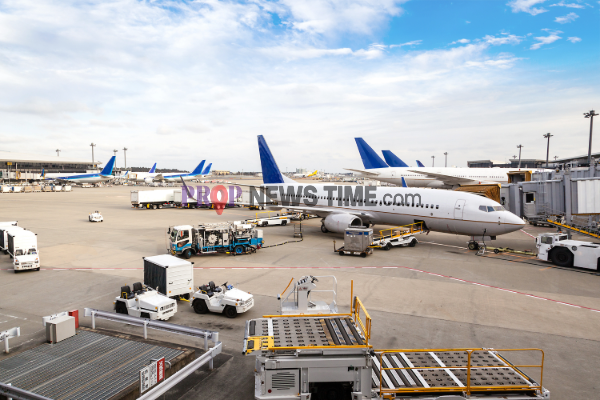
The Noida International Airport, also known as Jewar Airport, is a landmark greenfield aviation project being developed in the Gautam Buddh Nagar district of Uttar Pradesh, India. Positioned to become the largest airport in the country in terms of area, it is designed to alleviate congestion at Delhi's Indira Gandhi International Airport (IGI) and enhance regional connectivity within the National Capital Region (NCR). The project is being developed under a public-private partnership model, with Swiss firm Flughafen Zurich AG acting as the concessionaire. Spanning across 5,000 acres, the airport is strategically located approximately 75 kilometers from Delhi and 72 kilometers from IGI Airport, making it a vital hub for air travel and economic activity in northern India. Advertisement


Connectivity plays a crucial role in the Noida International Airport's master plan. The airport will be seamlessly linked to major transport networks, including the Yamuna Expressway, Delhi-Mumbai Expressway, and both the Western and Eastern Peripheral Expressways, ensuring efficient road access from various parts of the NCR and beyond. A dedicated metro link from Noida to the airport is also planned to facilitate smooth passenger transit. Additionally, the proposed Delhi-Varanasi High-Speed Rail corridor will significantly cut travel time to just 21 minutes, positioning the airport as a key access point for domestic and international travelers.
The development of the Noida International Airport is structured in multiple phases, each designed to progressively expand capacity and infrastructure. Phase 1, with an investment of approximately INR 10,056 crore, focuses on constructing a single runway and a terminal with an initial capacity of 12 million passengers annually. As of early 2025, significant construction progress has been made, with the airport expected to commence operations by April 2025. In the subsequent Phase 2, the airport's capacity will be expanded to handle 42 million passengers annually by adding another 30 million. The final phases will see the construction of additional runways and terminals, ultimately increasing the airport's total capacity to 70 million passengers per year.
The airport will feature two state-of-the-art passenger terminals, designed to optimize passenger movement while minimizing environmental impact. Terminal 1 will cater to 30 million passengers annually, and Terminal 2 will accommodate 40 million. Both terminals will be developed in phases, with Terminal 1 initially set to handle 12 million passengers in its first stage. A unique swing-aircraft stand concept is being introduced, which will allow airlines to use the same contact stand for both domestic and international flights, thereby improving operational efficiency and reducing turnaround times.
With an estimated total investment ranging from INR 15,000 to INR 20,000 crore (approximately USD 2-2.5 billion), the Noida International Airport is set to drive significant economic growth in the region. It is expected to generate thousands of direct and indirect employment opportunities during both the construction and operational phases. The surrounding areas have already witnessed a surge in real estate development, with new residential and commercial projects emerging along the Yamuna Expressway in anticipation of the airport's operationalization. The airport's proximity to key industrial corridors such as the Delhi-Mumbai Industrial Corridor (DMIC) has further enhanced investment opportunities, attracting businesses from diverse sectors.
In addition to its economic potential, the Noida International Airport is designed with sustainability at its core. The airport will incorporate green building practices, energy-efficient systems, and cutting-edge technology to minimize its carbon footprint. Efforts are being made to achieve a "net-zero carbon emissions" target by integrating renewable energy solutions and optimizing resource utilization. The airport will also feature extensive green spaces, water harvesting systems, and waste management practices to align with global sustainability standards.
A major focus of the project is the development of multi-modal connectivity to ensure easy access to the airport from various parts of the region. Apart from road connectivity via expressways, a dedicated High-Speed Rail station will link the airport to key cities such as Delhi, Agra, and Varanasi, providing a fast and efficient travel option for passengers. Plans are also in place for dedicated logistics and cargo terminals to facilitate trade and commerce, making the airport a crucial node in India's logistics network.
Once fully operational, the Noida International Airport is expected to redefine air travel in India and position itself as a major aviation hub in South Asia. The airport is expected to cater to the growing passenger and cargo demand in the region while enhancing Uttar Pradesh's role in the country's aviation sector. The first phase of the airport is projected to provide immediate relief to IGI Airport in Delhi by diverting traffic and offering passengers an alternative gateway to the NCR.
In conclusion, the Noida International Airport is a game-changer for India's aviation infrastructure, promising to revolutionize air travel while acting as a catalyst for regional economic development. Its strategic location, cutting-edge facilities, and phased expansion plan make it a crucial element in India's broader vision for enhanced connectivity and economic growth. With robust infrastructure, multi-modal transport links, and a commitment to sustainability, the airport is set to become a vital hub for business and tourism in the coming years.

5th Jun, 2025

25th May, 2023

11th May, 2023

27th Apr, 2023
Advertisement





 Facebook
 Whatsapp
