Advertisement








When should a housing society in Mumbai start considering re...
From GST on JDAs to SEBI’s REIT reclassification and the S...
Stay ahead in the world of real estate with our daily podcas...
Stay ahead in the world of real estate with our daily podcas...
The Chenab Bridge, part of the Udhampur-Srinagar-Baramulla Railway Link (USBRL) project, is set to become the world's highest railway bridge, standing 359 meters above the Chenab River-35 meters taller than the Eiffel Tower. Spanning 1,315 meters, the bridge connects Bakkal and Kauri villages in Jammu and Kashmir, drastically reducing travel time between Katra and Banihal to 20 minutes. Built to withstand extreme weather and seismic conditions, the INR 1,486 crore project utilizes blast-proof steel and advanced monitoring systems. Expected to last over 120 years, the bridge aims to boost connectivity and economic growth in the region.
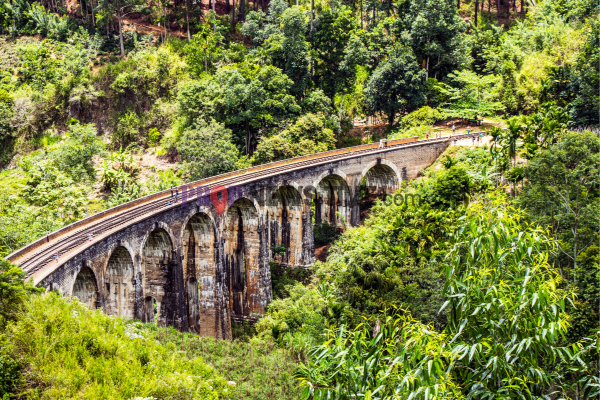
The Chenab Bridge, poised to become the world's highest railway bridge, stands as a testament to India's engineering prowess. Situated in the Reasi district of Jammu and Kashmir, this architectural marvel is part of the ambitious Udhampur-Srinagar-Baramulla Railway Link (USBRL) project, aiming to enhance connectivity in the region. Advertisement


Strategically located between the villages of Bakkal and Kauri, the bridge spans approximately 1,315 meters (4,314 feet) across the Chenab River. Its most striking feature is the main arch, which stretches 467 meters (1,532 feet), supporting a deck that soars 359 meters (1,178 feet) above the riverbed-surpassing the height of the Eiffel Tower by 35 meters. This impressive elevation not only sets a new world record but also underscores the project's engineering challenges.
The inception of the Chenab Bridge stemmed from Indian Railways' proposal to establish a railway link between Katra and Qazigund, aiming to reduce travel time between Jammu and Kashmir to approximately 6 hours and 30 minutes. A significant highlight of this route is the reduction of travel time between Katra and Banihal from several hours to just 20 minutes, thanks to the bridge's strategic placement.
Constructing the bridge in the rugged terrain of the Himalayas presented numerous challenges. Engineers had to design a structure capable of spanning a deep gorge while preserving the natural flow of the Chenab River. The region's harsh weather conditions, including potential wind speeds up to 266 km/h and temperatures dropping to -40°C, necessitated a design that could withstand such extremes. The bridge's two-ribbed arch, supported by massive pylons and cables, was assembled using one of the world's largest cable cranes, highlighting the project's complexity.
Safety and durability were paramount in the bridge's design. The structure incorporates blast-proof steel and concrete pillars engineered to endure seismic forces corresponding to Zone-V, India's highest earthquake intensity zone. Specialized steel, 63 mm thick, enhances its resilience against potential threats. Additionally, a GIS-enabled online monitoring system has been installed for real-time surveillance and ongoing maintenance, ensuring the bridge's longevity.
The scale of the project is evident in its material requirements. Approximately 25,000 tons of steel, 4,000 tons of reinforced steel, and 46,000 cubic meters of concrete were utilized in the construction, reflecting the monumental effort involved. The estimated cost of the bridge is around INR 1,486 crores, underscoring the significant investment in this infrastructure endeavor.
With an anticipated lifespan exceeding 120 years, the Chenab Bridge is expected to serve as a vital link in the region's transportation network for generations. Its completion is not only set to revolutionize travel in Jammu and Kashmir but also stands as a symbol of India's engineering capabilities on the global stage. By facilitating more efficient transportation, the bridge is poised to bolster economic ties within the region, fostering development and prosperity.
In summary, the Chenab Bridge exemplifies a remarkable blend of innovative design, advanced engineering, and strategic vision. As the world's tallest railway bridge, it represents a significant milestone in infrastructure development, promising to enhance connectivity and stimulate economic growth in Jammu and Kashmir.

5th Jun, 2025

25th May, 2023

11th May, 2023

27th Apr, 2023
Advertisement








 Facebook
 Whatsapp
