Advertisement








When should a housing society in Mumbai start considering re...
From GST on JDAs to SEBI’s REIT reclassification and the S...
Stay ahead in the world of real estate with our daily podcas...
Stay ahead in the world of real estate with our daily podcas...
Leading companies including Adani Ports, DP World, and Vedanta have expressed interest in the INR 7,056 crore Thoothukudi outer harbour project following revisions to the Viability Gap Funding (VGF) cap, now set at INR 1,950 crore. The project, re-tendered after initial low response, involves dredging, reclamation, and breakwater construction under a DBFOT model to develop two container terminals with a combined 4 million TEU capacity. Phase one, costing INR 4,494 crore, will develop berths I and II, followed by phase two at INR 2,561 crore for berths III and IV. Improved eligibility criteria and financial incentives aim to attract more bidders, with rail-road linkages planned to enhance connectivity.
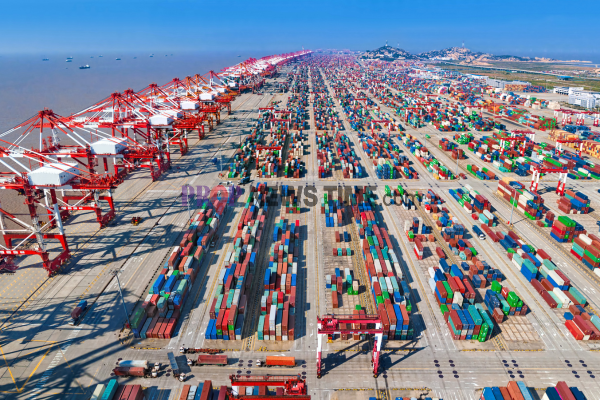
Prominent companies such as Adani Ports and Special Economic Zone, DP World, Jan De Nul, Vedanta Group, JM Baxi, and DBGT have expressed their interest in the INR 7,056 crore outer harbour project at Thoothukudi, Tamil Nadu. A re-tender was issued earlier, with the Viability Gap Funding (VGF) revised to make the project more appealing to potential bidders. Sources confirmed that a pre-bid meeting saw active participation from interested parties. Advertisement


The updated Request for Proposal (RFP) outlines that the VGF will be capped at a maximum of INR 1,950 crore or the actual quoted amount, whichever is lower. However, the Detailed Project Report (DPR) estimates that government support for construction-related activities such as breakwater and dredging would amount to approximately INR 2,500 crore.
The outer harbour project is a near greenfield development, requiring significant investment in civil works like dredging, reclamation, and breakwater construction. These are not revenue-generating activities, which makes substantial government financial support imperative. The DPR highlights that globally, very few greenfield projects of this nature are solely funded by private investors.
According to Jagannarayan Padmanabhan, Senior Director at CRISIL, VGF serves as a one-time grant to assist high-capital projects, and extended concession periods can offer developers more time to recover investments. Furthermore, a moratorium on royalty payments could reduce financial strain during initial stages, improving the project's long-term sustainability.
The VOC Port Authority had reissued the tender after the previous attempt garnered insufficient response. Only two bidders, Vedanta and Premier Science and Technology, applied in the earlier round, both of whom were disqualified. This time, eligibility criteria have been revised to encourage wider participation. The project encompasses dredging and breakwater construction under a design, build, finance, operate, and transfer (DBFOT) model. It targets a total handling capacity of 4 million TEUs (twenty-foot equivalent units) annually, divided into two phases. Phase one, costing INR 4,494 crore, includes the development of container terminal 1 (berths I and II), while phase two, estimated at INR 2,561 crore, focuses on container terminal 2 (berths III and IV).
The first phase's construction period is set at 36 months, and the second phase is expected to take 24 months. Each container terminal will feature a quay length of 1,000 metres.
On the connectivity front, the port authority is planning rail-road linkages for the project. While the concessioning authority will provide rail facilities up to the outer harbour terminals' entrance, the concessionaire is responsible for developing railway infrastructure beyond this point.
With major corporations showing interest, the project holds the promise of boosting India's port infrastructure significantly. If executed as planned, this project could emerge as a vital hub, enhancing container handling capacities and connectivity in the region.

5th Jun, 2025

25th May, 2023

11th May, 2023

27th Apr, 2023
Advertisement








 Facebook
 Whatsapp
