Advertisement










Private equity has played a significant role in shaping Indi...
In today’s real estate landscape, fitness is often treated...
In this episode of Prop Personalities, we sit down with Hars...
Luxury real estate is one of the most talked-about segments ...
Welcome to Prop Personalities by Prop News Time - a podcast ...
The Thane Metro, a 29-kilometre circular corridor with 22 stations, aims to transform urban mobility in one of Maharashtra's fastest-growing cities. Approved in August 2024 and costing INR 12,200 crore, the project addresses traffic congestion and pollution by offering a modern, sustainable transit solution. Managed by Maha Metro, construction began in October 2024, with completion slated for 2029. Integrated with Mumbai Metro Lines 4 and 5, the Thane Metro will serve 647,000 daily commuters, boosting connectivity, easing road congestion, and spurring economic growth. This transformative project promises a cleaner, more efficient, and connected future for Thane's residents.
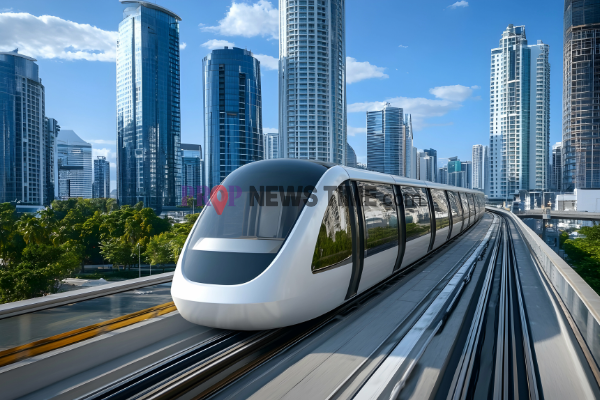
The Thane Metro is an ambitious infrastructure project poised to redefine urban mobility in Thane, one of Maharashtra's fastest-growing cities. With increasing traffic congestion, rapid urbanization, and a rising population, the need for a reliable and efficient public transit system has become crucial. The Thane Metro aims to address these challenges by providing a modern, sustainable, and integrated transportation network. Approved by the Union Cabinet in August 2024, this project is set to enhance connectivity, reduce pollution, and improve the quality of life for the city's residents. Advertisement


The Thane Metro project is designed as a 29-kilometre circular corridor, also known as the Integral Ring Metro Rail Project. This corridor will feature 22 strategically located stations, covering key residential, commercial, and industrial areas of the city. The metro route runs along the western periphery of Thane, bordered by the Ulhas River and the Sanjay Gandhi National Park, ensuring seamless connectivity across densely populated zones. The circular design allows passengers to travel efficiently between major hubs, significantly reducing travel time and easing road congestion.
The project is estimated to cost approximately INR 12,200 crore, reflecting a significant investment in Thane's infrastructure. Funding for the project is a joint effort between the Government of India and the Government of Maharashtra, with additional support from bilateral agencies. The project is being executed by the Maharashtra Metro Rail Corporation Limited (Maha Metro), marking their first greenfield venture in the Mumbai Metropolitan Region. This collaboration underscores the commitment to delivering world-class infrastructure to support the city's rapid growth.
Construction for the Thane Metro began in October 2024, with initial activities including geotechnical investigations to assess the viability of the planned routes. The project is expected to be completed by 2029, with phased rollouts ensuring that key segments become operational progressively. The metro will be fully integrated with the existing and upcoming Mumbai Metro network, particularly Line 4 (Wadala to Kasarvadavali) and Line 5 (Thane to Kalyan via Bhiwandi). This integration aims to provide a seamless transit experience for commuters traveling between Thane, Mumbai, and surrounding regions.
The Thane Metro is anticipated to serve a daily ridership of 647,000 passengers by 2029, with projections indicating an increase to 872,000 passengers by 2045. This surge in ridership will play a crucial role in reducing road traffic, alleviating the strain on existing public transport systems, and decreasing pollution caused by vehicular emissions. By offering an efficient and reliable alternative to road-based travel, the metro will encourage more residents to switch to public transport, contributing to a cleaner and greener urban environment.
In terms of infrastructure, the Thane Metro promises to incorporate state-of-the-art technology and modern amenities. The trains will feature air-conditioned coaches, CCTV surveillance, and automated fare collection systems to enhance passenger safety and convenience. The stations will be designed with accessibility in mind, featuring elevators, escalators, and facilities for differently-abled individuals. These features will ensure that the metro system is inclusive, efficient, and capable of meeting the needs of a diverse urban population.
The economic impact of the Thane Metro is expected to be substantial. Improved connectivity will boost real estate development along the metro corridor, attract investments, and support the growth of local businesses. The project will also generate employment opportunities during both the construction and operational phases, providing a significant boost to the local economy. Furthermore, the metro will reduce travel time for daily commuters, enhancing productivity and improving the overall quality of life in the city.
Despite the promising outlook, the Thane Metro has faced several challenges, including delays related to land acquisition, environmental clearances, and coordination among various agencies. However, the project has gained momentum thanks to the persistent efforts of Maha Metro and the strong backing of both the state and central governments. The recent laying of the foundation stone by Prime Minister Narendra Modi in October 2024 marks a pivotal milestone, signaling the government's commitment to seeing the project through to completion.
The Thane Metro represents a significant leap forward in urban transportation for the city. By addressing the critical issues of traffic congestion, pollution, and inadequate public transit, the metro is set to transform Thane into a more connected, efficient, and sustainable urban hub. The project's success will not only benefit the residents of Thane but also serve as a model for other cities facing similar challenges. As the metro progresses towards completion, it stands as a testament to the power of strategic planning, innovation, and collaboration in shaping the future of urban India.

5th Jun, 2025

25th May, 2023

11th May, 2023

27th Apr, 2023
Advertisement





 Facebook
 Whatsapp
