Advertisement










Private equity has played a significant role in shaping Indi...
In today’s real estate landscape, fitness is often treated...
In this episode of Prop Personalities, we sit down with Hars...
Luxury real estate is one of the most talked-about segments ...
Welcome to Prop Personalities by Prop News Time - a podcast ...
The Ahmedabad Metro is a transformative rapid transit system designed to modernize urban mobility in Ahmedabad and Gandhinagar, Gujarat. Phase 1, fully operational by October 2022 at a cost of INR 10,773 crore, spans 40.03 km across two corridors: the Red Line (North-South) and the Blue Line (East-West), connecting key areas with 33 stations. It has significantly reduced traffic congestion, cut travel times, and provided an eco-friendly alternative to road transport. Phase 2, underway at an estimated cost of INR 5,384 crore, will add 28.26 km, enhancing regional connectivity, including links to Gandhinagar and GIFT City. With plans for a future Phase 3, the Ahmedabad Metro exemplifies urban innovation, sustainability, and progress, shaping Gujarat's infrastructure landscape.
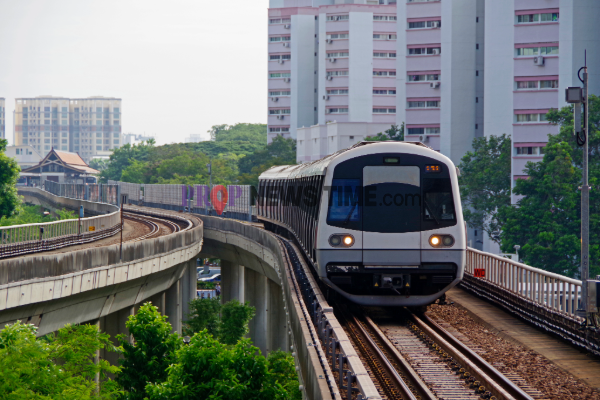
The Ahmedabad Metro is a modern rapid transit system designed to revolutionize urban mobility in Ahmedabad and Gandhinagar, Gujarat. Since its inception, the metro has significantly improved connectivity, reduced traffic congestion, and provided a sustainable transportation option for residents and visitors. The project, developed by the Gujarat Metro Rail Corporation Limited (GMRC), has seen rapid progress and ambitious expansion plans, reflecting the city's commitment to infrastructure development. Advertisement


The idea of a metro system for Ahmedabad emerged to tackle the city's increasing traffic issues and growing population. The Gujarat Metro Rail Corporation Limited (GMRC), a joint venture between the Government of India and the Government of Gujarat, was formed to execute the project. Phase 1 of the Ahmedabad Metro was approved in 2013, and construction began in March 2015. The project was divided into two main corridors: the North-South Corridor (Red Line) and the East-West Corridor (Blue Line).
On March 6, 2019, the first 6.5 km section of the metro, between Vastral Gam and Apparel Park, was inaugurated by Prime Minister Narendra Modi. By October 2022, the entire Phase 1 network became fully operational, marking a major milestone for the city's transportation infrastructure. The total cost for Phase 1 was approximately INR 10,773 crore. The Ahmedabad Metro currently operates two primary lines, covering a total length of 40.03 kilometres.
The Red Line (North-South Corridor) runs from Motera Stadium to APMC, spanning 18.87 kilometres with 15 stations. This line provides crucial connectivity between the northern and southern parts of the city, serving key areas and commercial hubs. The construction cost for this corridor was a significant part of the overall budget for Phase 1.
The Blue Line (East-West Corridor) extends 21.23 kilometres, connecting Vastral Gam in the east to Thaltej Gam in the west. It features 18 stations, with both elevated and underground sections. This corridor enhances east-west connectivity and includes important stops like Gujarat University, Old High Court, and Kalupur Railway Station. The Blue Line's construction involved building tunnels under densely populated areas, adding to the project's complexity.
Phase 2 of the Ahmedabad Metro, approved in February 2019, aims to extend the network by an additional 28.26 kilometres at an estimated cost of INR 5,384 crore. This phase includes two major corridors that will improve regional connectivity, particularly linking Ahmedabad with Gandhinagar.
The first corridor of Phase 2 will extend the Red Line from Motera Stadium to Mahatma Mandir in Gandhinagar. This extension will cover 22.84 kilometres and add 20 stations. The corridor aims to serve key government and commercial centers in Gandhinagar, facilitating smoother transit between the twin cities.
The second corridor will connect Gujarat National Law University (GNLU) to Gujarat International Finance Tec-City (GIFT City), spanning 5.42 kilometres with three stations. This line is designed to support the growing economic activities in GIFT City, which is emerging as a major financial hub.
Phase 2 is expected to be completed by 2026 and will further integrate Ahmedabad with its surrounding areas, offering a comprehensive transit solution for commuters.
Looking ahead, Phase 3 of the Ahmedabad Metro is in the proposal stage. This phase is expected to include new routes, such as a 5.56-kilometre line from Koteshwar Road to the airport and a 7.56-kilometre extension to GIFT City. The estimated cost for these extensions is around INR 4,300 crore. If approved, Phase 3 will further solidify Ahmedabad's metro network as a robust and expansive transit system.
The Ahmedabad Metro employs standard gauge tracks and is powered by a 750 V DC third rail system. The trains, supplied by Hyundai Rotem, consist of three coaches and can accommodate up to 1,000 passengers per trip. The metro is equipped with modern amenities, including air-conditioned coaches, advanced signaling systems, and automated fare collection. The Communication-Based Train Control (CBTC) system ensures safety and efficiency by enabling real-time train operations.
Stations are designed to be accessible for differently-abled passengers, with features like elevators, tactile flooring, and ramps. Additionally, the metro incorporates eco-friendly technology, such as regenerative braking, which helps save energy.
The Ahmedabad Metro project has faced several challenges, including land acquisition issues, construction delays, and the need to minimize disruption in densely populated areas. Despite these obstacles, the successful completion of Phase 1 and ongoing work in Phase 2 highlight the project's resilience and effective planning.
One of the most notable achievements was the inauguration of the full 40.03-kilometre Phase 1 network in 2022. This milestone has significantly reduced travel times and improved the daily commute for thousands of residents. The metro has also helped alleviate traffic congestion on Ahmedabad's busy roads, contributing to a cleaner environment by reducing vehicle emissions.
Since its launch, the Ahmedabad Metro has been well-received by the public, offering a reliable, efficient, and affordable mode of transportation. The metro has become particularly popular among daily commuters, students, and tourists. With fares ranging from INR 5 to INR 25, it remains accessible to people from various economic backgrounds.
The metro's impact extends beyond convenience, supporting the city's economic growth and urban development. By connecting key business districts, educational institutions, and residential areas, the metro is helping Ahmedabad transition into a modern, well-connected metropolis.
The Ahmedabad Metro is a transformative project that has reshaped urban mobility in the city and its neighboring regions. With its modern infrastructure, ambitious expansion plans, and commitment to sustainability, the metro system is poised to become a model for other cities in India. As Phase 2 progresses and Phase 3 takes shape, the Ahmedabad Metro will continue to enhance connectivity, reduce congestion, and improve the quality of life for its residents. This modern transit system stands as a testament to Ahmedabad's growth, innovation, and vision for a better future.

5th Jun, 2025

25th May, 2023

11th May, 2023

27th Apr, 2023
Advertisement





 Facebook
 Whatsapp
