Advertisement










Private equity has played a significant role in shaping Indi...
In today’s real estate landscape, fitness is often treated...
In this episode of Prop Personalities, we sit down with Hars...
Luxury real estate is one of the most talked-about segments ...
Welcome to Prop Personalities by Prop News Time - a podcast ...
The Pune Metro is a major rapid transit initiative designed to ease travel within one of Maharashtra's most dynamic cities. Officially approved in 2016 and operational from March 2022, the system currently includes two lines spanning over 31 kilometers, serving vital residential, commercial, and industrial zones. Developed by Maharashtra Metro Rail Corporation Limited (MahaMetro), it employs modern rolling stock, automated fare collection, and eco-friendly features like regenerative braking and solar power utilization. Despite cost escalations, construction delays, and fluctuating ridership, the planned addition of a third line and future extensions signal long-term growth. The Pune Metro aspires to deliver reliable, efficient, and sustainable urban transportation.
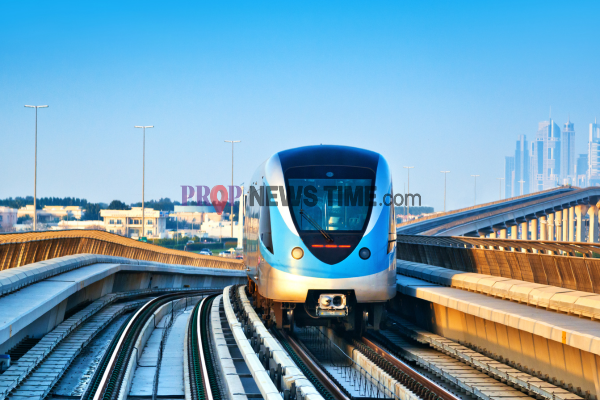
The Pune Metro is a revolutionary project designed to address Pune's growing urban transportation challenges. With the city's population expanding and traffic congestion worsening, the metro aims to offer a modern, efficient, and eco-friendly alternative to traditional commuting options. Operated by the Maharashtra Metro Rail Corporation Limited (MahaMetro), the Pune Metro represents a significant step toward enhancing connectivity and improving the quality of life for Pune's residents. Advertisement


The idea for a metro system in Pune was first proposed in the early 2000s to tackle the city's burgeoning traffic issues. The Delhi Metro Rail Corporation (DMRC) prepared the Detailed Project Report (DPR) in 2008, and after several revisions and approvals, the project was finally greenlit by the Central Government in December 2016. Prime Minister Narendra Modi laid the foundation stone on December 24, 2016, marking the official beginning of construction. The initial cost for the project was estimated at INR 11,420 crore, but due to various delays, including the COVID-19 pandemic, costs escalated to over INR 13,000 crore.
The Pune Metro began its operations in March 2022, and it currently consists of two primary lines that span a combined length of 31.25 kilometres. These lines are designed to connect key areas of the city, reducing travel times and providing a reliable commuting option. Purple Line (Line 1): This line spans 16.59 kilometres and runs from PCMC Bhavan in Pimpri-Chinchwad to Swargate in central Pune. It has a combination of elevated and underground sections, serving important locations such as Shivajinagar, Civil Court, and Kasarwadi. The Purple Line aims to ease the traffic congestion on the busy Old Mumbai-Pune Highway and improve connectivity between the industrial areas of Pimpri-Chinchwad and the city center. Aqua Line (Line 2): The Aqua Line covers 14.66 kilometres, connecting Vanaz in the west to Ramwadi in the east. This line is entirely elevated and passes through significant residential and commercial areas, including Deccan Gymkhana, Shivajinagar, and Yerawada. The Aqua Line is particularly beneficial for reducing congestion on the Paud Road and Nagar Road corridors, which are known for heavy traffic.
A third line, the Red Line (Line 3), is currently under construction. This line will stretch 23.33 kilometres and run from Hinjawadi Phase I to Shivajinagar. The Red Line is a crucial addition, as it will connect the Rajiv Gandhi Infotech Park in Hinjawadi, a major IT hub, to the city's central areas. This corridor is expected to ease the daily commute for thousands of IT professionals and reduce the heavy traffic on the Hinjawadi-Wakad stretch. The estimated cost for Line 3 is around INR 8,313 crore, and it is being developed under a Public-Private Partnership (PPP) model by Tata Realty and Siemens.
The Pune Metro project is funded through a combination of equity contributions from the Central Government and the Maharashtra State Government, along with loans from international financial institutions. The European Investment Bank (EIB) provided a loan of €600 million to support the construction of the first two lines. The initial budget for these lines was INR 11,420 crore, but due to various factors, including inflation and project delays, the costs have now surpassed INR 13,000 crore.
The Pune Metro employs standard gauge tracks and is electrified using a 750 V DC third rail system. The trains, supplied by Titagarh Firema and Alstom, consist of three coaches and can accommodate approximately 1,000 passengers per trip. The metro system incorporates modern technology, including automated fare collection (AFC), real-time passenger information systems, and advanced signaling for safe and efficient operations.
Sustainability is a key focus of the Pune Metro. The system uses regenerative braking technology to conserve energy and reduce emissions. Additionally, solar panels have been installed at several stations to harness renewable energy. The metro stations are equipped with rainwater harvesting systems and waste management facilities, making the system more environmentally friendly.
To make commuting more convenient, Pune Metro introduced the One Pune Card, a National Common Mobility Card (NCMC) compliant with the RuPay platform. This card can be used not only for metro travel but also for shopping and other forms of public transport. The card offers attractive discounts, such as 30% off on weekends and 10% off on weekdays, and can be recharged online or at metro stations.
Since its launch, the Pune Metro has seen fluctuating ridership numbers. In August 2023, the system recorded 20.47 lakh passengers, generating a revenue of INR 3.07 crore. However, by November 2023, ridership had declined to 14 lakh passengers, with revenue dropping to INR 2.20 crore. These numbers fall short of the initial projections of 6 lakh daily passengers by 2021. Factors contributing to this shortfall include limited last-mile connectivity, competition from existing bus and auto-rickshaw services, and the relatively high fare structure.
Despite the challenges, the future of Pune Metro looks promising. The completion of Line 3 is expected to boost ridership significantly by connecting major IT hubs with central Pune. Additionally, plans are in place for further expansions to cover more parts of the city and its suburbs. Improving feeder services, parking facilities, and integrating with other modes of transport are key strategies being implemented to attract more commuters.
The Pune Metro represents a significant leap forward in the city's public transportation infrastructure. While the project faces challenges in terms of ridership and cost overruns, it has the potential to transform urban mobility in Pune. With ongoing expansions, modern technology, and a focus on sustainability, the Pune Metro aims to provide a seamless, efficient, and eco-friendly commuting experience. As the network grows, it is poised to play a pivotal role in shaping the future of transportation in one of Maharashtra's fastest-growing cities.

5th Jun, 2025

25th May, 2023

11th May, 2023

27th Apr, 2023
Advertisement





 Facebook
 Whatsapp
