Advertisement








When should a housing society in Mumbai start considering re...
From GST on JDAs to SEBI’s REIT reclassification and the S...
Stay ahead in the world of real estate with our daily podcas...
Stay ahead in the world of real estate with our daily podcas...
The Delhi Metro Rail Corporation (DMRC) is undertaking the construction of more than 40 kilometres of underground corridors as part of its Phase 4 expansion, which accounts for around 50% of the 86 kilometres of new lines being laid across five corridors. This includes the construction of 27 underground stations using advanced tunnelling technologies like Tunnel Boring Machines (TBMs) and the New Austrian Tunnelling Method (NATM). The project aims to navigate challenging terrains, including densely populated areas. Progress includes the completion of a two-kilometre stretch on the Magenta Line and multiple active tunnelling drives across different corridors.
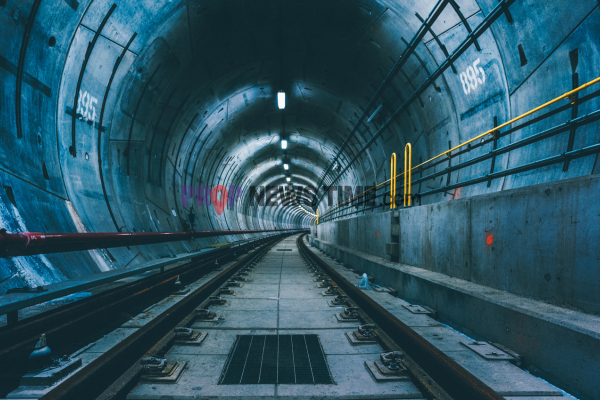
The Delhi Metro Rail Corporation (DMRC) is constructing over 40 kilometres of underground corridors as part of its Phase 4 expansion, which constitutes approximately half of the total 86 kilometres of new lines being developed across five corridors, according to a senior DMRC official. This includes the development of 27 underground stations. Advertisement


The DMRC has already completed a two-kilometre underground section extending the Magenta Line from Janakpuri West to Krishna Park. The underground stretches of Phase 4 pass through diverse terrains, including crowded residential and commercial areas such as Sadar Bazar, Nabi Karim, Ajmal Khan Park, and New Delhi, making this an engineering challenge.
A senior official explained that the DMRC typically constructs underground stations using conventional cut-and-cover technology, while tunnels are excavated with the help of Tunnel Boring Machines (TBMs). These machines, designed to tunnel through various soil and rock types, have been instrumental in the DMRC's tunnelling projects since Phase 1. In Phase 3, about 30 TBMs were employed to complete 50 kilometres of underground sections.
In Phase 4, seven tunnelling drives have already been completed, and nine are currently underway. The Aerocity-Tughlakabad corridor, spanning 19 kilometres underground, includes a section built using the New Austrian Tunnelling Method (NATM), which has previously yielded successful results. The Janakpuri West-RK Ashram Marg corridor will feature nine kilometres of underground lines, while the Inderlok-Indraprastha corridor will have over 11 kilometres. In contrast, the Majlis Park-Maujpur and Lajpat Nagar-Saket G Block sections will not include underground stations. DMRC officials are monitoring the tunnelling work closely, employing advanced instrumentation to regularly assess the structural condition of buildings located above the project sites.
The DMRC's Phase 4 expansion highlights the organisation's commitment to overcoming engineering challenges in densely populated areas. By leveraging advanced tunnelling technologies like TBMs and NATM, the project ensures minimal disruption while creating efficient and modern underground corridors. With significant progress already made, these developments aim to enhance Delhi's metro connectivity and ease urban commutes.

5th Jun, 2025

25th May, 2023

11th May, 2023

27th Apr, 2023
Advertisement








 Facebook
 Whatsapp
