Advertisement








When should a housing society in Mumbai start considering re...
From GST on JDAs to SEBI’s REIT reclassification and the S...
Stay ahead in the world of real estate with our daily podcas...
Stay ahead in the world of real estate with our daily podcas...
The Mumbai-Ahmedabad High-Speed Rail (MAHSR) project, India's first bullet train initiative, spans 508 km and is backed by INR 1.1 lakh crore ($15 billion) in investment, including a INR 88,000 crore loan from Japan at 0.1% interest. Connecting Mumbai to Ahmedabad via 12 stations, including Surat and Vadodara, the project cuts travel time to 2-3 hours with speeds up to 320 km/h. Set for full operation by 2028, it has achieved 100% land acquisition and advanced construction in Gujarat. Despite delays, it promises over 36,000 jobs, regional connectivity, and economic growth, marking India's entry into high-speed rail.
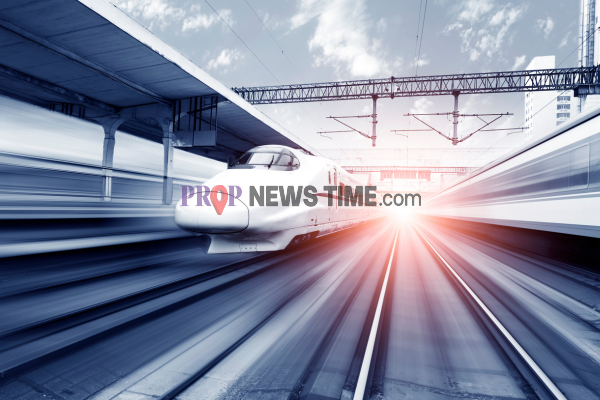
The Mumbai-Ahmedabad High-Speed Rail (MAHSR) project, commonly referred to as the Bullet Train project, is a landmark initiative that marks India's entry into the league of countries with high-speed rail networks. Announced in 2015, the project is designed to connect Mumbai, the financial capital of India, to Ahmedabad, Gujarat's largest city, over a stretch of 508 kilometers. With its advanced Japanese Shinkansen technology and an estimated investment of INR 1.1 lakh crore (approximately $15 billion), this initiative is poised to revolutionize intercity travel, enhance regional connectivity, and contribute to India's economic development. Advertisement


The idea for a high-speed rail system in India was first discussed in the 1980s, but it gained momentum only in the 2010s when the Indian government began exploring modern infrastructure solutions to support rapid urbanization and economic growth. The feasibility of such a project was studied extensively before its formal announcement during Prime Minister Narendra Modi's visit to Japan in December 2015. The project was finalized as a collaboration between India and Japan, with Japan providing technical expertise, funding, and its renowned Shinkansen technology.
The Japan International Cooperation Agency (JICA) played a crucial role in conducting feasibility studies and providing a soft loan of INR 88,000 crore for the project. The loan carries a nominal interest rate of 0.1% and is repayable over 50 years, with a 15-year moratorium. This financial arrangement underscores the strong bilateral ties between the two nations and Japan's commitment to supporting India's infrastructure development.
The MAHSR corridor stretches from Mumbai's Bandra-Kurla Complex (BKC) to Ahmedabad, passing through 12 stations, including Thane, Virar, Boisar, Vapi, Surat, Bharuch, Vadodara, Anand, and Sabarmati. The route is designed to optimize travel times and serve as a critical link between Maharashtra and Gujarat, two of India's most economically significant states. The corridor will include both elevated tracks and underground sections, with a 21-kilometer undersea tunnel near Thane Creek being one of its most ambitious engineering features.
Trains will operate at a maximum speed of 320 km/h, significantly reducing the travel time between Mumbai and Ahmedabad from the current 6-7 hours by train to just 2-3 hours, depending on the service. Limited-stop services will take approximately 2 hours, while those stopping at all stations will take around 3 hours.
As of 2024, the project has achieved significant progress, although it has faced delays due to challenges in land acquisition and the COVID-19 pandemic. Approximately 1,389 hectares of land have been acquired across Gujarat, Maharashtra, and the Union Territory of Dadra and Nagar Haveli, ensuring 100% land availability for construction.
Construction work is advancing rapidly, particularly in Gujarat, which accounts for the majority of the project's route. Key milestones include the completion of 350 kilometers of pier foundations, 316 kilometers of pier construction, and 190 kilometers of girder launching. Track slab manufacturing facilities have also been established in Surat, Gujarat, to ensure the availability of high-capacity ballastless track slabs required for the corridor.
The first operational segment, between Surat and Bilimora, is expected to be completed by 2026. The entire corridor, from Mumbai to Ahmedabad, is projected to be operational by 2028.
The MAHSR project is heavily reliant on Japanese technology and expertise, particularly the Shinkansen system, which is celebrated for its safety, efficiency, and reliability. Japanese engineers are actively involved in designing the tracks, tunnels, and other critical infrastructure. Additionally, the project incorporates advanced safety features, including earthquake-resistant technology, to ensure seamless operations in diverse geographical conditions.
Training programs for Indian engineers and railway officials are being conducted in Japan to build local expertise in operating and maintaining high-speed rail systems. This knowledge transfer is expected to strengthen India's capabilities in executing future high-speed rail projects.
The Mumbai-Ahmedabad High-Speed Rail project is expected to have far-reaching economic and social benefits. It is projected to create over 36,000 jobs during the construction phase and generate additional employment opportunities in allied sectors such as manufacturing, logistics, and tourism. Once operational, the project will enhance regional connectivity, facilitate faster movement of goods and people, and stimulate economic activity in the regions it serves.
The project will also contribute to urban development around its stations, fostering the growth of satellite towns and real estate markets. For instance, cities like Surat and Vadodara are already witnessing increased investments in commercial and residential properties due to improved connectivity prospects.
Despite its promise, the project has faced criticism and challenges. Land acquisition, particularly in Maharashtra, has been a contentious issue, delaying construction timelines. Environmental concerns, especially related to the undersea tunnel near Thane Creek, have also been raised. Additionally, some critics have questioned the project's cost-effectiveness, arguing that the funds could have been used to improve existing railway infrastructure.
The Mumbai-Ahmedabad High-Speed Rail project is just the beginning of India's foray into high-speed rail systems. The success of this project is expected to pave the way for additional high-speed corridors across the country, including routes connecting Delhi and Varanasi, Mumbai and Pune, and Chennai and Bengaluru. These corridors aim to create a robust high-speed rail network, transforming India's transportation landscape and enhancing economic competitiveness.
The Mumbai-Ahmedabad High-Speed Rail project is a monumental step forward in India's infrastructure development journey. By introducing high-speed rail technology, it promises to revolutionize travel, strengthen regional connectivity, and drive economic growth. While challenges remain, the progress achieved so far underscores the transformative potential of this initiative. As India's first bullet train takes shape, it symbolizes the country's aspirations for a modern, efficient, and sustainable transportation system.

5th Jun, 2025

25th May, 2023

11th May, 2023

27th Apr, 2023
Advertisement








 Facebook
 Whatsapp
